
How to Hit the Proper Flop Shot
Some links on this page are affiliate links. As an Amazon Associate, GolfThis earns from qualifying purchases at no extra cost to you.
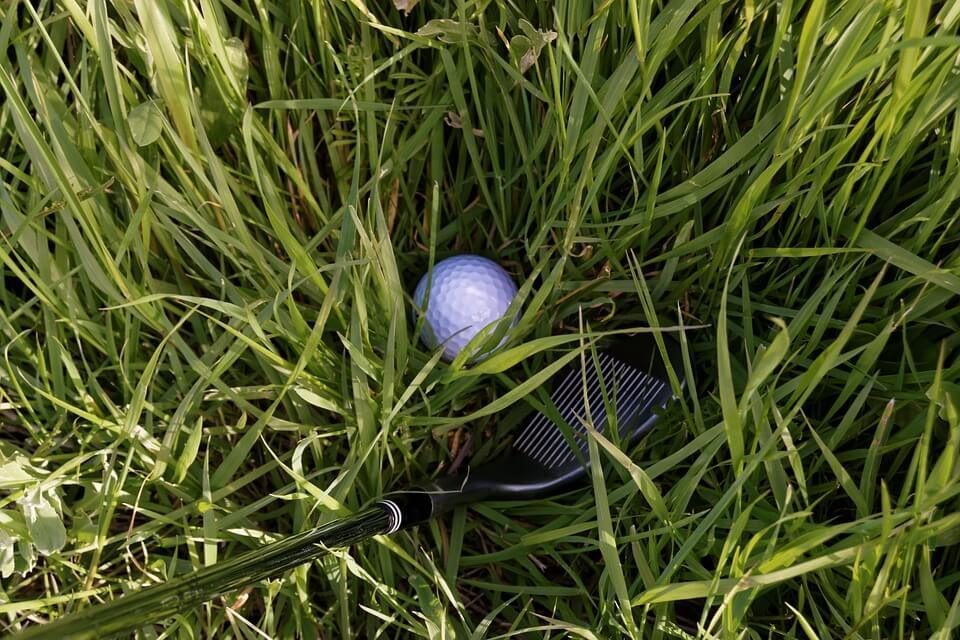
Okay, so maybe you are not Phil Mickelson and want to flop every shot that misses the green, but you find that if you could have this shot in the bag for those times it’s really needed, you might save a few strokes overall in your game.
Especially when there is very little green to work with and you would like to get the ball to land (and stop quickly) “like a butterfly with sore feet”, as Sam Snead once put it.
The Fundamentals of Playing a Flop Shot
The objective of a flop shot is to get the ball as high in the air as possible with as much spin as possible compared to the distance of the shot, especially the less green you have to work with. We have all seen Mickelson and Tiger do this in amazing ways, out of tough situations.
Back in the day Ballesteros was perhaps the biggest magician of them all around the greens; known for making a par or even a birdie from the toughest of situations. Like in anything you want to get good at, mastering and maintaining the basics and fundamentals are crucial.
To get height and spin you need this to happen:
- The club is highly lofted once it strikes the ball (impact)
- A swing path that is from the outside in
- High speed on the club face
- Solid contact
Execution and Technique
To get enough loft you need to open the face, and to do that you should put your stance to the left. You would use the stance of a typical wedge shot from 80-100+ yards when it comes to.
Personally, I use an average and normal distance from the ball on these shots, but you might want to try what Ballesteros did in his time on flop shots; play the ball closer to you than normal, so you can attack the ball more across, more outside in with a slightly steeper angle of attack.
This, when executed correctly, will give more spin, which is an essential part of the shot to limit roll, or simply stop almost on the spot. This will be a thing to practice and test out to see what works for you.
Swing Speed
To create enough swing speed you would need anything from a ½ of a full swing to an almost full swing depending on the length of the shot.
Hand Action
In a lot of ways this is a type of shot that requires some level of performance and practice in a solid hand action/release. I would advise for those who still need to develop this part more, to get Ben Hogan’s classic work on golf: Five Lessons. It will show you how to educate your hands, which for this part of your game will give better contact, control of speed, and angle of attack.
Make no mistake, this is not to be confused with “scoopy-hand action” which creates unstable results and poor contact. This is a proper education of the hands’ way to move through the swing, although for most better players this is a part that has become an automated “unconscious competence” long ago, and is no longer something you can put conscious control over in their technique.
Ball Position
I see a lot of good players who are using a ball position that is just slightly left of the middle of the stance for this shot. Now that is certainly a safe way to play this shot and will eliminate some mistakes. Lie of the ball should also be taken into consideration, the worse the lie, the more necessary it would be to play it from the middle of the stance.
The way I see it, if you really need to get the ball high, you can practice lob shots that are a lot more to the left in the stance with the ball position. That does take some practice, but it will enable you to give the club much more loft once you hit the ball.
Backswing
This shot needs to be played with an outside in swing path, so it will be essential to set the hands much earlier on the shot in the backswing, while not getting the shaft in behind you at all, it needs to be more in front. A good way to do this is to let your right come a bit forward towards the ball in the setup, and maintaining the right arm more in front of you in the backswing, instead of letting the elbow get in behind, too fast or early.
A few mobile videos of your swing by a friend from “down the line” view will easily show you whether you are keeping the club and shaft slightly in front of you on this shot (as well as pitch shots), or if its getting too much in behind.
You can watch most pro’s do this fairly well, and good players are usually not a bad idea to model when trying to improve.
Lower Body Action
I think you will find that the slower and more gradual passive movement you can have with the lower body on this shot, the better you will see the quality of your shots getting on average. Be aware of a too quick lower body on this shot, that’s generally not going to be beneficial.
Clubface
While we have already stated the importance of enough loft and that the clubface should be open to a degree that works for you, it is also worth mentioning that if you have a swing that does not open the clubface enough on the way back in your backswing, this shot can get harder to deal with.
You want to make sure you have slight rotation of the clubface so that it opens enough and gives you the loft you need. Note that this does not mean any unnatural movement of the club or hands.
Practice, Performance, and Mentality
To get better at the flop shot you simply need to practice it. Like Ben Hogan said, there are no shortcuts in life or in golf. If you want to improve, you got to put in the work. My job here is to show you what to focus on when you do put in that work. Correct application of knowledge or info is the only way to get anywhere near “shortcuts” in golf, but they still require you to do the work.
So my advice about both becoming better at doing flop shots, and the game of golf in general, is to get educated on applying the right knowledge about the game at the right time, no matter what part it is, and then go to work on it.
Lies
Now, for the flop shot, to start with I would advise to practice it with good lies only. Practice at least 3 different distances of flop shots so you get a feel for how to control distances. As you get better you can finetune this farther, and you will develop a sound judgement and feel around the greens for this shot.
As you get better, go to work on medium lies and tough lies as well. These are parts of the reality out on the golf course, just as much as the good lies are.
Make sure to also execute this shot under more pressure, like when you play on the course, or if you play tournaments. The more you can do that, and do that with success, the more confidence and belief you can build up in your ability to use this shot when you need it, even if it’s a pressured situation.
Make it a Habit
Confidence comes through reference experiences, and the only way to get that is to go and put yourself in those situations a much as possible, especially tournaments.
At the end of the day this is a type of shot that requires confidence and belief to execute well, especially in hard situations or under pressure. To big extent, that is the nature of this shot. A good example would be Tiger Woods flop shot from The Memorial in 2012.
Use Stats
As a last note I would advise to use stats on this part of your game, as well as the rest, so you will be able to track your progress of the results you are getting. That can be both fun and motivational, and you can learn more about your own game, and where you have the best opportunities to save more strokes on average in general in your golf game.
Conclusion
This game is to start with learning the fundamentals and the technique to get a basis, then applying that with practice to build feel and a good judgement for distance around the green’s for using this shot. Following that, it will be about building experience, belief and confidence, which is done true playing the game and using these shots in play, especially in tournaments.
The biggest difference between a pro and beginner when it comes to the flop shot is the player’s belief in his ability to execute the shot. The pro has done it 500 times before, and well, in hard situations. The average golfer has usually not. To build up and improve, the most important is experience. The rest are fundamental technique.
Cover image artificially generated for illustrative purposes.