
Best Cavity Back Irons in 2026
Some links on this page are affiliate links. As an Amazon Associate, GolfThis earns from qualifying purchases at no extra cost to you.
Ask ten golfers what “cavity back” means and eight of them will say “the irons for people who aren’t very good yet.” That’s not quite right, and it undersells a design that shows up in tour bags too. A cavity back iron hollows out the back of the head and pushes that saved weight to the edges of the face. The result is a wider effective hitting area, so a strike an inch off-center still holds most of its ball speed and direction instead of losing both.
That’s the actual argument for playing one, and it has nothing to do with skill level in the way the stereotype suggests. A mid-handicap golfer who finds the center of the face maybe six times out of fourteen swings benefits more from that forgiveness than from a blade’s extra feedback. This list covers the spread, from true super game-improvement cavities built for total beginners to players’-distance cavities that better ball-strikers still choose on purpose.
We weighted independent robot and player testing over manufacturer copy. MyGolfSpy’s 2026 Most Wanted testing, which hits every entrant on a fixed robot rig instead of relying on a manufacturer’s own numbers, carried the most weight, backed by Golf Digest’s Hot List panel and the fitters and reviewers at Golf Monthly and GolfWRX.
How we picked: We don’t claim to have hit every iron here. These picks come from manufacturer specs, independent testing data (MyGolfSpy’s 2026 Most Wanted robot and player testing, Golf Digest’s Hot List panel), and aggregated feedback from golfers playing them. Where we’ve had a club in hand, we say so.
This is part of our 2026 series, alongside Best Golf Irons in 2026. Jump to the comparison table if you just want the picks.
Best Cavity Back Irons in 2026 Comparison Table
| Iron | Type | Best For | Price |
|---|---|---|---|
| Ping G440 | Game-improvement | Mid handicaps wanting distance and forgiveness | $$$ |
| Callaway Apex Ai300 | Game-improvement (forged) | Golfers who want cavity forgiveness with a forged feel | $$$$ |
| Cobra Darkspeed | Game-improvement | High handicappers chasing distance first | $$$ |
| TaylorMade Qi35 | Players-distance cavity | Low-to-mid handicaps who want to keep some workability | $$$$ |
| Titleist T200 | Players-distance cavity | Better players who mis-hit occasionally and want insurance | $$$$ |
| Mizuno JPX 925 Hot Metal | Game-improvement | Golfers who want distance without a bulky-looking head | $$$ |
| Tour Edge Hot Launch Max D | Super game-improvement | Beginners and high handicappers on a budget | $$ |
| Wilson Dynapower | Game-improvement | Value-focused buyers who still want real distance tech | $$ |
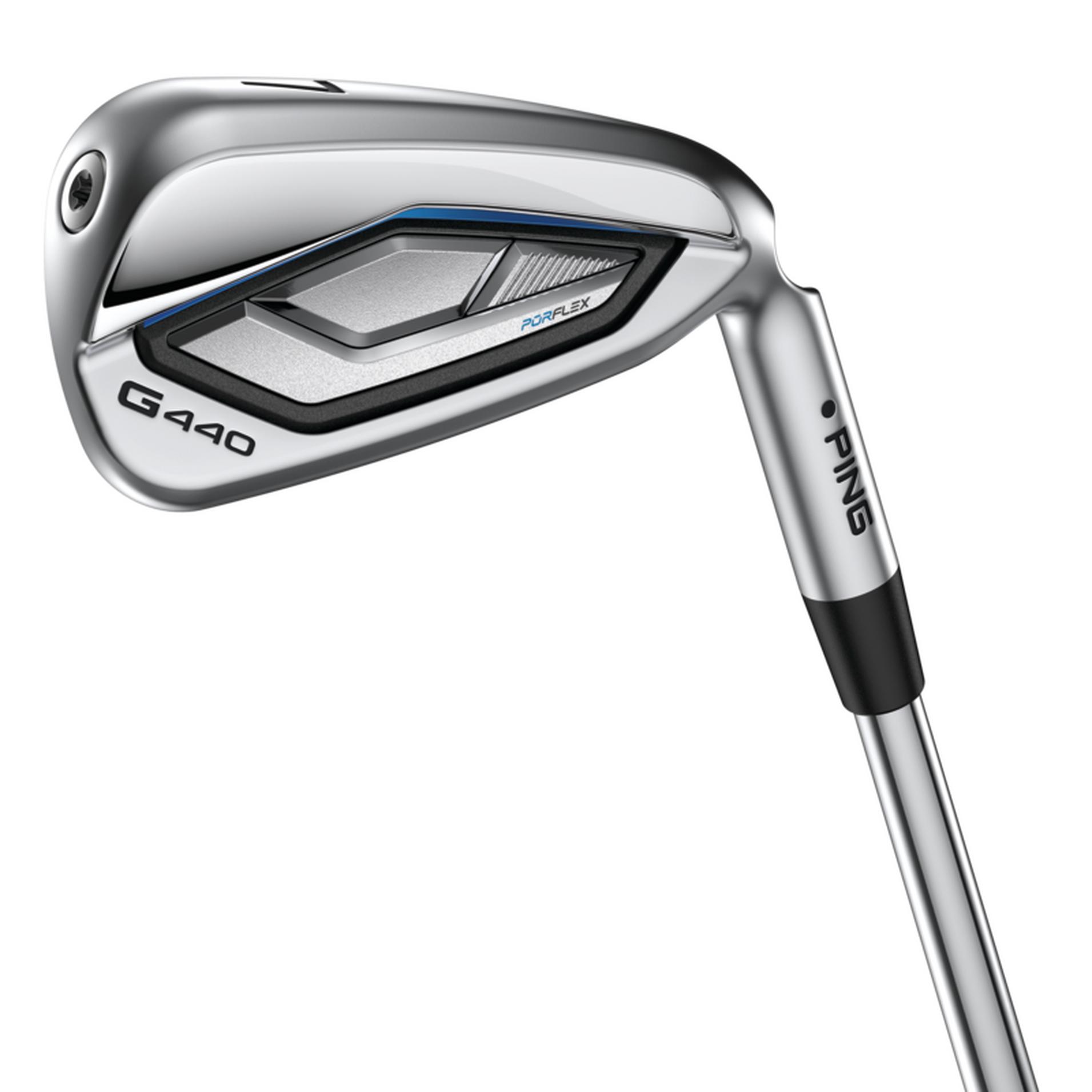
1. Ping G440
The G440 is built for a golfer who wants real forgiveness without a head that looks oversized at address. Ping thinned the face compared to the outgoing G430, and the biggest gain shows up exactly where a cavity back earns its keep: toe and heel strikes hold their ball speed noticeably better than the previous generation, according to MyGolfSpy’s testing.
Golf Digest’s Hot List panel gave it Gold and named it the best game-improvement iron of the year. The head profile is more compact than Ping’s past cavity designs, so it sits in the bag next to a players’ wedge without looking out of place.
The tradeoff is the one every cavity back makes to get that forgiveness: perimeter weighting and added offset cost some shot-shaping control a better player would want on purpose.
Who should skip it: Low-handicap players who shape shots deliberately. The forgiveness that saves a mis-hit also blunts an intentional draw or fade.
2. Callaway Apex Ai300
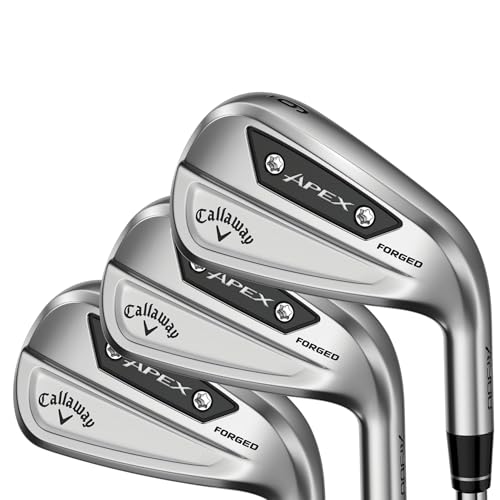
The Ai300 is a forged cavity back aimed at a golfer who wants game- improvement forgiveness without it feeling or sounding cheap. It’s built around Callaway’s Ai Smart Face technology, a face pattern designed from swing-impact data pulled across a large sample of real golfers rather than one tour pro’s strike map, with a slightly larger profile and wider sole than Callaway’s players’ irons.
Testers on MyGolfSpy’s forum and at Golf Monthly consistently point to the forged feel as the standout. It launches high and easy while feeling softer off the face than most cavity backs at its price. Forged construction usually gets reserved for players’ irons, where forgiveness matters less, so pairing it with real cavity-back margin for error is the rarer combination.
The catch is price. This is the most expensive cavity back on this list, and a mid-handicap golfer who doesn’t prioritize feel can get similar forgiveness for less from the Ping or Cobra above and below it.
Who should skip it: Budget-conscious buyers. You’re paying a real premium for forged feel in a category where cast construction performs almost as well.
3. Cobra Darkspeed
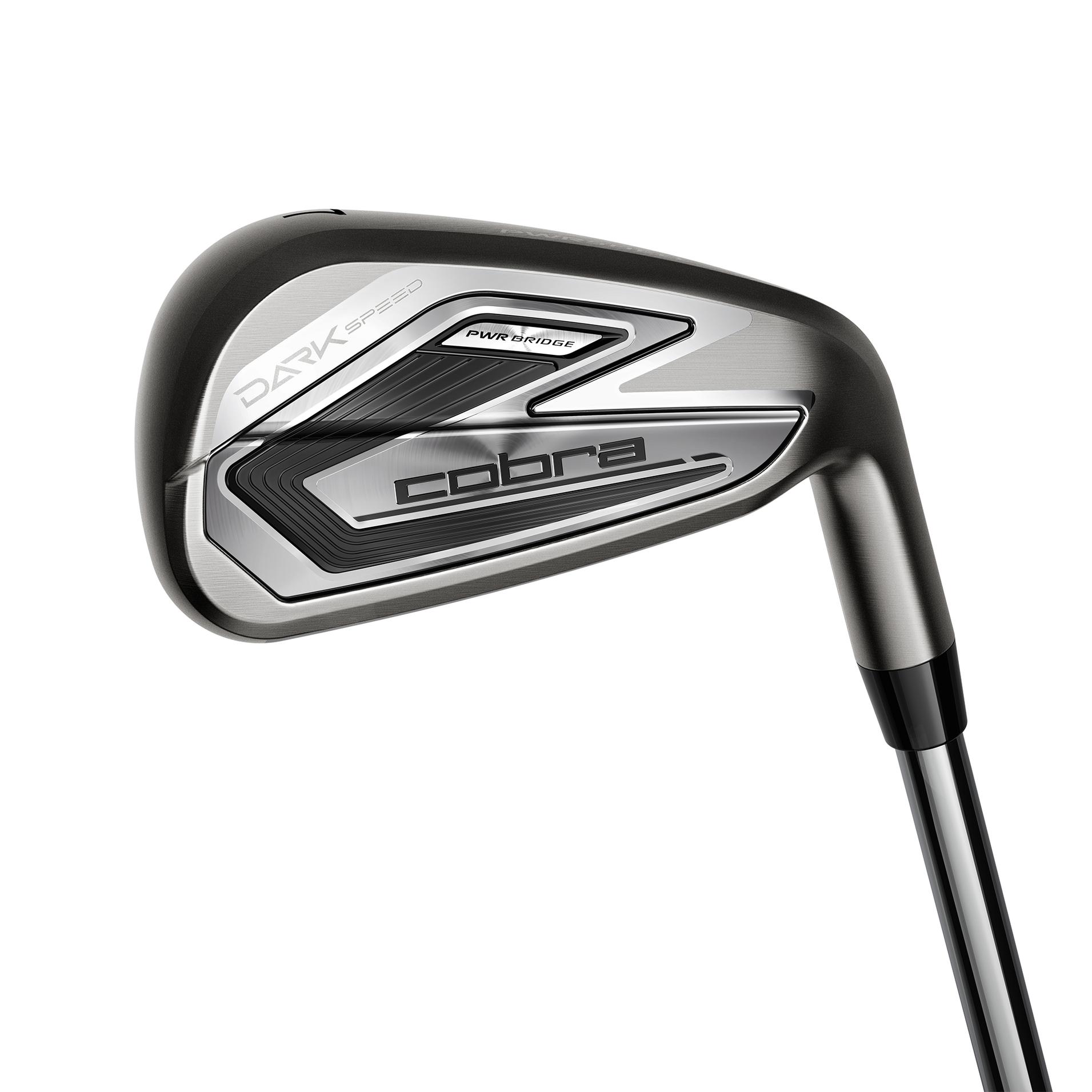
The Darkspeed is a hollow-body cavity back built around one goal: distance. The unsupported face behind Cobra’s PWRSHELL insert is the company’s most aggressive distance construction yet, and reviewers at Golf Monthly and Plugged In Golf note it goes as far as anything in the category while sounding noticeably less harsh than earlier distance-first Cobra irons.
That softer sound is the real story. Distance-oriented cavity backs have historically had a hollow, tinny strike, and the Darkspeed’s polymer-filled cavity dampens that in a way testers weren’t expecting. It’s aimed squarely at a high-handicap or beginner golfer chasing every yard the iron slot can give up.
Distance-first construction still means less spin control on approach shots, and stopping the ball on a firm green takes more club-selection discipline than a shorter, more controlled iron would need.
Who should skip it: Golfers who already generate plenty of clubhead speed. You’ll launch these too far and too low without the swing speed to match, and better players will find shot control frustrating.
4. TaylorMade Qi35
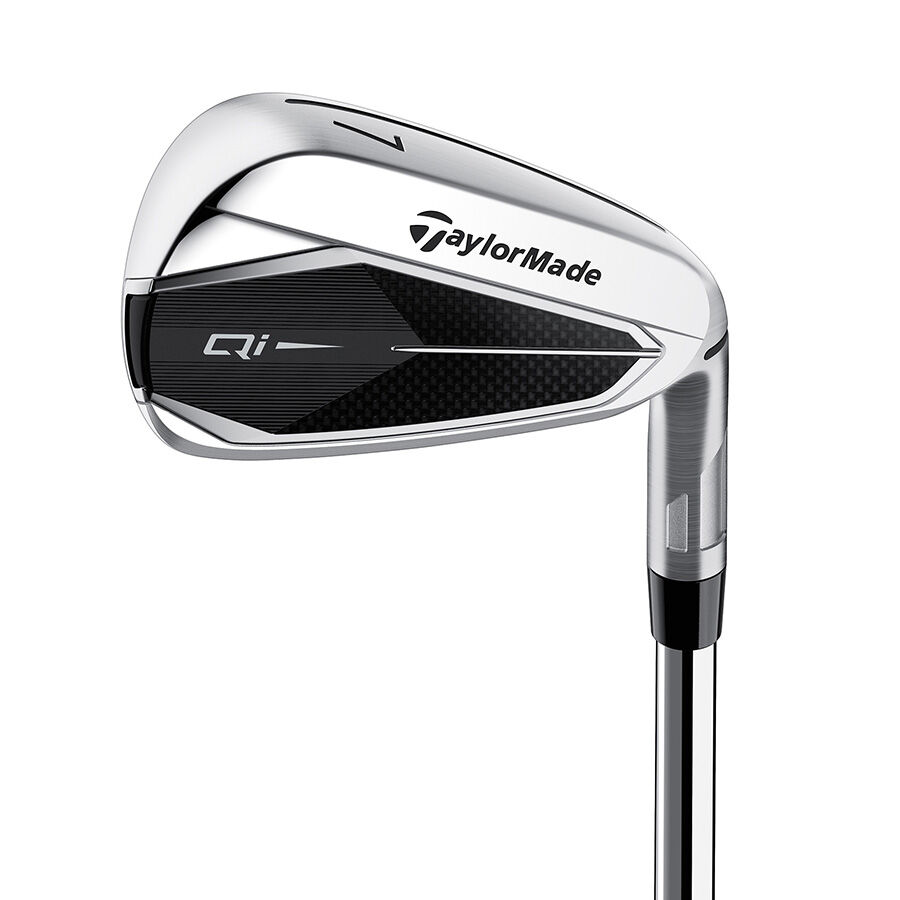
The Qi35 sits on the players’-distance end of the cavity spectrum, built for a golfer who has real ability but still wants insurance against the occasional thin or fat strike. TaylorMade uses a hollow-body construction with an internal weighting system to keep the center of gravity low without inflating the head size the way a true game-improvement iron does.
MyGolfSpy’s testing puts it near the top of its category for combining distance with a compact look at address, a pairing that’s genuinely hard to execute. Better players who tried it in fitting-bay tests report shot dispersion holding up better on mis-hits than a traditional muscle back would allow.
It’s not a true game-improvement iron, and a high handicapper won’t get the same forgiveness margin as the Ping or Tour Edge above and below it on this list.
Who should skip it: True beginners and high handicappers. This is forgiveness built for a golfer who is already reasonably consistent, not one still finding the center of the face.
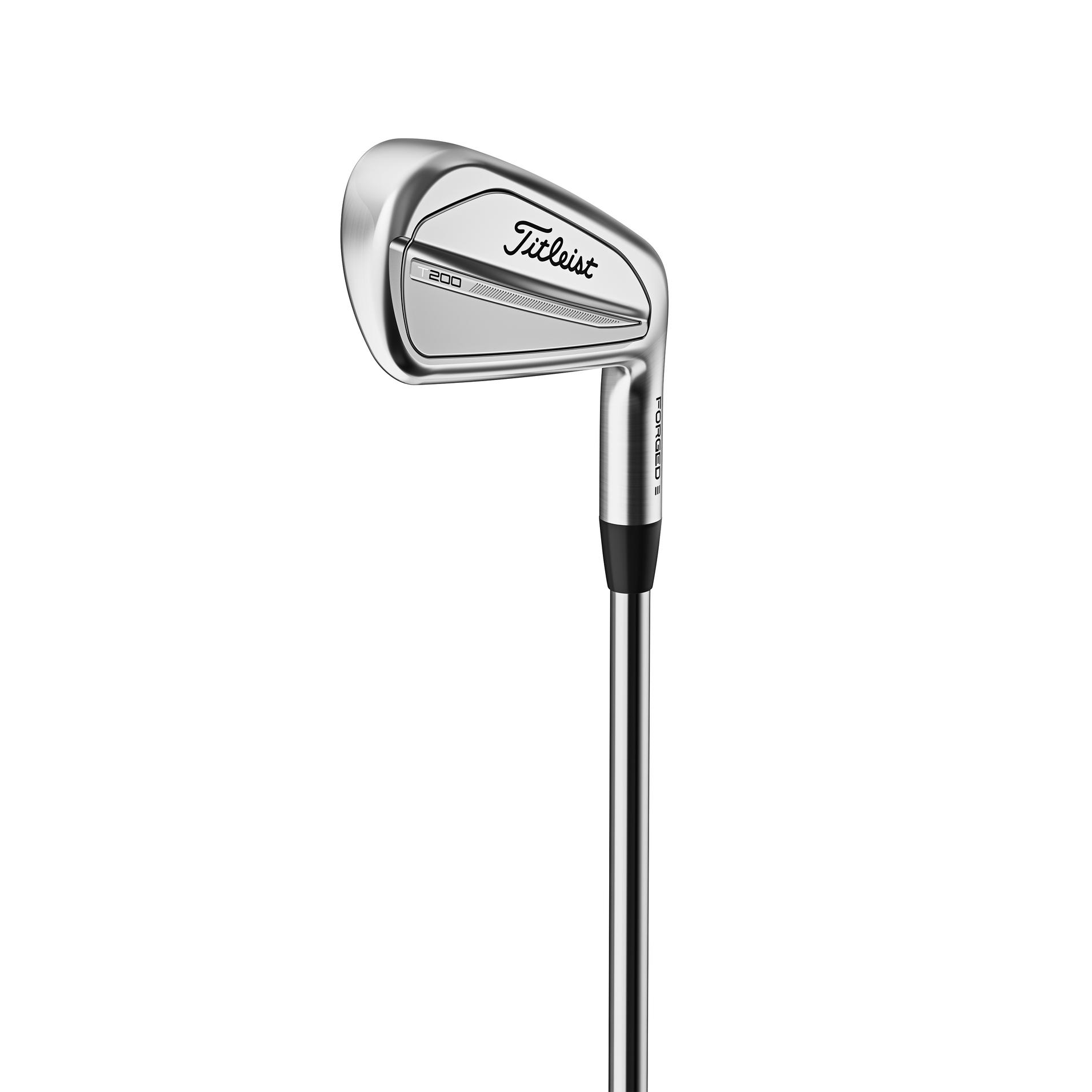
5. Titleist T200
The T200 is Titleist’s players’-distance cavity, built for a better golfer who mis-hits occasionally and wants a set that doesn’t punish it as severely as the T100. It uses a tungsten-weighted, forged face insert inside a hollow-body cavity to add ball speed and forgiveness while keeping a compact profile at address.
Golf Digest and Golf Monthly both continue to rank it among the strongest options for a single-digit-to-mid handicapper who wants Titleist’s tour pedigree with a real forgiveness upgrade over the classic muscle-back shape. It’s the set Titleist points a scratch player toward when they admit their iron play isn’t as sharp as it used to be.
It still asks more precision than a true game-improvement iron. A high handicapper will find less margin here than the name suggests.
Who should skip it: High handicappers. The compact profile and thinner sole reward centered contact more than they forgive a poor one.
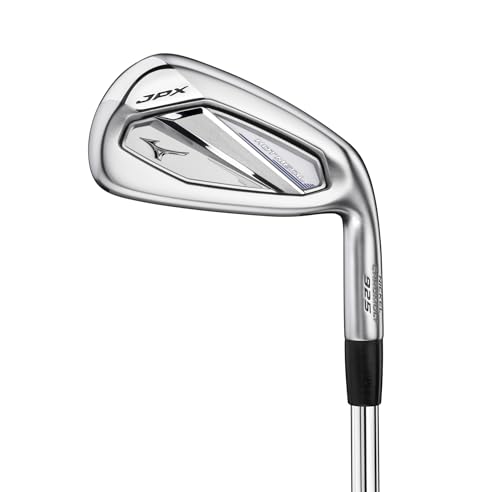
6. Mizuno JPX 925 Hot Metal
Mizuno built the Hot Metal line for golfers who want real distance technology without a head that looks like a shovel at address. It pairs a thin, hot face with strategic perimeter weighting, all wrapped in a profile that’s noticeably more compact than most distance-first cavity backs.
Reviewers consistently note that it launches higher and carries farther than its compact look suggests, which is the entire design goal: distance gains that don’t announce themselves. It splits a real difference in the category, where most distance-focused cavities get bulkier as they get longer.
The tradeoff is that a golfer who wants maximum forgiveness over aesthetics will find a wider-soled, more overtly game-improvement iron does the job with less compromise.
Who should skip it: Golfers who prioritize forgiveness above every other spec. The compact shaping here trades away some of the margin a wider-bodied super game-improvement iron would offer.
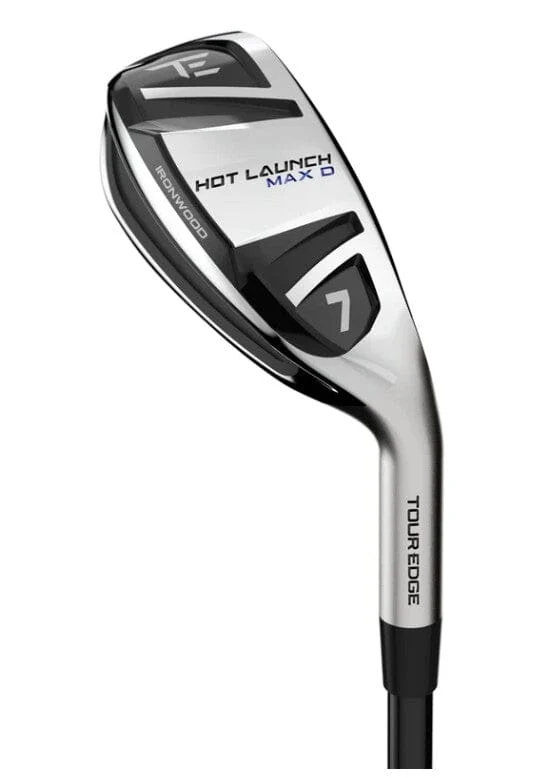
7. Tour Edge Hot Launch Max D
Tour Edge won the super game-improvement category outright in MyGolfSpy’s 2026 Most Wanted testing with the Hot Launch Max D, finishing in the top three for both distance and forgiveness against full-price competitors from the major brands, at a fraction of what Ping, Callaway, or Cobra charge.
The line ships as ironwoods rather than a traditional iron set: a hollow, hybrid-style head replaces the longer numbers, with true cavity-back irons taking over from the middle of the set down. That construction is exactly why it’s the widest-sole, most beginner-forgiving option here, built for a golfer who struggles to find the center of the face consistently rather than one refining an already-competent swing.
The honest tradeoff is looks and shaft variety. This isn’t a set a single-digit player would ever consider, and the stock shaft lineup is thinner than what you’d get from a major brand’s custom fitting cart.
Who should skip it: Anyone under a 15 handicap. The extreme forgiveness here is wasted once you’re finding the center of the face regularly, and you’ll want more workability than this shape allows.
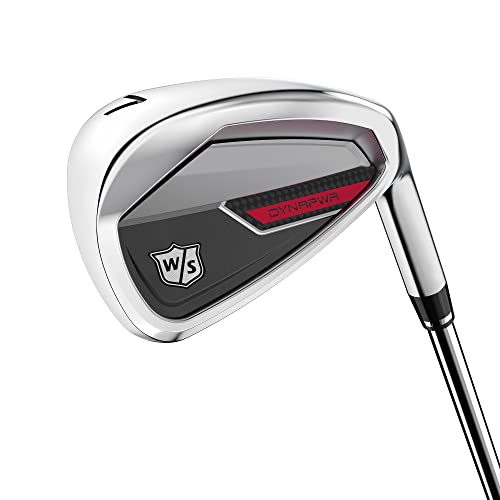
8. Wilson Dynapower
Wilson doesn’t get the shelf space of the big four manufacturers, but the Dynapower cavity back consistently shows up in value-category testing as a legitimate alternative rather than a budget compromise. It uses a carbon-fiber crown insert to save weight and reposition it low in the head, a distance trick borrowed from driver design that’s less common in irons at this price.
Golf Monthly’s testing has flagged it as a strong value pick for a golfer who wants real forgiveness and distance technology without paying a premium-brand markup. It won’t match the fitting-cart depth of a Ping or Callaway, but the core forgiveness is genuinely there.
The stock shaft options are limited compared to the majors, and resale value tends to run lower for the same reason: it’s a less-recognized name on the secondary market.
Who should skip it: Golfers who plan to get custom fit with multiple shaft options. The stock lineup here is thinner than a major brand’s fitting cart offers.
Frequently Asked Questions
What makes an iron a cavity back?
A cavity back iron hollows out the back of the clubhead and pushes the freed-up weight to the perimeter of the face, a design called perimeter weighting. That spreads the effective hitting area wider, so a strike away from the center still keeps most of its ball speed and direction. A blade or muscle back iron does the opposite, keeping the mass concentrated behind the center for feel and control at the cost of forgiveness.
Are cavity back irons only for beginners?
No. Cavity back covers a wide range, from super game-improvement sets built for total beginners to players'-distance cavities played by some tour pros. What all of them share is more forgiveness than a blade, not necessarily an easy or basic build. Plenty of single-digit handicappers play a cavity back iron because they'd rather keep ball speed on a mis-hit than have maximum shot-shaping control.
Do cavity back irons go as far as blades?
On a center strike, a good blade and a good cavity back travel similar distances, since loft and shaft do more of that work than head design. The real gap shows up on a mis-hit: a cavity back loses noticeably less ball speed and distance off the toe or heel than a blade does, which is the entire point of the design.
The Bottom Line
If you’re a mid-handicap golfer looking for the safest all-around pick, the Ping G440 is where we’d start. It’s the rare cavity back that doesn’t ask you to sacrifice looks for forgiveness. If you’re already a consistent ball-striker who wants insurance rather than a total forgiveness overhaul, the Titleist T200 or TaylorMade Qi35 both do that job without pushing you into a true game-improvement shape. None of these will fix a bad swing. A good cavity back just makes your good shots count for more and your bad ones cost you less.
Browse the full Best Golf Irons in 2026 roundup if you want game-improvement and players’ options side by side.
Cover image artificially generated for illustrative purposes.