
Best Irons for High Handicappers in 2026
Some links on this page are affiliate links. As an Amazon Associate, GolfThis earns from qualifying purchases at no extra cost to you.
You caught the last three approach shots on the toe, and each one came up 20 yards short and well right of the pin. That’s not a swing problem you fix by practicing harder before your next round. It’s an equipment problem: a blade or players’ iron has almost no forgiveness for a strike off-center, and a high handicapper mis-hits far more often than a scratch player does.
Game-improvement irons exist specifically to widen that margin. A bigger head, a lower and more forward center of gravity, and mass moved to the perimeter of the clubface all work toward the same goal: a mis-hit that would cost 20 yards and a wild miss on a blade instead comes out playable.
We weighted these picks on independent robot testing for forgiveness and dispersion, real degree of game-improvement (some entries here are further along that spectrum than others), and price against how much of the technology you’re actually getting.
How we picked: We don’t claim to have hit every set here. These picks come from MyGolfSpy’s 2026 robot and player testing, manufacturer specs, and aggregated feedback from high-handicap golfers and fitters. Where we’ve had a set in hand, we say so.
These are pulled from the wider Best Golf Irons in 2026 market with one filter: maximum forgiveness for players who need the most help, not a mixed list balancing that against shot-shaping control. Jump to the comparison table if you just want the picks.
See also: Best Irons for Mid-Handicappers in 2026 — the same idea for players who find the center more often.
Best Irons for High Handicappers in 2026 Comparison Table
| Irons | Category | Best For | Price (7-piece) |
|---|---|---|---|
| PING G740 | Super game-improvement | Maximum forgiveness | $$$$ |
| Tour Edge Hot Launch Max D | Super game-improvement | Value SGI | $$$ |
| Callaway Quantum Max OS | Super game-improvement | Mid-to-high handicap | $$$$ |
| TaylorMade Qi Max | Game-improvement | Easy launch, premium feel | $$$$ |
| Wilson DYNAPWR | Game-improvement | Value, high MOI | $$$ |
| Mizuno JPX 925 Hot Metal | Game-improvement | Forgiveness with better feel | $$$$ |
| Callaway Rogue ST Max | Game-improvement | Prior-gen value | $$ |
| Takomo 101 MKII | Game-improvement | Budget, direct-to-consumer | $$ |
1. PING G740
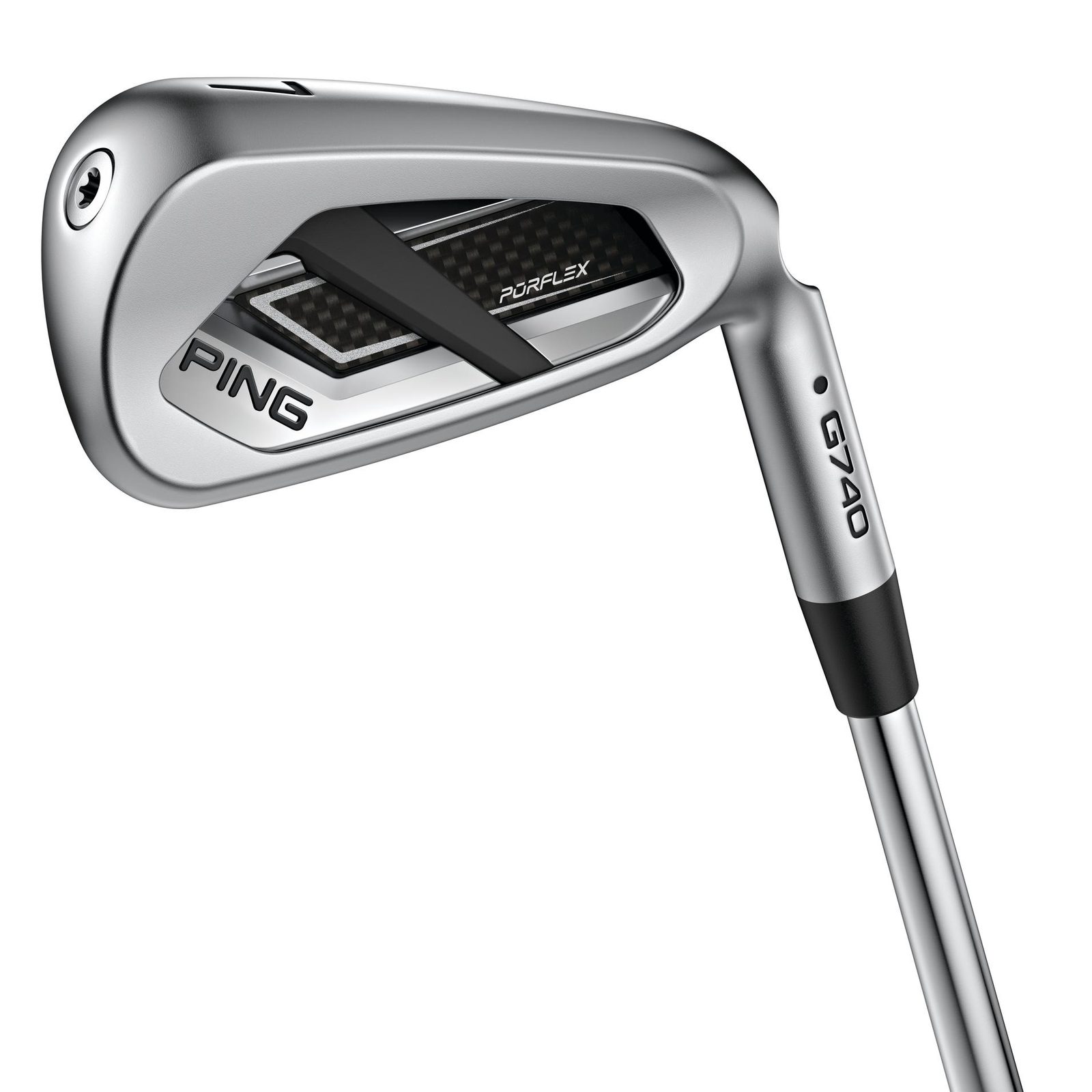
The G740 is, by PING’s own design brief, unapologetically super game-improvement, and independent testing backs up that positioning. A sole 22 percent wider and a blade 3 percent longer than the already-forgiving G440 lower the center of gravity further and raise the moment of inertia to levels PING calls the most forgiving iron it’s made.
Early dispersion testing found shot groupings 8 to 12 percent tighter than the previous G430 generation, even on inconsistent strikes, which is the actual promise of a super game-improvement iron: not longer good shots, but shorter misses. Testers also reported 10 to 15 yards more carry than their gamer sets, driven partly by strong lofts.
This is the deepest end of the forgiveness pool on this list, and it looks the part. A better player picking this up will find it chunky and un-workable, which is the correct trade for the golfer it’s built for.
Who should skip it: Single-digit or low double-digit handicappers. The G440 or a players’-distance iron gives up less shot-shaping for similar forgiveness gains.
2. Tour Edge Hot Launch Max D
Hot Launch Max D won MyGolfSpy’s 2026 Most Wanted testing outright in the super game-improvement category, finishing top three in both distance and forgiveness and taking the category win for accuracy. That combination, the top score for accuracy alongside strong distance, is unusual. Most SGI irons that launch this easily give up some dispersion control to get there.
At $599.99 for the tested configuration, it undercuts the majors on this list by a wide margin, while beating several of them on the actual test data.
Tour Edge carries a smaller retail footprint than PING or Callaway, so trying before buying is less convenient, and resale value tends to run lower for direct-value brands regardless of how the clubs perform.
Who should skip it: Golfers who want to test-swing in person before buying. Tour Edge’s dealer network is thinner than the majors above.
3. Callaway Quantum Max OS
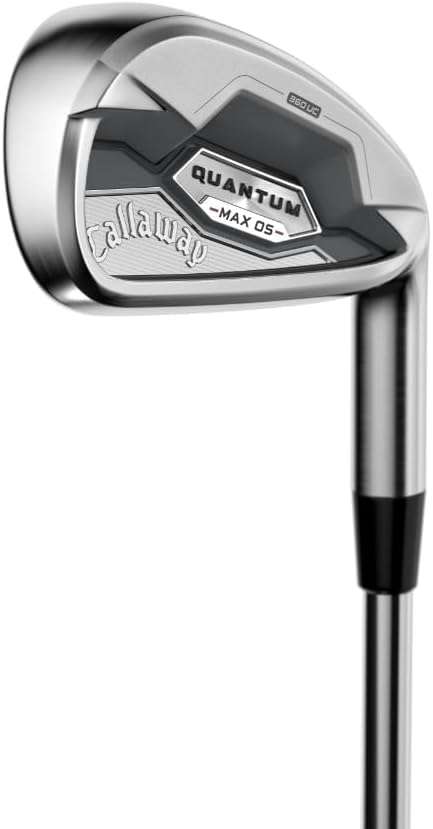
Quantum Max OS is Callaway’s current super game-improvement flagship, built around an AI-optimized face and a 360-degree undercut cavity aimed at preserving ball speed on strikes well off the center. The sole is specifically shaped to improve turf interaction, which matters more for a high handicapper whose contact point on the ground varies shot to shot.
It’s positioned for mid-to-high handicappers specifically, a slightly narrower target than the PING G740’s maximum-forgiveness brief, which shows up as a marginally more refined look and feel without giving back much forgiveness.
Pricing sits at the top of this list, in line with Callaway’s flagship positioning rather than a value play.
Who should skip it: Budget-conscious buyers. The performance is real, but the Tour Edge or Wilson entries below deliver a similar handicap range of forgiveness for meaningfully less.
4. TaylorMade Qi Max
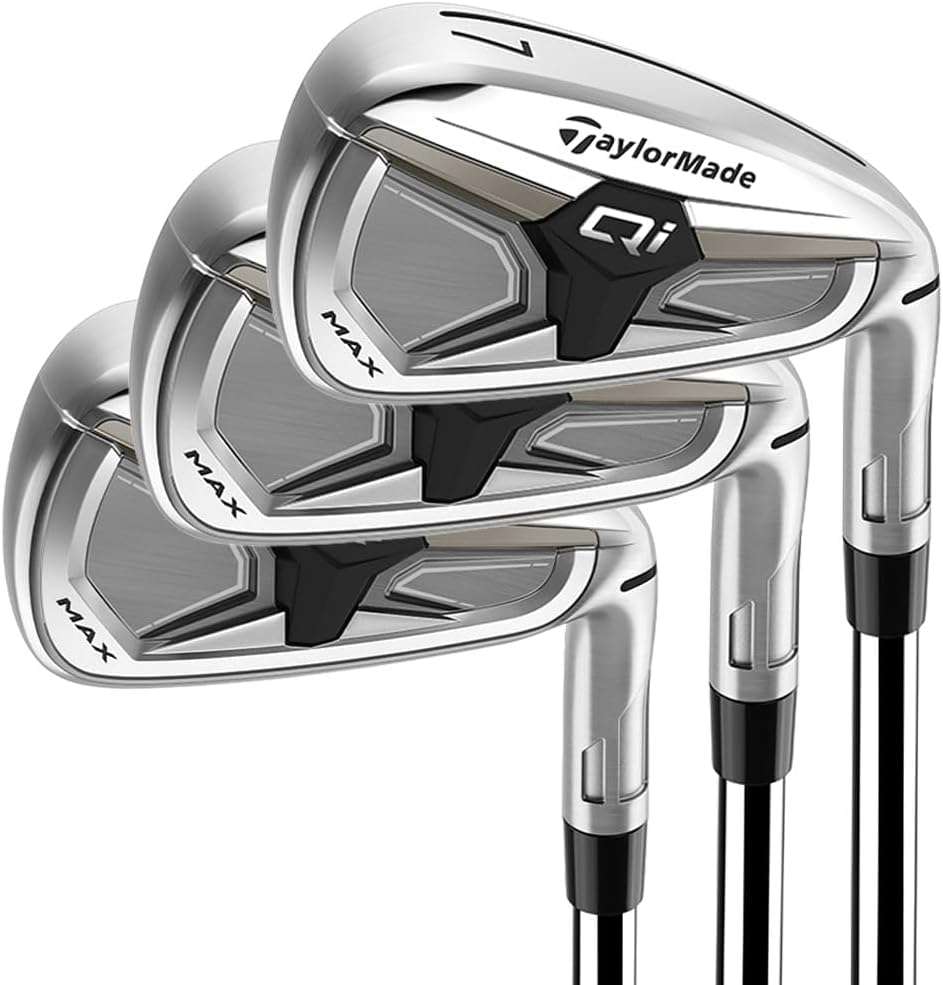
Qi Max sits a step down the forgiveness spectrum from the true SGI entries above, rated elite for both forgiveness and feel, aimed at players who need real help getting the ball airborne without wanting a club that looks oversized in the bag. It’s the pick for a high handicapper who cares how the set looks at address as much as how it performs.
The trade for that refined look is premium pricing. You’re paying for TaylorMade’s fit and finish alongside the forgiveness, not just the forgiveness alone, and that shows up clearly against the Tour Edge or Wilson options at a similar performance level.
Testers consistently note how easy these are to launch, which is the specific problem a lot of high handicappers have with lower-lofted, longer irons.
Who should skip it: Anyone who’s decided price matters more than brand and finish. The Wilson DYNAPWR delivers comparable forgiveness for notably less.
5. Wilson DYNAPWR
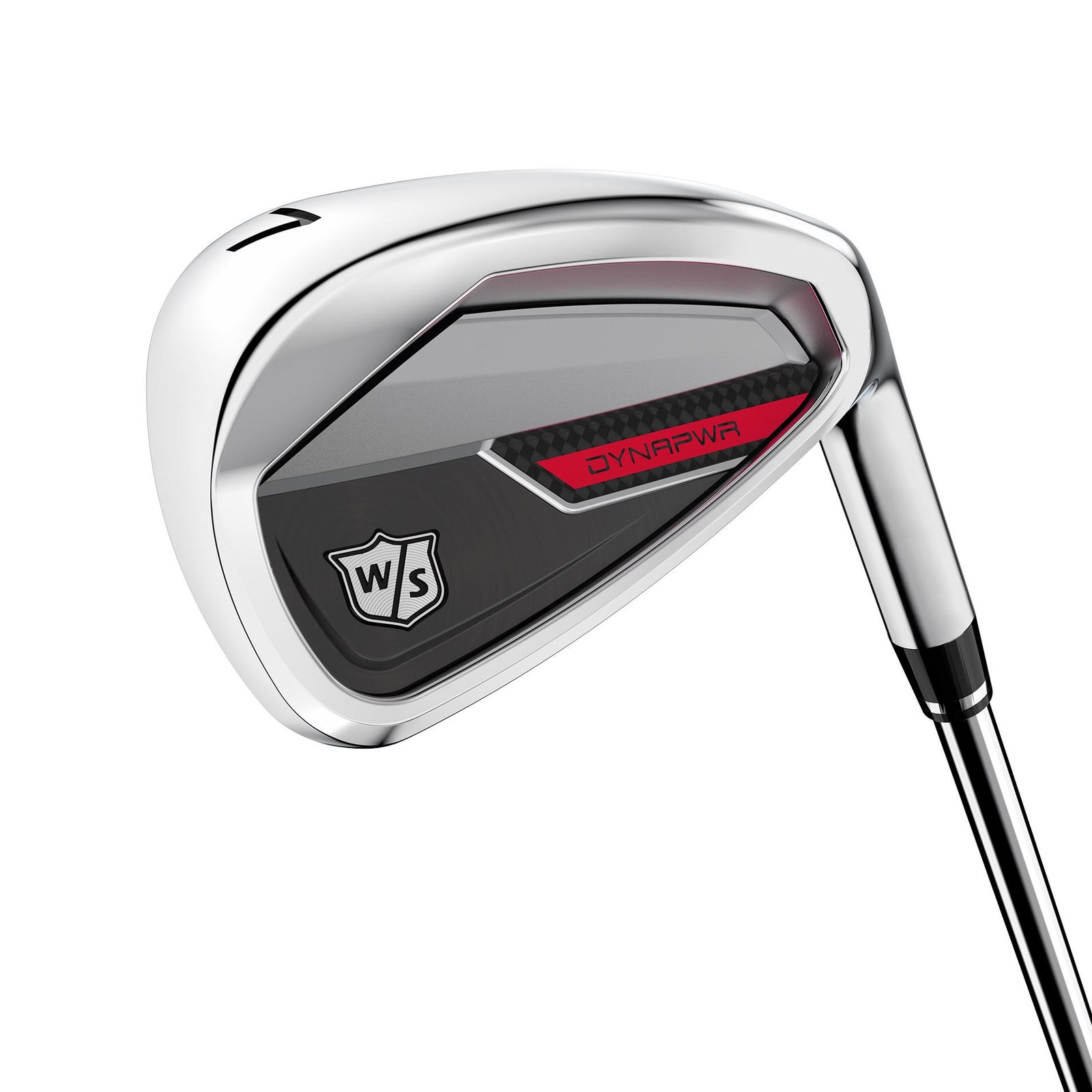
DYNAPWR is built around one job: transfer as much energy to the ball as possible regardless of where on the face contact happens, using a high-MOI head and a low, forward center of gravity for higher launch and a steeper landing angle. Player reviews from actual high-handicap testers back that up directly, describing smooth feel and appealing looks at address alongside the forgiveness.
At around $899 for a seven-piece set, it undercuts the flagship brands on this list by several hundred dollars without giving up meaningful distance or forgiveness: real game-improvement technology at a price a recreational golfer doesn’t have to justify twice.
It’s a newer entrant in the iron market than PING or Callaway, so its resale and long-term reputation are less established.
Who should skip it: Golfers who prioritize resale value and brand longevity. The performance is proven; the long-term track record is shorter.
6. Mizuno JPX 925 Hot Metal
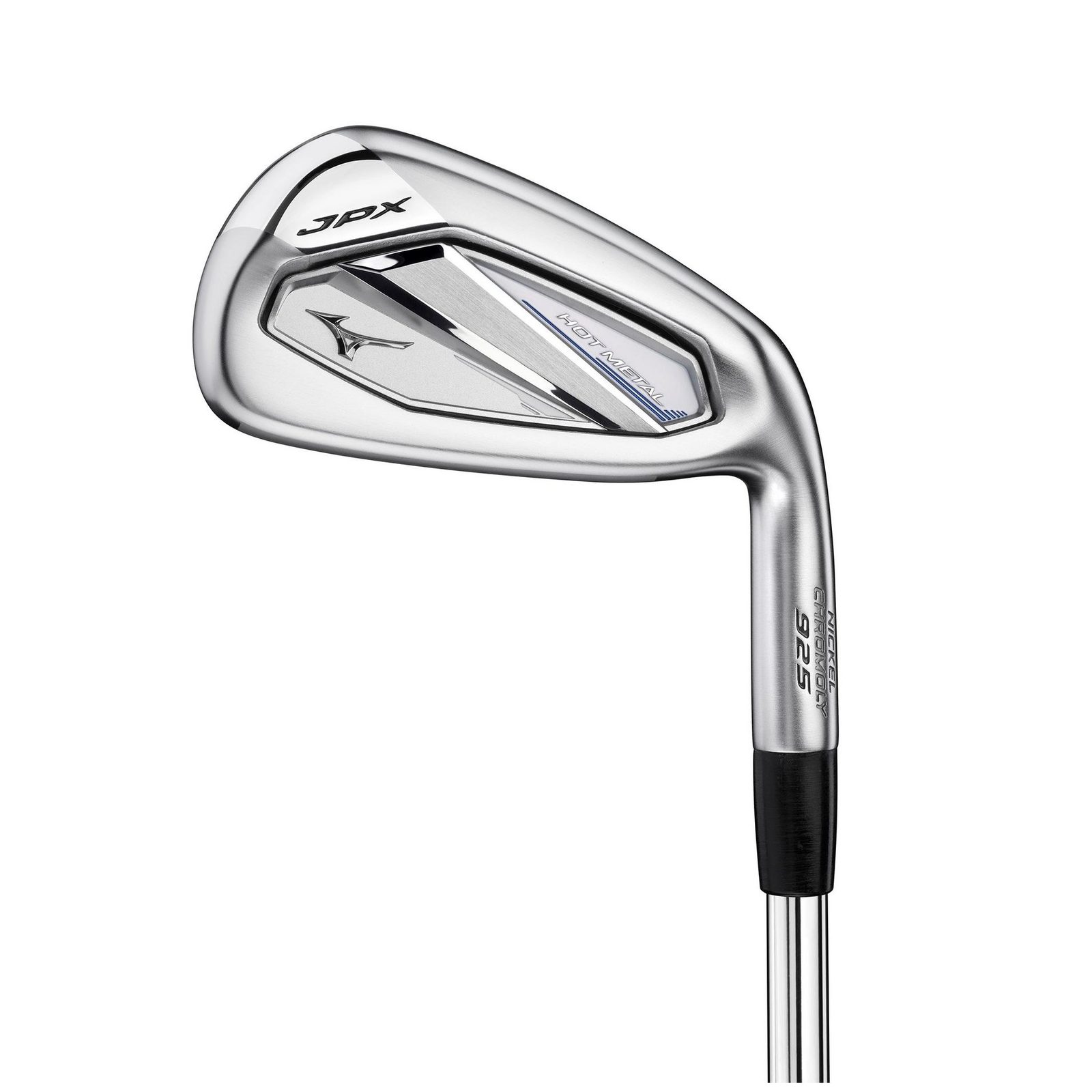
Hot Metal is Mizuno’s answer to a specific complaint about game-improvement irons: that maximum forgiveness usually means giving up feel entirely. It’s named consistently among the most forgiving irons on the market that still carry Mizuno’s reputation for feedback off the face, from a company built on players’ irons and forged feel.
A high handicapper who’s tried a true super game-improvement iron and found the feel too dead or clicky has an option here that keeps most of the forgiveness while giving up less of the sound and feedback at impact.
It’s priced at the premium end of game-improvement, reflecting Mizuno’s positioning rather than the forgiveness numbers alone.
Who should skip it: Golfers who want the absolute maximum forgiveness available. The PING G740 or Tour Edge Hot Launch Max D go further in that specific direction.
7. Callaway Rogue ST Max
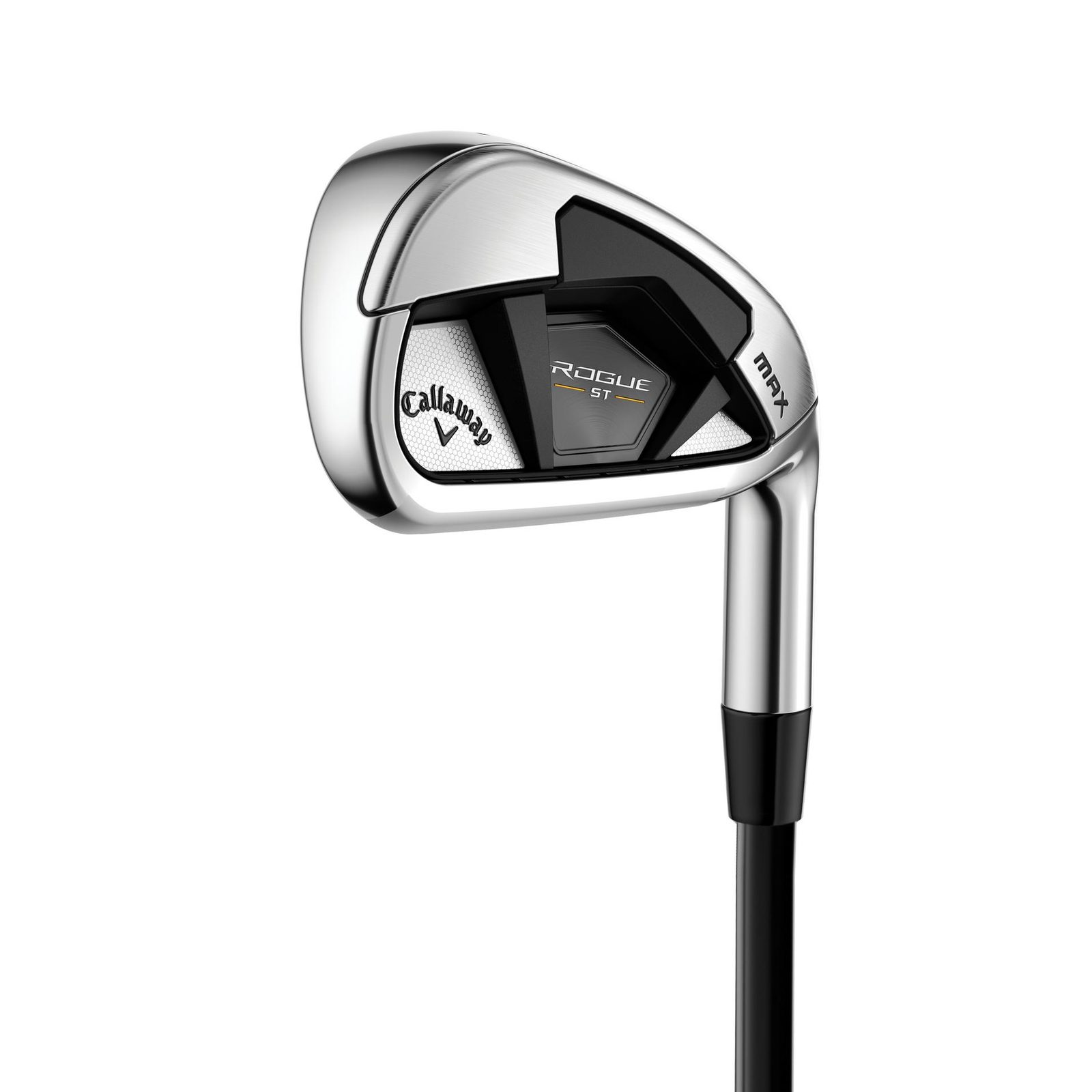
The Rogue ST Max is a previous-generation Callaway set, now discounted as the newer Paradym line has taken its place at the top of the catalog, and it delivers roughly 95 percent of the forgiveness and distance of Callaway’s current $1,100 flagship at well under half the price. It’s the strongest value argument on this list from a major brand.
Buying last year’s technology from a major manufacturer is consistently the best value play in golf equipment, because the year-to-year gains are incremental while the price gap between generations is not. A high handicapper is unlikely to feel the difference the newest generation adds.
The trade is availability. Prior-generation stock varies by retailer and will eventually run out as it’s replaced entirely by newer inventory.
Who should skip it: Anyone who wants the manufacturer’s current-generation warranty and full custom-fit options. Availability on a discontinued line is not guaranteed to last.
8. Takomo 101 MKII
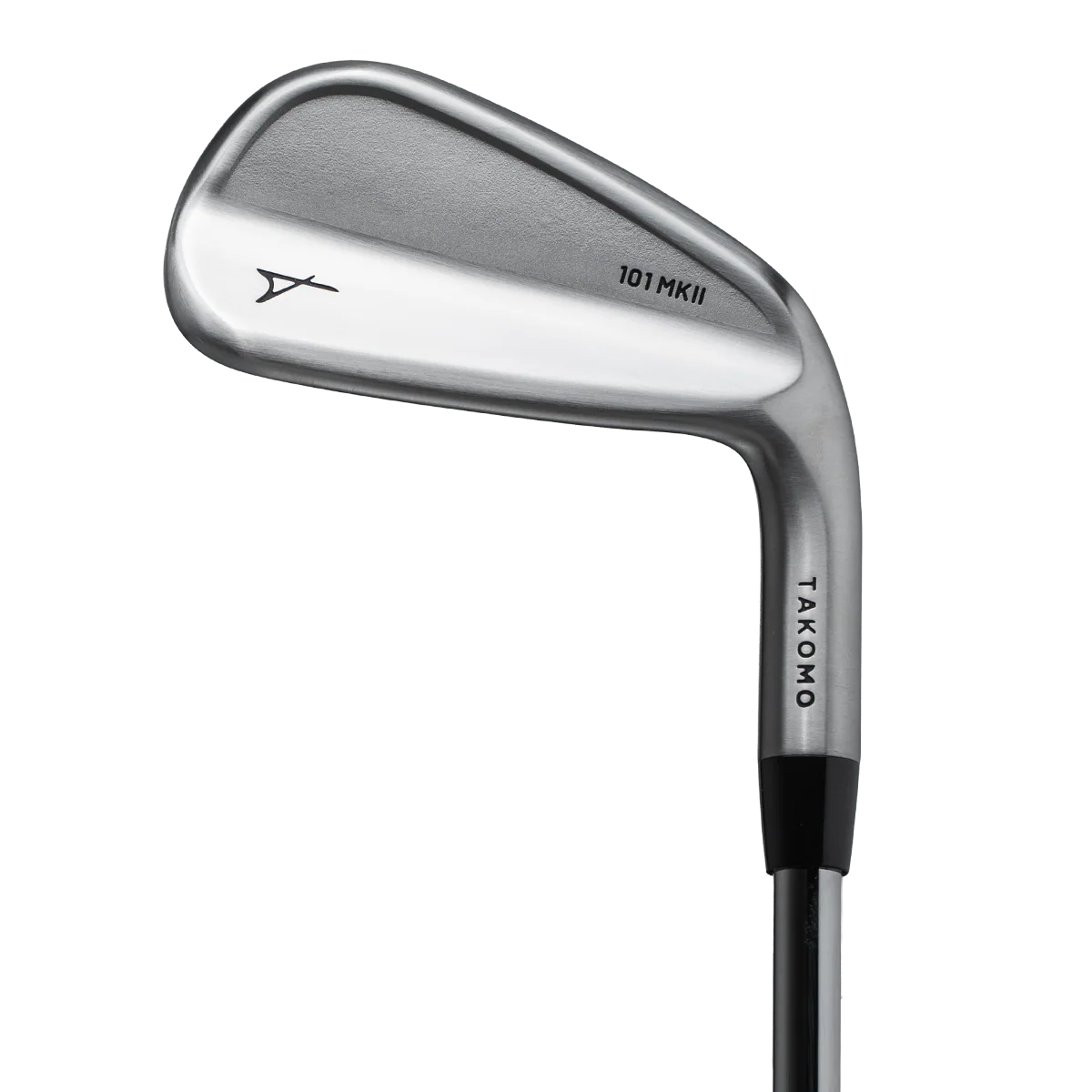
Takomo sells direct-to-consumer, and the 101 MKII is the clearest example of what that model buys: sound and feel reviewers call top-tier, real distance and forgiveness, at a price around $83 per club, well below what a comparable major-brand set costs. It’s also been named MyGolfSpy’s Best Game-Improvement Iron outright in 2026 testing, not just best for the price.
Most budget options settle for “good enough for the price.” This one tested as the best in its category on accuracy, distance, and forgiveness combined, sold at a fraction of the majors’ pricing because there’s no retail markup or pro shop margin in the way.
The trade is the same as any direct-to-consumer brand: no in-store fitting, and a thinner track record than a 50-year-old manufacturer.
Who should skip it: Golfers who want an in-person fitting before committing, or who value buying from a brand with decades of history behind it.
Frequently Asked Questions
What's the difference between game-improvement and super game-improvement irons?
Degree, not category. Game-improvement irons add forgiveness and launch over a players' iron while still looking roughly like a golf club. Super game-improvement irons push further: wider soles, thicker toplines, more offset, and a bigger head, aimed specifically at golfers who need maximum help getting the ball airborne and keeping mis-hits playable.
Will forgiving irons actually lower my scores?
For a high handicapper, usually yes, and the mechanism is specific: a wider sweet spot means a mis-hit that would have been a chunked or bladed shot with a blade iron instead comes out playable. That turns a double bogey into a bogey more often than it turns a bogey into a par. Forgiveness caps your bad shots. It doesn't make your good shots better.
Should I buy the newest model or last year's?
Last year's model, usually. Iron technology moves incrementally year to year, and a previous-generation set from a major brand often drops 30 to 50 percent in price within a year of the new release while keeping the vast majority of the forgiveness and distance. The premium for "current" buys marginal gains most high handicappers can't feel yet.
The Bottom Line
If you’re mis-hitting badly and need the most forgiveness available, start with the PING G740 or Tour Edge Hot Launch Max D. If budget matters as much as forgiveness, the Takomo 101 MKII tested as the best in its category at a fraction of the major-brand price. Whatever you pick, get fitted for shaft flex and length before you buy. The head does less for your score than a shaft matched to your actual swing speed.
Cover image artificially generated for illustrative purposes.