
Best Golf Rangefinders in 2026
Some links on this page are affiliate links. As an Amazon Associate, GolfThis earns from qualifying purchases at no extra cost to you.
You’re standing 160 yards out, guessing between your 7-iron and your 8-iron because the sprinkler head says one number and your gut says another. A rangefinder ends that guess. The only real decision left is which one, because the category runs from $60 pocket lasers to $600 hybrid units with GPS overlays and club recommendations built in.
Raw yardage accuracy is not where these devices actually separate. Independent testing consistently finds budget and premium lasers within a yard or two of each other on a clean look at the flag. What separates them is lock-on speed, slope compensation, glass clarity in bad light, and how much information they layer on top of the number.
We weighted these on accuracy against independent test data, lock-on speed and usability under real playing conditions, and whether the feature set matches the price rather than padding it.
How we picked: We haven’t field-tested every unit on this list ourselves. These picks come from independent testing publications, manufacturer specs, and aggregated player feedback. Where we’ve had a unit in hand, we say so.
Jump to the comparison table if you just want the picks.
See also: Are Rangefinders Worth It?
Best Golf Rangefinders in 2026 Comparison Table
| Rangefinder | Type | Range | Slope | Price |
|---|---|---|---|---|
| Bushnell Pro X3+LINK | Laser | 1,300 yd | Yes, switchable | $$$$ |
| Garmin Approach Z30 | Laser + AR overlay | 450 yd | Yes | $$$$ |
| Voice Caddie SL3 | Laser + GPS hybrid | 800 yd | Yes | $$$$ |
| Precision Pro NX9 | Laser | 400 yd | Yes, switchable | $$ |
| Nikon Coolshot 20i GIII | Laser | 500 yd | Yes | $$ |
| TecTecTec VPRO500 | Laser | 540 yd | No | $ |
| GoGoGo Sport GS03 | Laser | 650 yd | Yes | $ |
1. Bushnell Pro X3+LINK
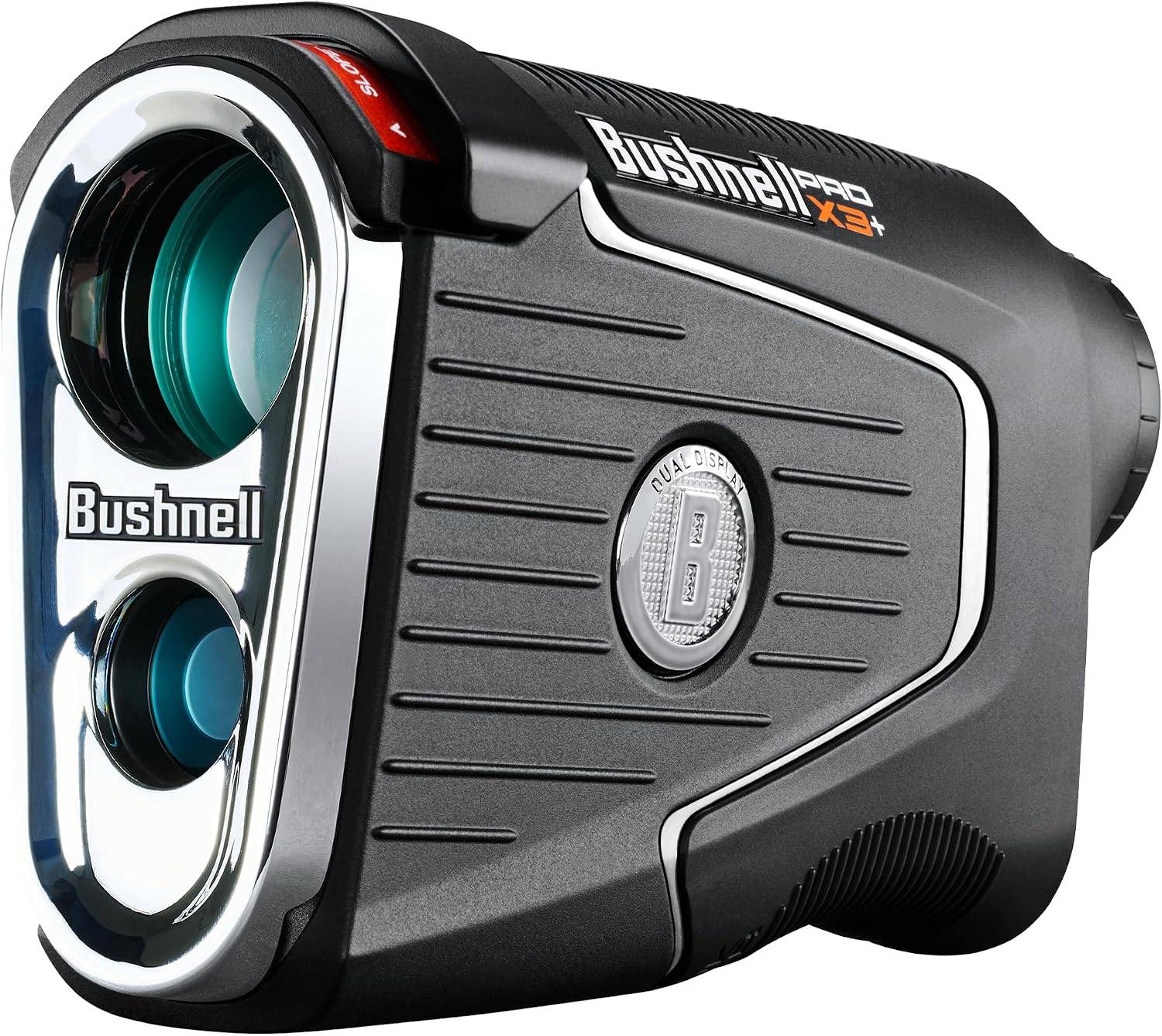
The Pro X3+LINK is the rangefinder with the fewest compromises, and the price reflects that. A 1,300-yard range, 7x magnification, IPX7 waterproofing, and Bushnell’s “Elements” system, which folds elevation, temperature, and barometric pressure into its slope-adjusted number rather than just accounting for the hill.
The standout feature is the LINK integration: paired with a Foresight Sports launch monitor session, it can surface club recommendations based on your own measured carry distances rather than generic averages. That’s a genuinely different feature from anything else on this list, not just a faster version of the same laser.
None of that is necessary to play a good round of golf. It’s necessary if you want the single most capable unit on the market and are willing to pay for capability you may only use in specific conditions.
Who should skip it: Casual and once-a-month golfers. The LINK ecosystem and Elements data are wasted if you’re not tracking your own launch numbers.
2. Garmin Approach Z30
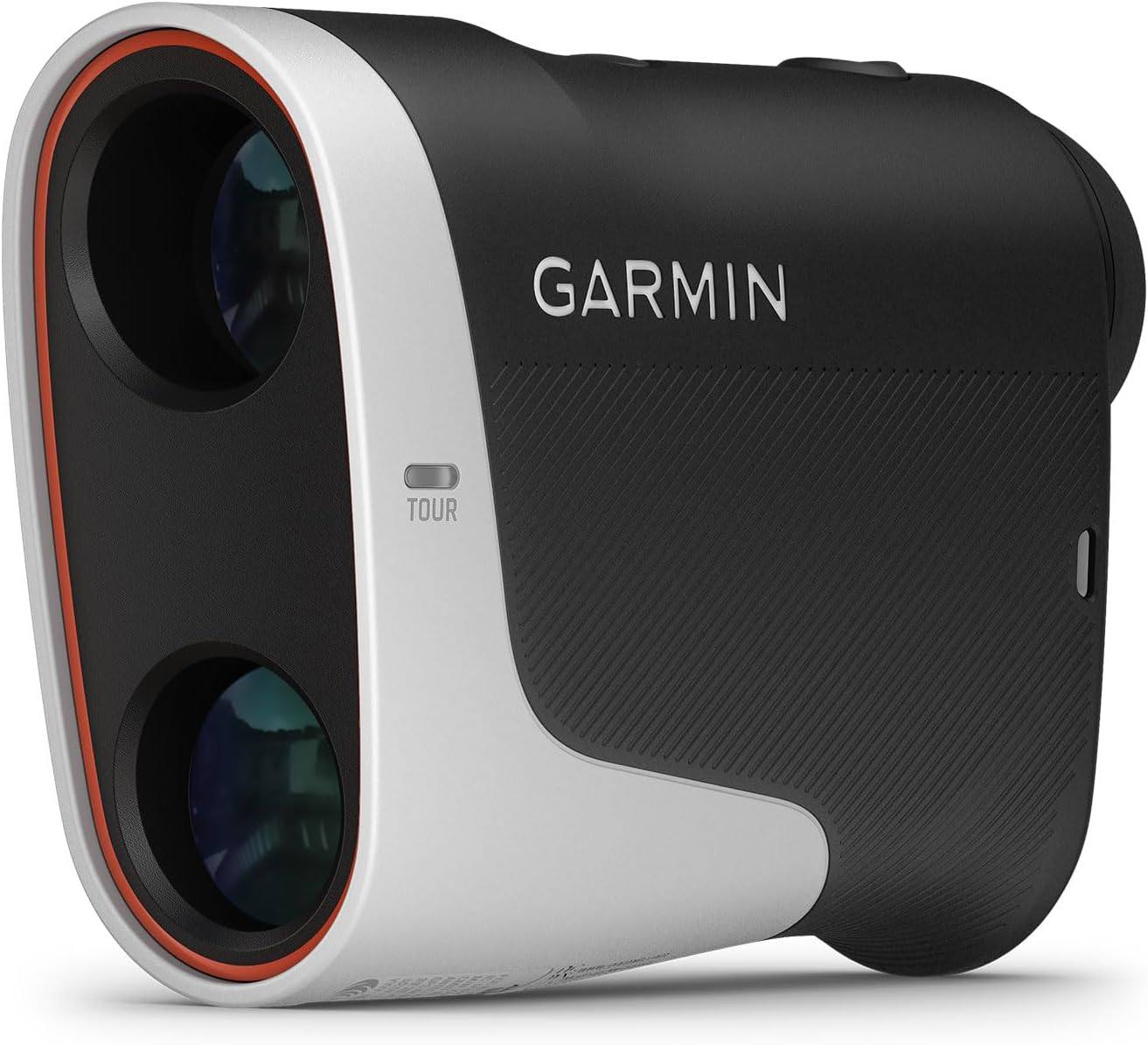
The Z30’s transparent OLED overlay puts the yardage directly in your line of sight through the eyepiece, so you’re reading the number while still looking at the flag instead of looking away and back. Reviewers consistently call it out as the feature that changes how the device actually gets used on course.
Range tops out at 450 yards, noticeably shorter than the Bushnell or Voice Caddie, which is a real trade for a shorter number most golfers will never need past a par 5 tee shot anyway. Garmin’s ecosystem tie-in with its GPS watches and the Garmin Golf app is the other draw, syncing laser reads automatically if you already wear one.
It’s a laser-first device, not a hybrid. There’s no GPS course map layered on top the way the Voice Caddie offers.
Who should skip it: Golfers outside the Garmin ecosystem who want GPS overlay features. Buy the Voice Caddie SL3 instead.
3. Voice Caddie SL3
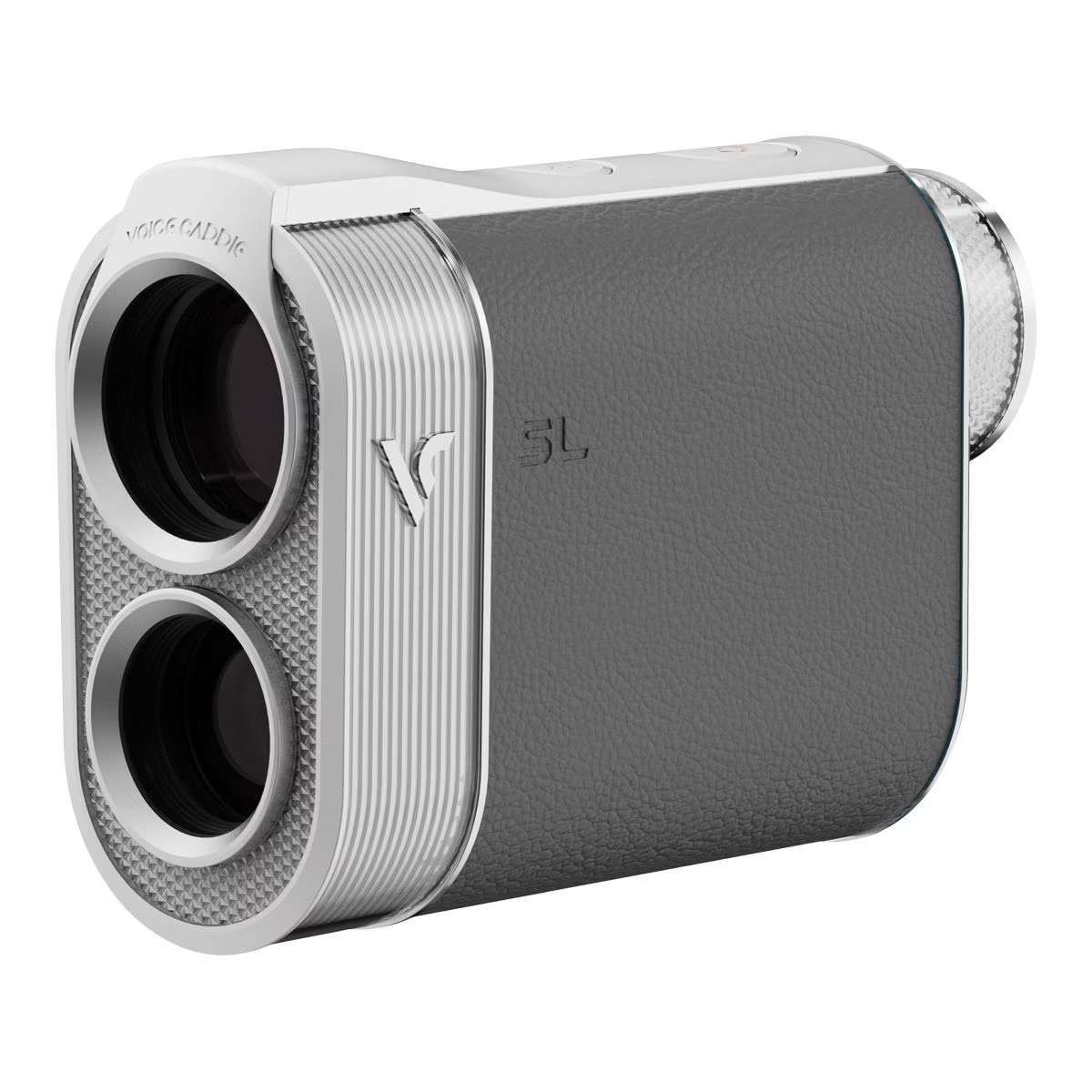
The SL3 is built to be the one device that replaces both a laser and a GPS watch, combining an accurate laser with a color touchscreen showing hole maps, green undulation, and hazard distances. Reviewers have called it the class of the field for a true all-in-one distance-measuring device, and it’s the only entry on this list that gives you GPS course data without a laser lock.
That breadth comes with a real trade-off some testers have flagged: laser accuracy that’s good but not quite class-leading on its own, because the unit is doing more jobs than a dedicated laser. If pure lock-on speed and precision are the priority, a laser-only unit edges it out.
At the top of this list’s price range, it’s a device you buy to replace two purchases, not to be the single best laser on the market.
Who should skip it: Anyone who already owns a GPS watch. You’re paying for a feature you have covered elsewhere.
4. Precision Pro NX9
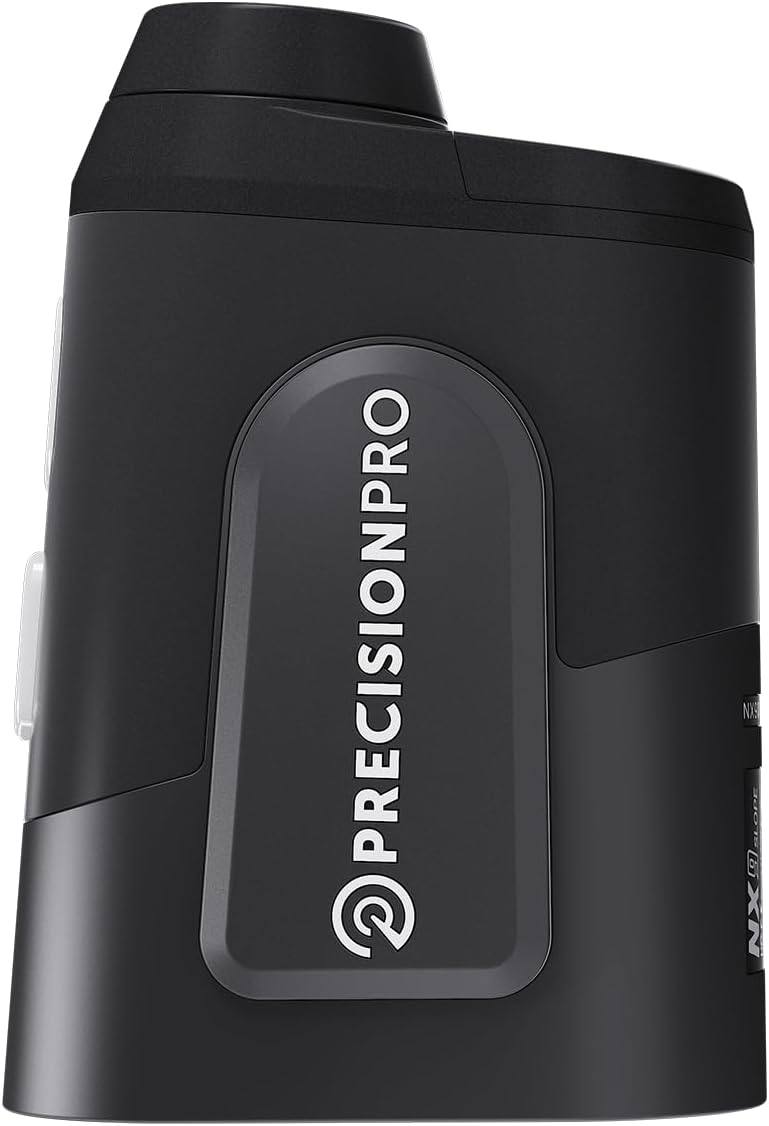
The NX9 is the clearest example of a rangefinder punching above its price. Certified accurate within a yard, switchable slope for tournament legality, and a built-in magnet for cart-bar mounting, all at meaningfully less than the Bushnell or Garmin units above it.
What you give up is polish, not accuracy. The 6x magnification is a step below premium glass, and the slope readout displays above the main distance number rather than integrated with it, which a couple of reviewers noted forces your eye to shift between two numbers instead of reading one.
For a golfer who wants a reliable, tournament-legal laser without paying for a GPS layer or an ecosystem tie-in, this is the value pick that doesn’t feel like a compromise.
Who should skip it: Golfers who play in low light often. The 6x glass and standard optics fall behind the Nikon and Bushnell in dusk conditions.
5. Nikon Coolshot 20i GIII
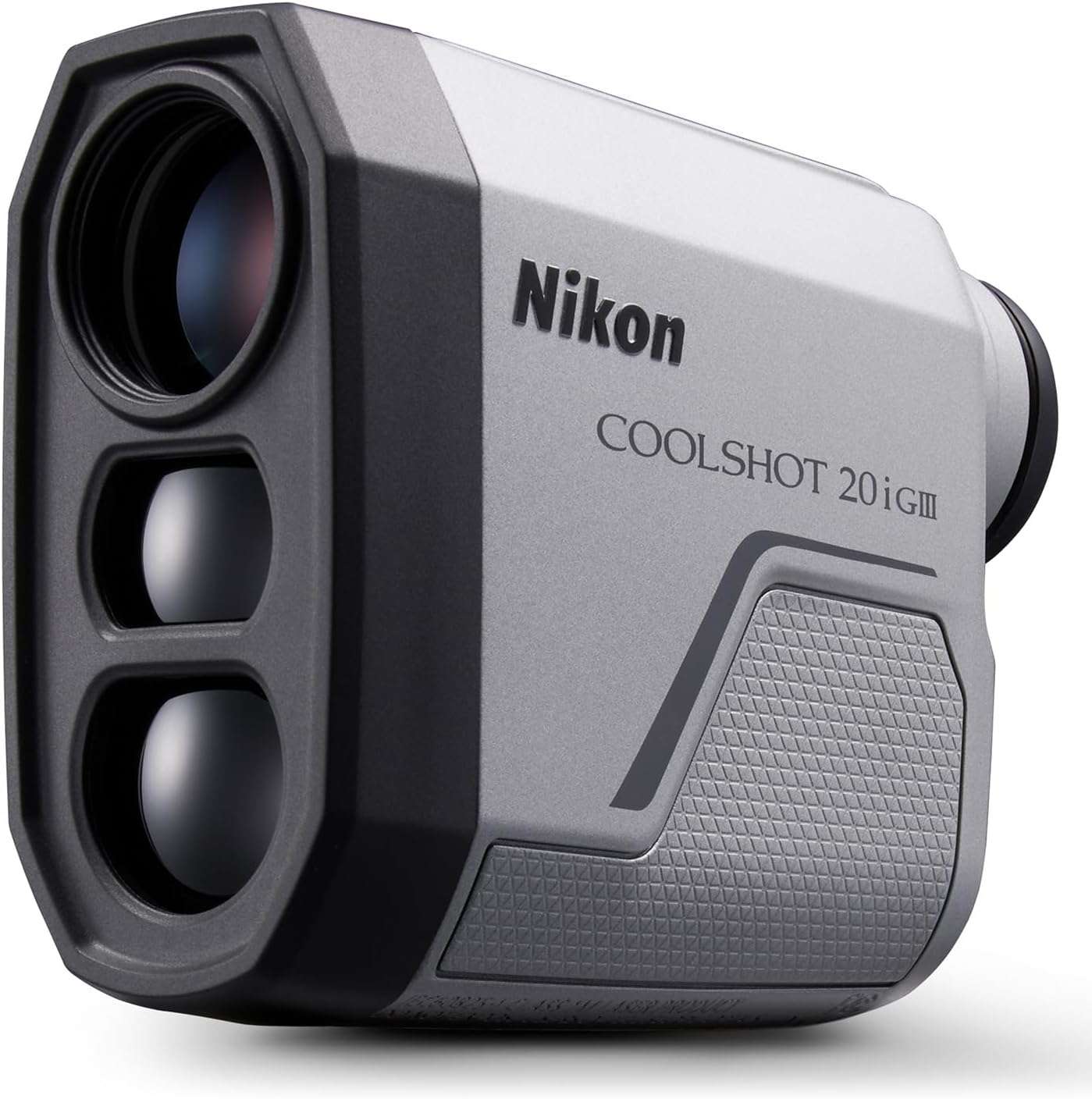
Nikon’s reputation is built on optics, not golf technology, and the Coolshot line is where that shows. The 20i GIII consistently gets called out for optical clarity ahead of its price point, small and light in the hand, and rainproof rather than merely water-resistant.
It’s a genuine entry-level-to-mid-tier unit rather than a stripped-down budget model. Slope compensation, a solid 500-yard range, and Nikon’s glass quality put it a step above the true budget lasers without approaching Bushnell or Garmin pricing.
The trade is features. No GPS layer, no ecosystem app, no club recommendation engine. It measures distance accurately and does very little else, which for a lot of golfers is exactly the point.
Who should skip it: Golfers who want app connectivity or shot tracking. This is a pure optical instrument, deliberately.
6. TecTecTec VPRO500
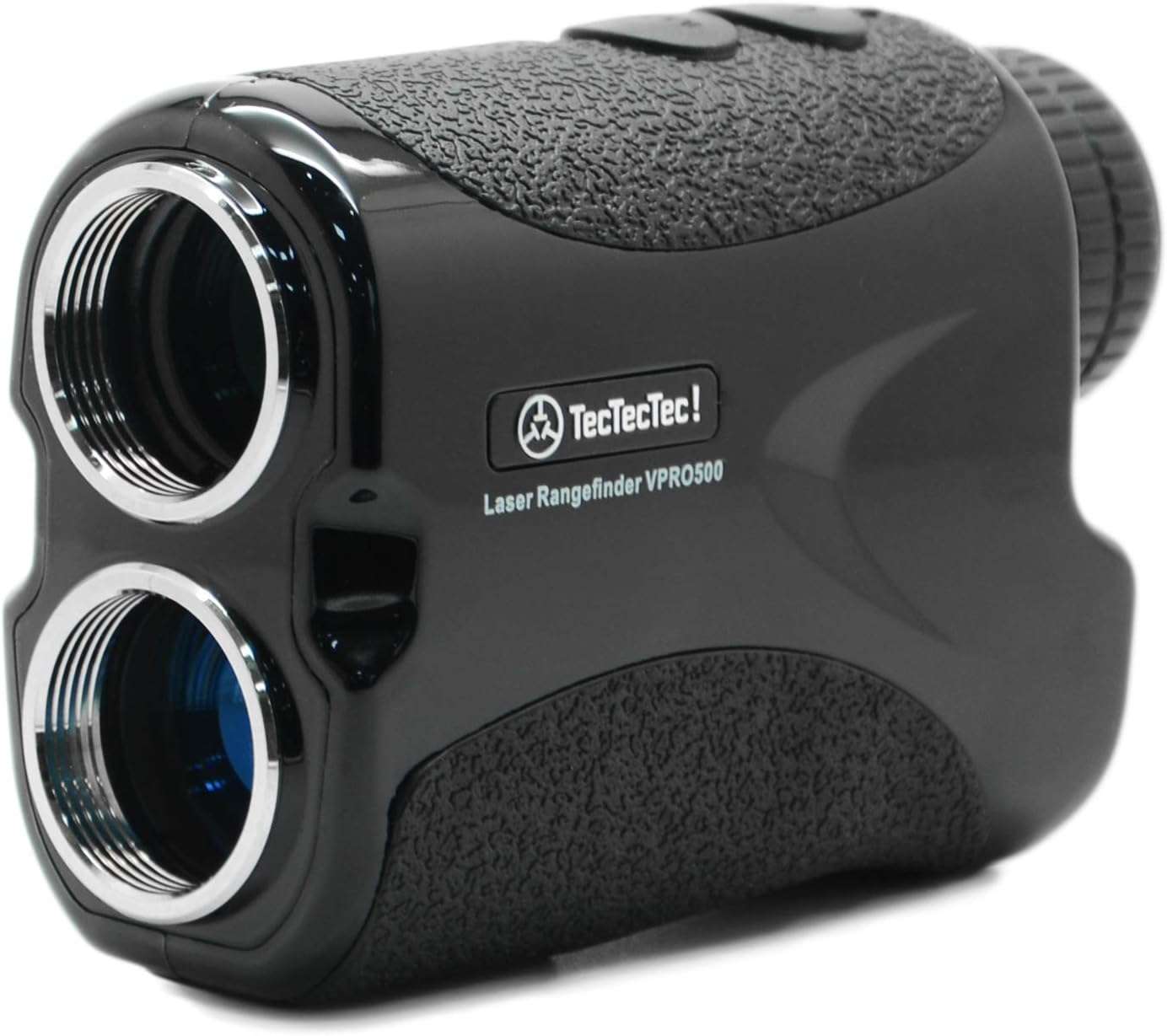
The VPRO500 is the rangefinder most often recommended as the first laser a golfer should buy, and independent testing backs that up: accurate within a yard, a pin-sensor mode that locks onto the flag even with trees or a cart path cluttering the background, and a scan mode for reading multiple distances quickly.
No slope compensation is the headline omission, which actually works in its favor for anyone who wants one device usable in both casual and tournament rounds without a switch to remember.
Build quality is where the price shows. It’s plastic-bodied rather than the rubber-armored housing on the pricier units, and it won’t survive being dropped on concrete the way a Bushnell will.
Who should skip it: Golfers who play in variable terrain and want elevation built into the number. Buy a slope-enabled model instead.
7. GoGoGo Sport GS03
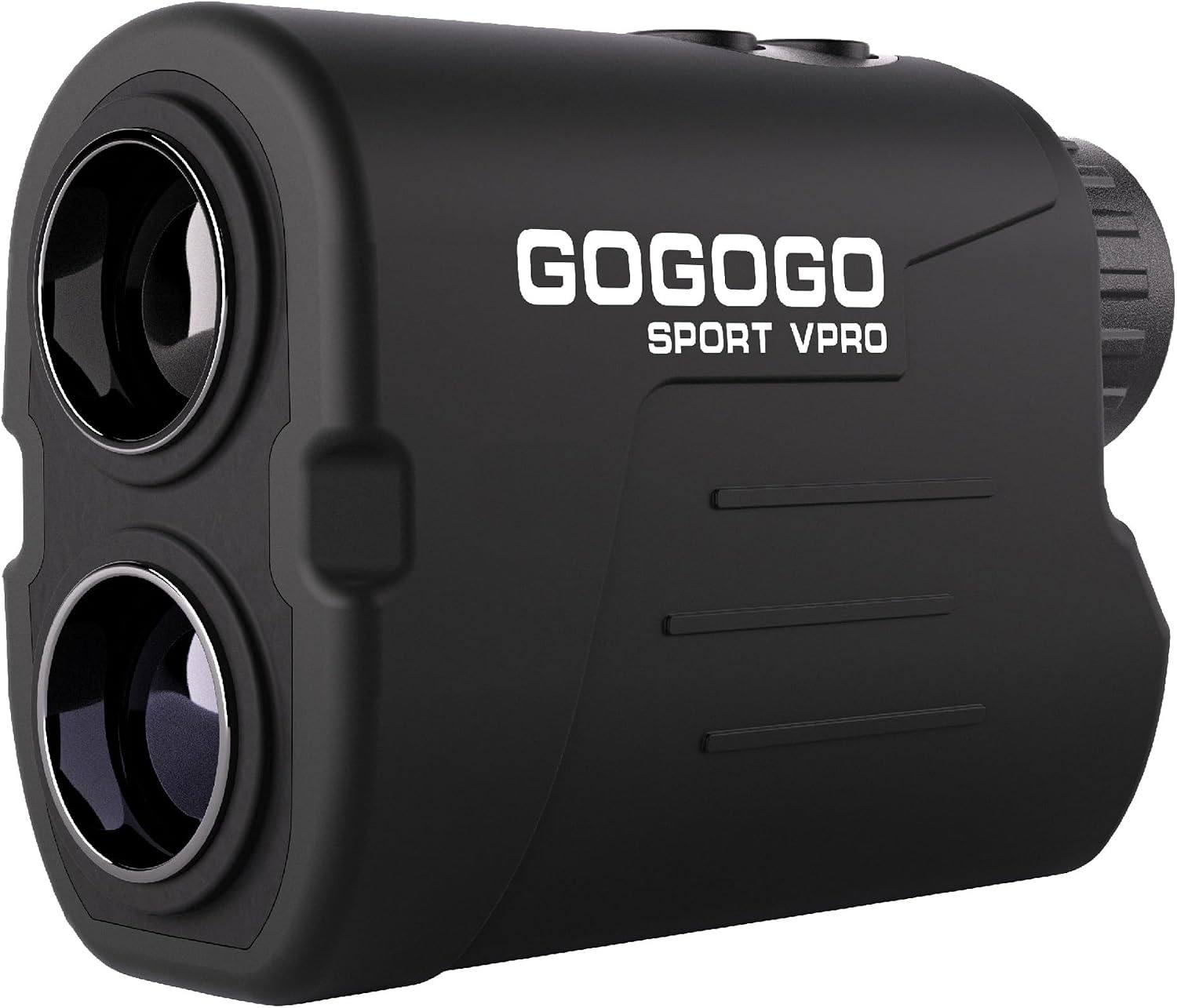
The GS03 is the cheapest rangefinder on this list with slope compensation included, which is the specific gap it fills. Most sub-$100 lasers skip slope entirely; this one doesn’t, at a price that undercuts the mid-tier units by a wide margin.
Accuracy holds up well under 150 yards, which covers the vast majority of approach shots most golfers actually face. Testers have noted it loses some precision at longer distances, which matters less for a wedge or mid-iron shot than it would off a par-5 tee.
This is a genuine budget option, not a toy. The trade-offs are real, but so is the price, and for a golfer deciding whether a rangefinder is worth owning at all, this is a low-risk way to find out.
Who should skip it: Long hitters who need reliable reads past 200 yards regularly. Precision drops off at range in a way the pricier units don’t share.
Frequently Asked Questions
Do I need slope on a rangefinder?
Slope adjusts the displayed distance for elevation change, which is genuinely useful for club selection on a hilly course. It's also illegal in USGA-sanctioned tournament play, so any rangefinder you use in competition needs a slope switch you can physically turn off, not just hide from the display.
Is a laser rangefinder better than a GPS watch?
They measure different things. A laser gives you the exact distance to whatever you point it at, usually the pin, accurate within a yard. A GPS device gives you distances to preset points on the hole (front, center, back of green, hazards) without needing to see the flag. A laser is more precise when you have a sightline; GPS works when you don't.
How much accuracy difference is there between a $60 rangefinder and a $600 one?
Less than the price gap suggests, for raw distance. Budget lasers tested within a yard or two of premium models on basic yardage. What the expensive units add is speed of lock-on, slope compensation, image stabilization, optical clarity in low light, and extra features like club recommendations or GPS overlays, not fundamentally more accurate numbers on a clear day.
The Bottom Line
If you’ve never owned a rangefinder, the TecTecTec VPRO500 or GoGoGo Sport GS03 will answer the question of whether you’ll actually use one for a fraction of what the premium units cost. If you already know you will, the Precision Pro NX9 is the value sweet spot with no real accuracy compromise. Spend Bushnell or Garmin money only once you’ve identified a specific feature, LINK integration, AR overlay, GPS hybrid, that you know you’ll use every round.
Cover image artificially generated for illustrative purposes.