
Best Drivers for Beginners and High Handicappers in 2026
Some links on this page are affiliate links. As an Amazon Associate, GolfThis earns from qualifying purchases at no extra cost to you.
You are aiming further left every round to keep the ball in play, and it is not working. The drive that starts down the middle finishes in the right rough, the drive you aim into the left trees finishes in the right rough too, and somewhere in there the driver stopped being a club you want to pull out of the bag.
That is not a reason to buy a new driver on its own. It is a reason to buy the right kind. Drivers built for beginners and high handicappers are a genuinely different design target from tour heads: weight sits low and far back so the ball climbs on its own, the face keeps more of its ball speed on a miss, and several of them lean the weighting toward the heel to take some curve off a slice. None of that improves your swing, but it does make your bad swings cost less.
So we ranked these on dispersion and off-centre stability rather than peak distance. Peak distance is measured on a centre strike, and if you struck the centre of the face reliably you would not be reading a list for high handicappers. A driver that carries 281 yards with 8.7 yards of left-to-right spread is a better club for this reader than one that carries 285 with 24 yards of spread, and the test data below separates those cases plainly.
How we picked: We have not swung every driver on this list ourselves. These picks come from published robot and player testing at Today’s Golfer and MyGolfSpy, manufacturer loft and shaft specs, and aggregated feedback from fitters and golfers playing them. Where we have had a club in hand, we say so.
This is part of our 2026 series, alongside Best Golf Drivers in 2026 and Best Irons for High Handicappers in 2026. Jump to the comparison table if you just want the shortlist.
Looking for the all-time picks? Our original best drivers for beginners and high handicappers review covers models from an earlier generation, most of which are no longer sold new.
Best Drivers for Beginners and High Handicappers in 2026 Comparison Table
| Driver | Best For | Loft Options | Why It Made The List | Price |
|---|---|---|---|---|
| PING G440 Max | Forgiveness above all | 9°, 10.5°, 12° | 8.7 yd tested dispersion | $$$$ |
| Callaway Quantum Max D | Slice help with speed | 9°, 10.5°, 12° | Draw bias, 281 yd carry | $$$$ |
| PING G440 SFT | A bad slice | 9°, 10.5° | Strongest draw bias here | $$$$ |
| Cobra OPTM Max-K | Getting the ball airborne | 10.5° | Highest tested peak height | $$$ |
| TaylorMade Qi4D Max | All-round forgiveness | 9°, 10.5°, 12° | High MOI, wide shaft range | $$$$ |
| Titleist GT1 | Slower swings | 9°, 10°, 12° | Deepest CG in the GT line | $$$$ |
| Cobra Darkspeed Adapt Max-K | Value on last year’s tech | 9°, 10.5°, 12° | Flagship design, budget price | $$ |
| Tour Edge Hot Launch E525 | The tightest budget | 10.5°, 12° | Offset head, lowest price here | $$ |
1. PING G440 Max
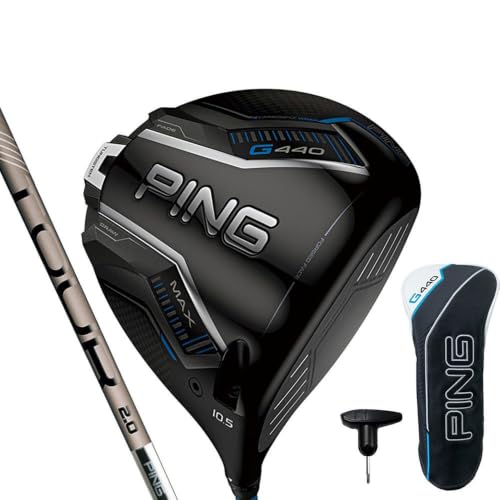
The G440 Max won Today’s Golfer’s 2026 forgiveness test with 8.7 yards of left-to-right dispersion, against 24.6 for the TaylorMade Qi4D Max and 21.8 for the Callaway Quantum Max D in the same test. It carried 281.4 yards doing it. Near the top of the field for distance and comfortably first for spread is why it leads this list.
PING has built the same club for years and improved it in small increments, and the G440 Max is where that approach pays off for a high handicapper. The head is large, the weighting is deep and low, and nothing about the setup asks you to do anything clever. Low-face strikes, which are the classic high-handicap driver miss, held their performance noticeably well in testing.
The stock shaft list runs from the 50-gram Alta CB Blue up to 65-gram Tour 2.0 and Tensei 1K Black options, so a slower swing and a faster one can both be fitted without a custom order. The catch is price: this is at the top of the market, and the G440 has been widely discounted at some retailers and barely at others, so it is worth shopping around.
Who should skip it: Golfers who want to shape shots deliberately. The G440 Max is built to resist curve in both directions, which is exactly what makes it hard to work the ball on purpose.
2. Callaway Quantum Max D
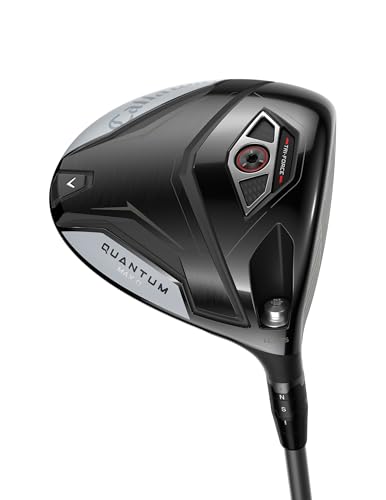
The Max D took third in the same Today’s Golfer forgiveness test that the G440 Max won, and it did so while posting the fastest ball speed of the group at 160.7 mph and a 281.1 yard carry. What separates it from the G440 Max is the draw bias: weight is pushed toward the heel to help the face square up, so the ball starts curving less to the right without you changing anything.
It is also the lowest-spinning driver on this list at 2,043 rpm in that test, which is a mixed blessing for this audience. Low spin means more roll when you find the fairway, but spin is also what keeps a ball in the air for a slower swing. That number suits a high handicapper who already generates decent speed more than it suits a beginner who does not.
Callaway’s whole 2026 Quantum line tested well, and the Max D is the one aimed squarely at the miss most golfers on this list are fighting.
Who should skip it: Golfers who hook the ball. Draw bias corrects one specific miss, and adding it to a swing that already turns the ball left makes the problem worse, not better.
3. PING G440 SFT
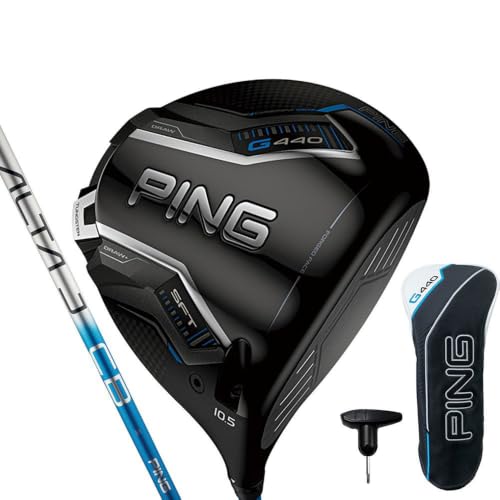
SFT stands for straight flight technology, and it is the most aggressive anti-slice head PING makes. It finished runner-up in Today’s Golfer’s 2026 forgiveness testing with 12.8 yards of dispersion and a 277.3 yard carry, which puts it within a few yards of its own Max sibling while doing substantially more to fight a left-to-right ball flight.
MyGolfSpy’s 2026 testing separately found the G440 SFT to be the most accurate driver in the high swing speed band, topping both fairways hit and straight shot percentage. A club that leads accuracy at 105 mph and fights a slice at 85 mph is unusual, and it makes this a rare pick that a beginner will not outgrow in two seasons.
The trade is the same one every draw-bias head makes, plus one specific to this model: it comes in 9 and 10.5 degrees only, so the 12-degree option that a genuinely slow swing wants is not available.
Who should skip it: Anyone whose miss is not a slice, and anyone who needs 12 degrees of loft to get the ball up.
4. Cobra OPTM Max-K
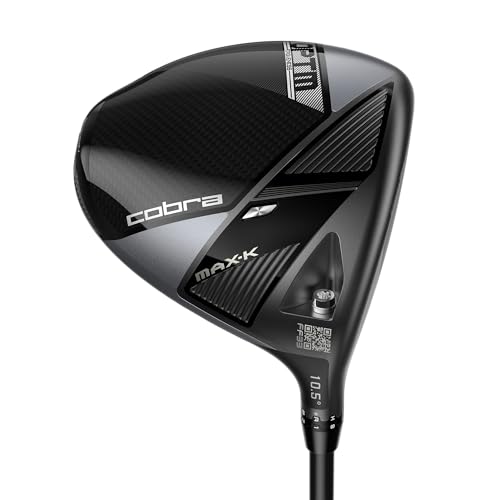
If your problem is that the ball will not get in the air, this is the club on the list built for you. The OPTM Max-K recorded the highest peak height of any driver in Today’s Golfer’s 2026 testing at 39.7 yards, launching at 13.3 degrees with 3,150 rpm of spin. That is a ball that climbs easily and stays up.
It pays for that in carry. At 260.2 yards it was the shortest driver in that test group, roughly 20 yards behind the G440 Max. For a golfer who currently hits low screamers that run out of energy, trading theoretical carry for real height is usually a gain rather than a loss. For anyone who already launches the ball fine, it is a straight loss.
Dispersion was solid at 17.9 yards, and it sits a clear step below the flagship prices above.
Who should skip it: Golfers who already launch the ball high, or anyone who balloons the ball into the wind. More height and more spin is the last thing that swing needs.
5. TaylorMade Qi4D Max
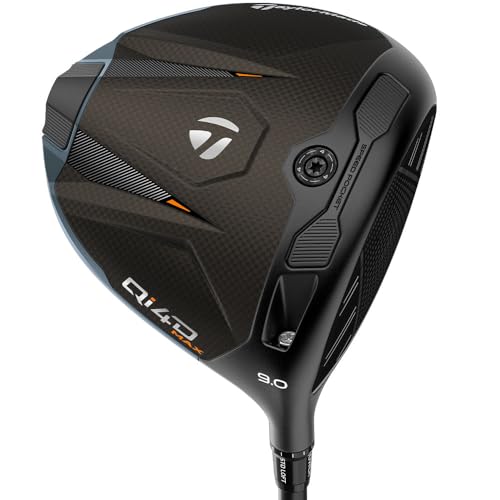
The Qi4D Max is the forgiveness-first head in TaylorMade’s 2026 line, and the platform underneath it tested as one of the most consistent in the field across every swing speed band. Ball speed of 160.1 mph and 276.1 yards of carry in Today’s Golfer’s testing put it in the same bracket as the PING and Callaway heads above.
Its weakness in that particular test was dispersion, at 24.6 yards the widest of the group, measured with the movable weight in the back position. That setting is the high-launch, high-forgiveness one, so the figure deserves context rather than dismissal, but it is the reason this sits fifth rather than first. A fitting session is worth more on this driver than on most of the others here.
The stock shaft options, True Temper Denali Frost Silver and Mitsubishi Vanquish, are genuinely different profiles rather than two paint jobs, which is not something every manufacturer at this price can say.
Who should skip it: Golfers buying off the rack with no intention of getting fitted. This head rewards having the weight and shaft matched to your swing more than the G440 Max does.
6. Titleist GT1
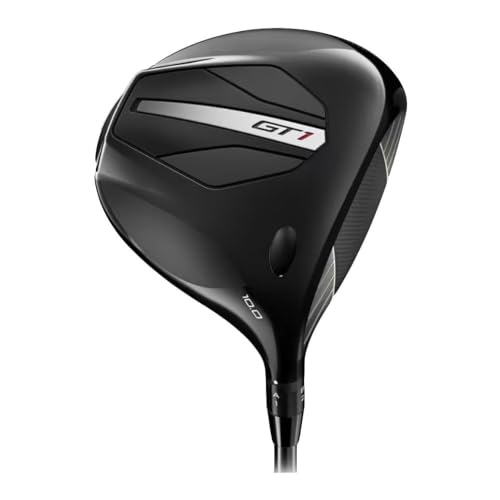
Titleist built the GT1 for the golfer its other drivers were never aimed at. It has the deepest centre of gravity in the GT family, which is the design decision that raises launch and adds stability, and it posted the top forgiveness rating in MyGolfSpy’s 2026 slow swing speed analysis. In Today’s Golfer’s testing it carried 276.5 yards with 17.6 yards of dispersion.
The reason it earns a place on a beginner list specifically is the shaft range: Titleist offers stock weights from 45 grams up to 58 grams. A beginner swinging 80 mph and a high handicapper swinging 95 need meaningfully different shafts, and most manufacturers make you special-order to get both.
It is the least forgiving head of the top three here on a pure dispersion basis, and it is priced with the flagships despite being the model aimed at slower swings.
Who should skip it: Golfers who want the lightest possible total weight. The GT1 launches high and forgives well, but a Cobra Air-X or an XXIO is a lighter overall package.
7. Cobra Darkspeed Adapt Max-K
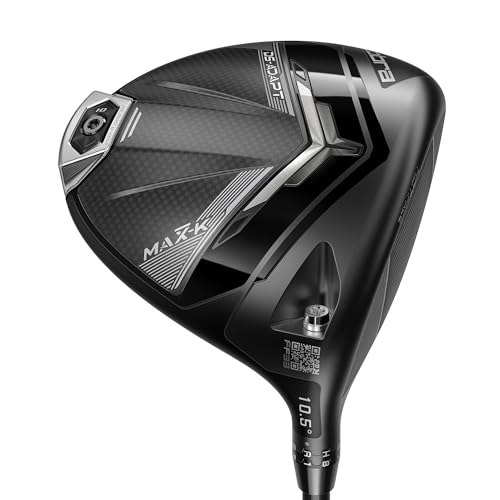
This was a flagship two seasons ago, and MyGolfSpy’s testing ranked the DS-Adapt Max-K first for distance in the high swing speed category with the second-fastest ball speeds in that field. Newer Cobra models have replaced it at the top of the line, which has moved the price a long way down without changing anything inside the head.
For a beginner, the appeal is straightforward: a high-MOI, high-launch head with an adjustable hosel, at roughly a third of what the flagships on this list cost. The technology has not aged in two years. The spin profile runs higher than the low-spin heads above, which suits a slower swing and works against a fast one.
Buying a superseded flagship is generally the best value available in golf equipment, and this is a clean example.
Who should skip it: Fast swingers who already spin the ball too much. This head adds spin, and at high speed that turns into a ballooning flight and lost distance.
8. Tour Edge Hot Launch E525
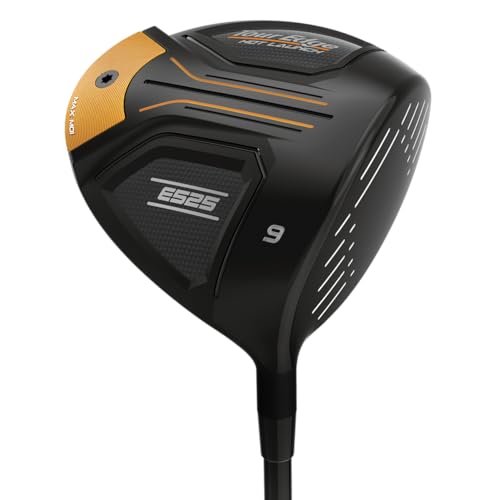
Tour Edge’s Hot Launch line gets recommended to new golfers more than its market share suggests it should, and the E525 is the driver in it. The head is offset, meaning the face sits slightly behind the hosel, which buys a fraction more time to square it up and is one of the more effective anti-slice features available at any price.
It is the cheapest club on this list by a wide margin, and it is not trying to compete with the G440 Max on ball speed. It is trying to get a new golfer hitting a playable tee shot without spending flagship money on a swing that will change substantially in the next two seasons. That is the right priority for most people buying their first driver.
Fitting options are thin compared with everything above, and the offset is visible at address, which some golfers dislike enough that it affects their confidence over the ball.
Who should skip it: Golfers who have played for a few seasons and have a repeatable swing. The offset that helps a beginner becomes a limitation once you can square the face on your own.
Frequently Asked Questions
What loft should a beginner use on a driver?
Most beginners are better off at 10.5 degrees or higher, and 12 degrees is not too much if your swing speed is under 90 mph. Loft adds backspin, which stabilises ball flight and reduces sideways curve. The 9-degree head is built for players who already generate enough speed to launch it, and using one before you do costs both distance and accuracy.
Does a draw-biased driver actually fix a slice?
It reduces one, it does not cure one. A draw-biased head has weight shifted toward the heel, which helps the face close faster through impact. That takes some curve off the ball, but the slice comes from your swing path and face angle, and the club cannot change either. Treat it as a club that makes your current miss less expensive while you work on the cause.
Is MOI worth paying attention to when buying a driver?
Yes, more than distance claims. MOI measures how much the head resists twisting when you miss the centre of the face, and high-handicap golfers miss the centre often. Figures near 10,000 g/cm2 represent the top of what current drivers reach. A higher-MOI head loses less ball speed and less direction on a toe or heel strike, which is exactly where scores are saved.
Should a beginner buy a brand-new driver at all?
Not necessarily. Driver technology moves slowly enough that a two- or three-year-old flagship head is close in performance to this year's, and often half the price. The larger gain for a new golfer is getting the shaft flex and loft right, which is a fitting question rather than a model-year question. Spend the saved money on a fitting or on lessons.
The Bottom Line
If you can afford it and you want the safest choice, the PING G440 Max is the driver we would put in most high handicappers’ bags, because 8.7 yards of dispersion covers a lot of imperfect swings. If your miss is specifically a slice, the G440 SFT does more about it. If you are new to the game and not sure how long you will stay, the Tour Edge Hot Launch E525 does most of the job for a fraction of the money.
The limitation worth naming: none of these will fix a swing fault, and the dispersion figures above come from robot and controlled testing rather than from your swing on a windy Saturday. Get your loft and shaft flex checked before you buy any of them, because that fitting matters more than which of these eight names is on the sole.
Cover image artificially generated for illustrative purposes.