
Best Drivers for Slow Swing Speeds in 2026
Some links on this page are affiliate links. As an Amazon Associate, GolfThis earns from qualifying purchases at no extra cost to you.
The number that matters when you shop for a driver is not on the box. It is your clubhead speed, and if it sits under 95 mph then most of the marketing attached to this category was written about somebody else’s swing. Ball speed records, low-spin tour heads, the yardage claims on the hang tag: all of it is measured at speeds you are not producing.
That is not a problem to feel bad about. Average male amateur swing speed sits around 93 mph and average female amateur speed around 78, so the band this article covers is where most golfers actually live. The problem is that the equipment aimed at it is a genuinely different design, and the flagship head sitting next to it in the shop will cost you distance.
What changes for a slower swing is mostly weight and loft. Total weight comes down, so the same effort produces more clubhead speed, and loft goes up, because less ball speed needs a steeper launch to carry. The shaft gets lighter and softer too, and that is the component most golfers in this band have wrong. We weighted these picks on all of that, plus forgiveness, since a slower swing has no spare ball speed to give away on a mis-hit.
How we picked: We have not swung every driver on this list ourselves. These picks come from MyGolfSpy’s 2026 robot testing across swing-speed bands, published testing at Today’s Golfer, manufacturer shaft and loft specs, and aggregated feedback from fitters and golfers playing them. Where we have had a club in hand, we say so.
This is part of our 2026 series, alongside Best Drivers for Seniors in 2026 and Best Golf Drivers in 2026. Jump to the comparison table if you just want the shortlist.
Looking for the all-time picks? Our original best golf driver for low swing speed review covers an earlier generation of models, most of which are no longer sold new.
Best Drivers for Slow Swing Speeds in 2026 Comparison Table
| Driver | Best For | Loft Options | Weight Approach | Price |
|---|---|---|---|---|
| TaylorMade Qi4D Max Lite | Under 85 mph | 9°, 10.5°, 12° | ~33g lighter than standard | $$$$ |
| Titleist GT1 | 85 to 95 mph | 9°, 10°, 12° | 45g to 58g shaft range | $$$$ |
| Cobra OPTM Max-K | Getting the ball up | 10.5° | Standard, high launch | $$$ |
| Srixon ZXi Max | Forgiveness on a budget | 9.5°, 10.5°, 12° | Sub-290g builds | $$$ |
| PING G440 Max | Tightest dispersion | 9°, 10.5°, 12° | 50g Alta CB Blue stock | $$$$ |
| XXIO 13 | Under 90 mph, all-in | 9.5°, 10.5°, 12° | Ultralight, whole-club system | $$$$ |
| Callaway Paradym Ai Smoke Max | Value flagship tech | 9°, 10.5°, 12° | Standard-light, 50g stock | $$ |
| Cobra Air-X | The lightest build here | 10.5°, 12° | ~40g under standard | $$$ |
1. TaylorMade Qi4D Max Lite
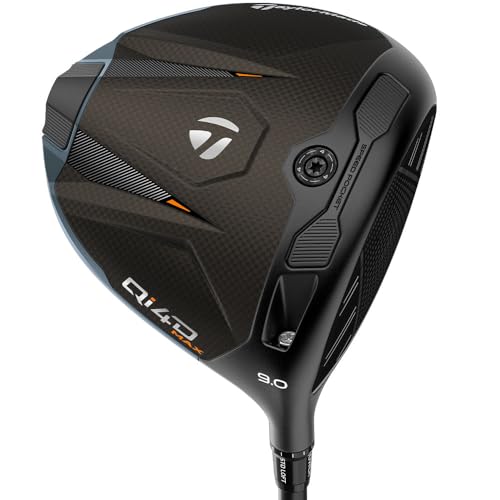
The Max Lite is the clearest example on this list of a manufacturer building for one speed band rather than stretching a flagship to cover it. It weighs roughly 33 grams less than the standard Qi4D, with an ultralight REAX shaft in the low 40-gram range, and in MyGolfSpy’s 2026 testing of 42 drivers it produced the tightest standard deviations for ball speed, carry and dispersion of any driver in the field. It also ranked second for forgiveness across all 42.
Those two results together are the reason it leads. Consistency at a low swing speed is worth more than a ball speed number, because the shot that ruins a hole for a slower swinger is the one that comes up 40 yards short and right, not the one that is 5 yards shorter than optimal.
The weight that comes out is weight that buys stability at higher speeds, so this is a driver with a genuine ceiling. Past about 95 mph, the standard Qi4D or the Max is the better head.
Who should skip it: Swing speeds already over 95 mph, and golfers who prefer a heavier club they can feel through the swing. Some players lose their tempo with an ultralight build.
2. Titleist GT1
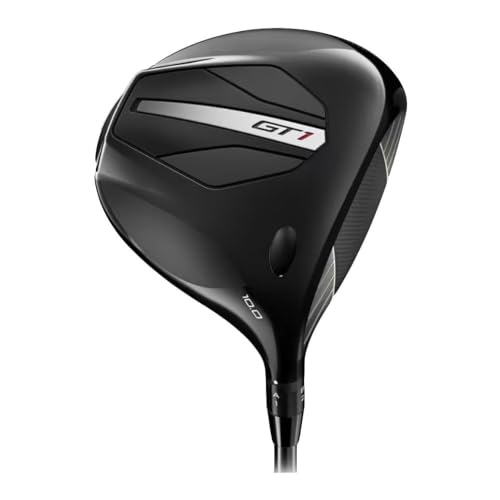
The GT1 took the top forgiveness rating in MyGolfSpy’s 2026 slow swing speed analysis, and it gets there through geometry rather than weight-saving: it carries the deepest centre of gravity in the GT family, which raises launch and resists twisting on a miss. In Today’s Golfer’s testing it carried 276.5 yards with 17.6 yards of left-to-right dispersion.
Its real advantage for this article is the stock shaft range, 45 grams up to 58 grams. “Slow swing speed” covers everything from a 75 mph swing to a 94 mph one, and those are different clubs. Most manufacturers cover that spread with a special order. Titleist covers it off the rack.
It is not the lightest total package here, and Titleist charges flagship money for the model aimed at the slowest swings in its range.
Who should skip it: Golfers chasing the lightest possible club. The GT1 launches high and forgives well by shape, not by being featherweight.
3. Cobra OPTM Max-K
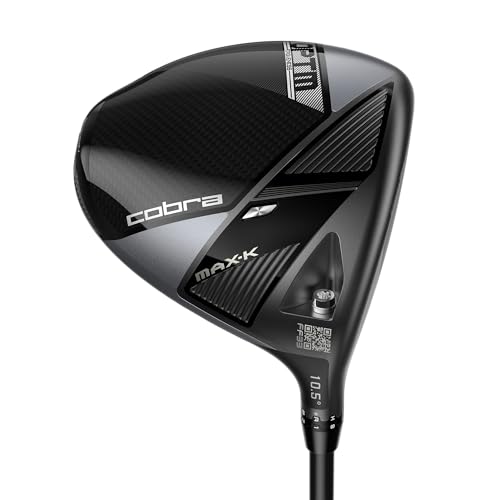
Height is the specific problem a slow swing has, and the OPTM Max-K addresses it more directly than anything else here. It recorded the highest peak height in Today’s Golfer’s 2026 testing at 39.7 yards, off a 13.3 degree launch angle with 3,150 rpm of spin. For a golfer whose drives currently come out low and run into trouble rather than carrying it, that is the profile to buy.
The cost shows up in carry, at 260.2 yards in that same test, which was the shortest of the group. Read that number carefully though. It was measured against drivers being swung fast, and the reason spin and height hurt there is speed this reader does not have. At 80 mph, the extra launch is doing work rather than wasting energy.
Dispersion held up at 17.9 yards, and it sits a price tier below the flagships.
Who should skip it: Anyone at the top of this band who already flights the ball high, and anyone playing regularly in wind, where a ballooning drive gets punished.
4. Srixon ZXi Max
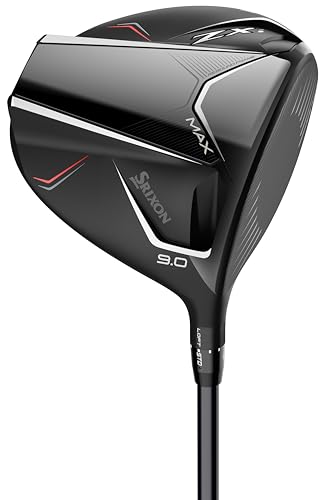
Srixon sits in an odd commercial position: the same parent company owns XXIO, the brand built entirely around slow swing speeds, so the ZXi Max is free to be the forgiving mainstream head rather than the ultralight specialist. It comes in sub-290 gram builds with 12 degrees available, which is the combination that matters for this band.
It is regularly named alongside the Qi4D Max Lite in slow swing speed guidance, and it costs meaningfully less than the flagship heads above while giving up little in forgiveness. For a golfer who wants current technology without paying $650, this is the sensible middle of the list.
Srixon’s retail presence is thinner than TaylorMade’s or Callaway’s in most markets, so trying one before buying takes more effort.
Who should skip it: Golfers who want the extreme lightweight build. The ZXi Max is light, not ultralight, and XXIO or the Air-X go considerably further.
5. PING G440 Max
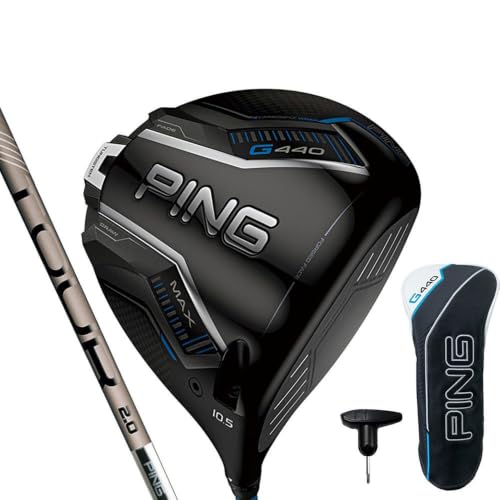
The G440 Max won Today’s Golfer’s 2026 forgiveness test with 8.7 yards of left-to-right dispersion, the tightest figure in that group by a wide margin, while carrying 281.4 yards. It is not a slow-swing-speed specialist, and it earns its place here on that dispersion number alone.
What makes it work for this reader is the 50-gram Alta CB Blue stock shaft, which is genuinely light rather than nominally light, plus a 12-degree head option. Fitted that way, a golfer at 85 to 95 mph gets flagship-level forgiveness without the club fighting their speed. Below about 80 mph, the lighter specialists above will do more.
It is expensive, and PING discounting is inconsistent between retailers, so the price you find varies more than it does for most brands.
Who should skip it: Swings under 80 mph, where a purpose-built lightweight head adds more than the G440’s forgiveness does.
6. XXIO 13
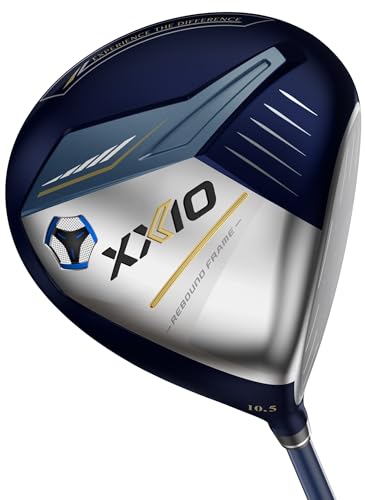
XXIO builds for one customer and makes no attempt to serve anyone else: swings under 90 mph. The whole club is designed as a system, so the head, shaft and grip are matched to a slow tempo rather than assembled from parts designed separately. Total weight runs roughly 30 grams under sibling brand Srixon’s equivalents.
The distinguishing feature is Weight Plus, extra mass in the butt end of the grip that changes how the club loads and releases. Players describe it as the head arriving through impact without having to be forced there, and it is a large part of why XXIO keeps a loyal following among golfers who have tried everything else in this category.
There is no hosel adjustability, which is a real gap against the GT1 or the PING, and XXIO is priced at the very top of this list despite that. It is a lot of money for a club you cannot tune.
Who should skip it: Anyone who wants to adjust loft or lie themselves, and anyone near 95 mph, where XXIO’s build is too light to stay stable.
7. Callaway Paradym Ai Smoke Max
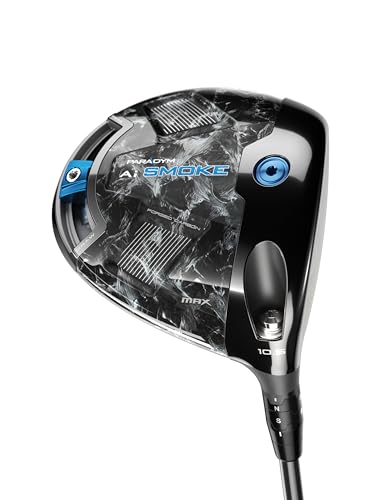
The Ai Smoke Max was Callaway’s flagship two generations back, replaced at the top of the range by the Quantum line, and the price has fallen accordingly while the head has not changed. Its face was designed using a large simulation set to spread ball speed across the area where golfers actually make contact rather than only at the centre, which is a design goal aimed squarely at inconsistent strikers.
For this list, that matters more than it does for a fast swinger. A slow swing has no ball speed in reserve, so a toe strike that keeps more of its speed is the difference between reaching the fairway bunker and stopping short of it. The 50-gram stock shaft option and a 12-degree head cover this band properly.
It is a previous-generation club, so fitting stock is thinning and shaft choices at retail are narrower than they were at launch.
Who should skip it: Golfers who want the current model and the resale value that comes with it. This is a value pick, and it is explicitly last year’s technology.
8. Cobra Air-X
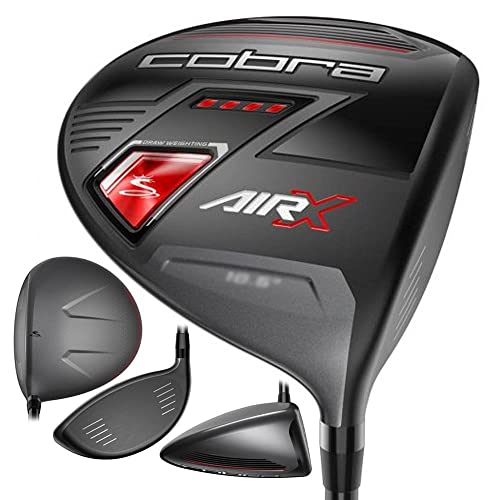
The Air-X is the lightest build on this list, roughly 40 grams under a standard driver with a head just under 200 grams, and it pairs that with noticeable offset to help square the face. It is the answer for the golfer at the very bottom of this speed band, where even the Qi4D Max Lite feels like work.
Cobra markets it to beginners and seniors together, which is a more honest piece of positioning than it first appears. A new golfer and a golfer whose speed has dropped are often looking for the same club, and the industry usually sells them two different ones at two different prices.
The trade is that a very light club is easy to swing too fast and lose control of, and the offset is visible at address in a way some golfers dislike.
Who should skip it: Better players with a repeatable swing, and anyone above about 85 mph. The features that help here become limitations quickly.
Frequently Asked Questions
What counts as a slow swing speed with a driver?
Under 95 mph is the band most lightweight driver technology targets, and under 85 mph is where the lightest builds are aimed. For reference, an average male amateur swings around 93 mph and an average female amateur around 78 mph. Slow is relative to tour speeds, not to other amateurs, so most golfers reading this are closer to normal than the word suggests.
How much loft do I need if I swing under 85 mph?
Twelve degrees is usually the right answer, and it is more than most golfers expect. A slower swing produces less ball speed, and less ball speed needs a higher launch angle to carry a useful distance before gravity takes over. Playing a 9-degree head at 80 mph produces a low, short flight that lands with no carry to spare.
Does a lighter driver really add clubhead speed?
Yes, and the effect is measurable. Dropping roughly 20 grams of total weight, from around 310 to around 290, is commonly credited with 3 to 5 mph of extra clubhead speed for a slower swinger, which works out to somewhere around 8 to 15 yards of carry. The gain shrinks as swing speed rises, which is why light builds are aimed at this band specifically.
Should I change the shaft or the head first?
The shaft, in most cases. Shaft weight and flex determine whether you can deliver the head squarely at speed, and a mismatched shaft undoes whatever the head was designed to do. Many golfers with slow swing speeds are playing stiff shafts that are too heavy for them, and moving to a lighter regular or senior flex changes ball flight more than a new head would.
The Bottom Line
Under 85 mph, the TaylorMade Qi4D Max Lite is the pick, and its consistency numbers across MyGolfSpy’s 42-driver field are the reason. Between 85 and 95, the Titleist GT1 and PING G440 Max both work, and the choice comes down to whether you want the shaft range or the dispersion. On a budget, the Callaway Paradym Ai Smoke Max gives up very little to any of them.
The limitation worth stating plainly: every figure above was produced by someone else’s swing, in a controlled test, with a shaft that may not be the one you would be sold. Get your swing speed measured and your shaft flex checked before buying any of these, because that fitting will change your ball flight more than the choice between these eight heads will.
Cover image artificially generated for illustrative purposes.