
Best Drivers for Fast Swing Speeds in 2026
Some links on this page are affiliate links. As an Amazon Associate, GolfThis earns from qualifying purchases at no extra cost to you.
You swing it hard, and the ball goes up like a rocket and lands like a brick. No roll, less carry than the numbers say you should get, and a suspicion that the driver is costing you distance rather than adding it. That is what too much spin looks like at high speed, and it is the specific problem this category exists to solve.
Speed generates spin. A swing at 110 mph produces considerably more backspin than the same strike at 90, and past a certain point that spin stops helping the ball stay in the air and starts making it climb and stall. Low-spin driver heads move weight forward to pull spin down, which is why they are aimed at fast swingers and why they punish slow ones: the same design that fixes a ballooning flight at 110 mph produces a flight that never gets airborne at 80.
The trap in this category is treating low spin as the only goal. Forgiveness still matters at speed, because a mis-hit at 110 mph misses by further than a mis-hit at 90. So we weighted spin control alongside stability at speed, and the list below includes heads that are not the lowest spinning in the field because they hold their line better.
How we picked: We have not swung every driver on this list ourselves. These picks come from MyGolfSpy’s 2026 robot testing in the high swing speed band, published testing at Today’s Golfer, manufacturer specs, and aggregated feedback from fitters and golfers playing them. Where we have had a club in hand, we say so.
This is part of our 2026 series, alongside Best Golf Drivers in 2026 and Best Drivers for Slow Swing Speeds in 2026. Jump to the comparison table if you just want the shortlist.
Looking for the all-time picks? Our original best drivers for fast swing speeds review covers an earlier generation of models, most of which are no longer sold new.
Best Drivers for Fast Swing Speeds in 2026 Comparison Table
| Driver | Best For | Loft Options | Spin Profile | Price |
|---|---|---|---|---|
| TaylorMade Qi4D LS | Lowest spin available | 8°, 9°, 10.5° | Lowest in 2026 field | $$$$ |
| Callaway Quantum Max | Speed with forgiveness | 9°, 10.5°, 12° | Low, high stability | $$$$ |
| Titleist GT3 | Distance with roll-out | 8°, 9°, 10° | Low to mid, adjustable | $$$$ |
| Callaway Quantum Triple Diamond | Shot shaping | 8°, 9°, 10.5° | Very low, fade bias | $$$$ |
| Cobra DS-Adapt Max-K | Raw distance | 9°, 10.5°, 12° | Higher, top ball speed | $$ |
| PING G440 SFT | Accuracy at speed | 9°, 10.5° | Higher, draw biased | $$$$ |
| PING G440 Max | Tightest dispersion | 9°, 10.5°, 12° | Mid, very stable | $$$$ |
| TaylorMade Qi4D Max | Forgiveness first | 9°, 10.5°, 12° | Mid, high MOI | $$$$ |
1. TaylorMade Qi4D LS
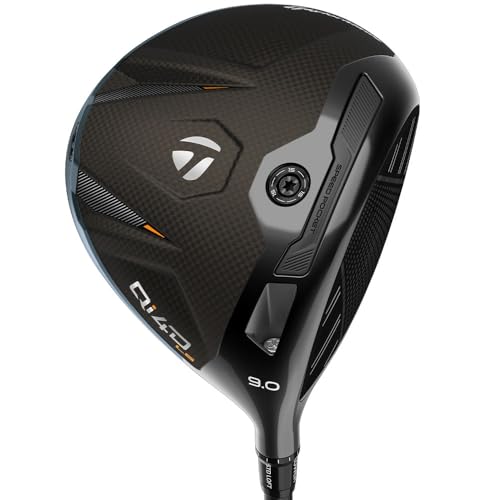
The Qi4D LS is the lowest-spinning driver in robot scatter data across MyGolfSpy’s entire 2026 field, which is the single most relevant fact for anyone reading this list. It scored 9.2 overall with a 9.7 distance score and averaged 294.0 yards, the longest of any TaylorMade model tested.
LS stands for low spin, and this is the head built for the golfer whose drives climb and stall. The weight sits forward, the face is deep, and everything about the design assumes you are generating enough speed to launch it without help. Testing found tour players and amateurs gaining roughly 1.5 mph of ball speed with it.
The cost is forgiveness. Low-spin heads have their weight forward rather than back, and weight back is what makes a driver stable on a mis-hit. This is the least forgiving driver on this list, and at 110 mph a toe strike with it is expensive.
Who should skip it: Anyone under about 105 mph, and anyone at speed who misses the centre of the face regularly. The Quantum Max below gives up a little spin control for considerably more stability.
2. Callaway Quantum Max
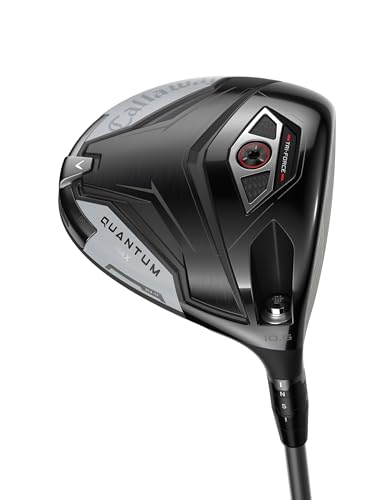
The Quantum Max is the most complete driver on this list, and MyGolfSpy’s 2026 testing had it leading its speed category for overall performance while also leading it for forgiveness. Doing both at once is unusual. It averaged 295.7 yards of total distance with a 79.7 percent playable rate.
Playable rate measures how often a shot finished somewhere you can play from, which is a more useful question at high speed than peak distance, because the penalty for a wayward drive scales with how far it travels. All four Callaway Quantum heads finished inside the top seven of the 2026 rankings, and this is the pick of them for most fast swingers.
It does not spin as low as the Qi4D LS, so a golfer whose specific fault is excessive spin may still be better off there.
Who should skip it: Golfers with a genuine spin problem confirmed on a launch monitor. The Quantum Max is the better all-round driver and the Qi4D LS is the better spin fix.
3. Titleist GT3
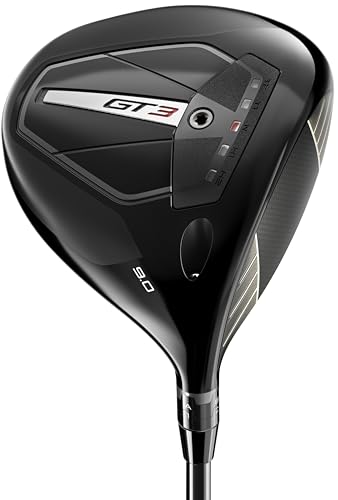
The GT3 took the top spot for distance and second overall for forgiveness in 2026 rankings of drivers for high swing speeds, which makes it the most balanced of the tour-oriented heads here. It is built for the fast player who wants maximum roll-out rather than maximum carry, and the distinction matters on firm courses.
Titleist’s adjustable weight track lets you shift the centre of gravity meaningfully rather than nominally, so the same head can be set up as a lower-spinning fade bias or a more neutral, slightly more forgiving option. For a fast swinger who has not settled on a preferred ball flight, that adjustability is worth more than a fractionally lower spin number.
It demands a better strike than the Quantum Max, and Titleist’s stock shaft options, while good, are where most fast swingers end up paying for an upgrade.
Who should skip it: Golfers who want to set the club once and never touch it. The GT3’s adjustability is most of what you pay for.
4. Callaway Quantum Triple Diamond
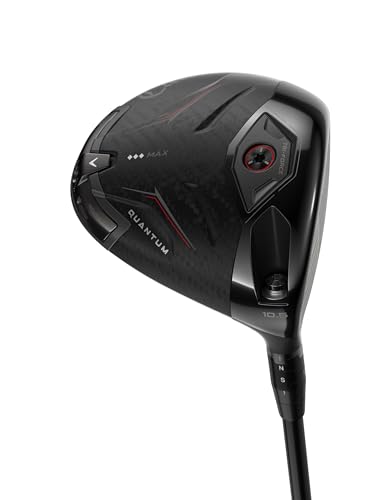
Triple Diamond is Callaway’s designation for its most compact, lowest-spinning head, and the 2026 version is exceptionally low spinning with a pronounced fade bias and high ball speeds. It is the driver on this list aimed at the player who wants to work the ball rather than resist curve.
That fade bias is a deliberate design choice rather than a flaw, and it suits a fast swinger who fights a hook. A strong player delivering the club with a closed face at 112 mph produces a left miss that runs a long way, and a head that resists closing is the equipment answer to it.
It is the most demanding club here. The head is smaller, the forgiveness is lower than anything else on this list, and a golfer who does not consistently find the centre will lose more to mis-hits than they gain in spin control.
Who should skip it: Anyone who slices, since a fade-biased head makes that worse, and any fast swinger whose strike pattern is inconsistent.
5. Cobra DS-Adapt Max-K
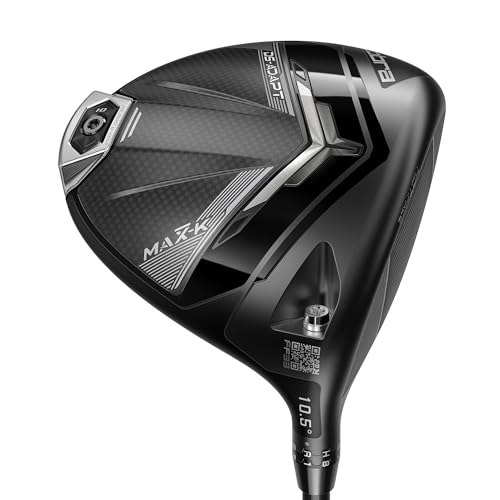
MyGolfSpy ranked the DS-Adapt Max-K first for distance in the high swing speed category, with the second-fastest ball speeds in that field. It is now a superseded model, which has moved its price to roughly a third of the flagships above without changing what is inside the head.
The catch, and it is a real one for this audience, is the spin profile. This head spins higher than the low-spin options above, which is what helped it post those distance numbers in testing but works against a golfer whose problem is already too much spin. Read it as a distance driver for a fast swinger with a neutral spin profile, not as a fix for a ballooning flight.
For the price, it is the best value on this list by a wide margin, and the adjustable hosel gives real tuning range.
Who should skip it: Fast swingers who already spin the ball too much, which is a large share of the golfers reading this. Check your numbers before choosing it.
6. PING G440 SFT
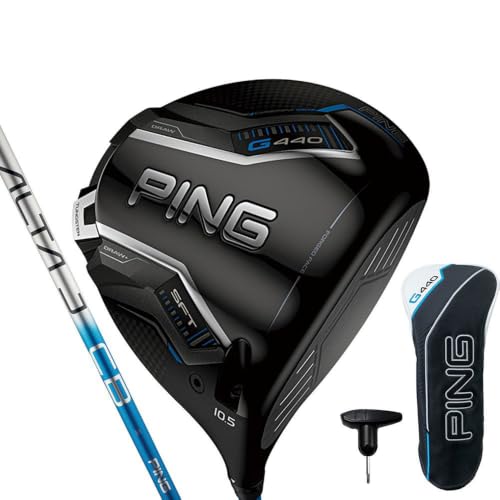
The G440 SFT was the most accurate driver in MyGolfSpy’s high swing speed testing, topping both fairways hit and straight shot percentage at 105 mph and above. That is a surprising result for a draw-biased head, and it is the reason this sits on a fast swing speed list at all.
The logic is worth following. A fast swinger who leaks the ball right is losing more yards to curve than to spin, and correcting the curve returns more distance than chasing a lower spin number would. If your miss at speed is a fade that becomes a slice, this is the most effective answer here.
It spins more than most heads in this category, and it comes in 9 and 10.5 degrees only. Those are both real limitations for a player at the top of this speed band.
Who should skip it: Fast swingers who draw or hook the ball, and anyone whose priority is the lowest possible spin.
7. PING G440 Max
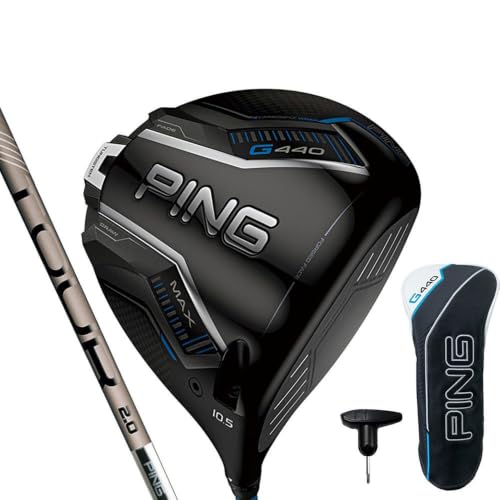
The G440 Max won Today’s Golfer’s 2026 forgiveness testing with 8.7 yards of left-to-right dispersion while carrying 281.4 yards, and it belongs here for the fast swinger who has decided that accuracy is worth more than the last few yards of roll.
That is a more common conclusion than the marketing in this category suggests. A 110 mph swing that finds the fairway 65 percent of the time scores better than one that finds it 45 percent of the time and goes 12 yards further, and the drivers at the top of this list are all giving up stability to chase spin numbers. The G440 Max does the opposite.
The stock shaft range up to 65 grams covers this speed band properly. It is not a low-spin head, so a golfer with a genuine spin problem will not fix it here.
Who should skip it: Fast swingers with confirmed high spin numbers. This head is stable, not low spinning, and those are different problems.
8. TaylorMade Qi4D Max
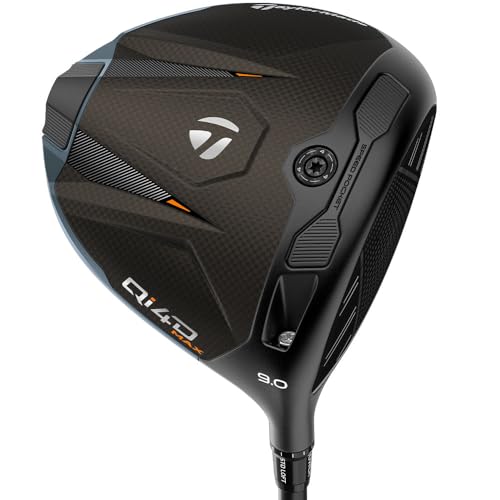
The Qi4D Max is the forgiveness-first head in TaylorMade’s line and the direct counterpart to the LS at the top of this list. For a fast swinger who has tried a low-spin head and found the mis-hits unplayable, this is the sensible retreat: the same platform, weighted for stability instead of spin reduction.
It posted 160.1 mph ball speed and 276.1 yards of carry in Today’s Golfer’s testing, with dispersion of 24.6 yards measured in the back weight setting. That setting is the high-launch one, so the figure reflects a specific configuration rather than the club’s best case, and a fast swinger would likely be fitted into the forward setting instead.
It is the least suited to this category of anything here, and it is on the list as a deliberate alternative rather than a recommendation for the typical fast swinger.
Who should skip it: Golfers with high spin and high speed, which is the core audience for this article. The LS or the Quantum Max are the right calls there.
Frequently Asked Questions
What swing speed counts as fast?
Above 105 mph is the band that independent testing treats as high swing speed, and it is roughly the top 10 percent of amateur golfers. Average male amateur speed sits around 93 mph. If you are between 95 and 105 you sit between categories, and you will usually be better served by a standard head than by a low-spin one built for speeds above you.
Why do fast swingers need low-spin drivers?
Because clubhead speed generates spin, and too much of it costs distance. A fast swing that produces 3,200 rpm sends the ball climbing steeply and dropping with no roll, which is why a 110 mph swing can hit it shorter than expected. Low-spin heads move weight forward to reduce that. The risk is overcorrecting: too little spin and the ball falls out of the air early.
Should a fast swinger always use a 9-degree head?
No, and this is a common and expensive mistake. Loft and spin are related but not the same thing, and many fast swingers launch better with 10.5 degrees on a low-spin head than with 9 degrees on a standard one. The combination that works is high launch with low spin, and the head, loft and shaft together determine that. A launch monitor answers it in ten minutes.
Does shaft choice matter more at high swing speed?
Yes, considerably. At 110 mph the shaft is loading and unloading with far more force, so a shaft that is too soft or too light will twist and deliver the face inconsistently. Fast swingers usually need heavier, stiffer profiles than stock offerings provide, and the stock shaft in a retail driver is commonly the weakest component in the build for this player.
The Bottom Line
If your spin numbers are genuinely high, the TaylorMade Qi4D LS is the lowest spinning driver tested in 2026 and it will fix a ballooning flight. If you do not know your spin numbers, buy the Callaway Quantum Max instead, because it led its speed band for both performance and forgiveness and it asks less of your strike.
One honest warning about this whole category. Low-spin heads are sold on the assumption that you are losing distance to spin, and plenty of fast swingers buy one when their actual problem is a mismatched shaft or an inconsistent strike. Thirty minutes on a launch monitor tells you which of those you have, and that session is worth more than the difference between any two drivers on this list.
Cover image artificially generated for illustrative purposes.