
Best Drivers for Distance in 2026
Some links on this page are affiliate links. As an Amazon Associate, GolfThis earns from qualifying purchases at no extra cost to you.
Every driver marketed on distance is marketed at a golfer who does not exist in most pro shops: someone swinging fast enough that backspin is costing them carry. If that is you, the clubs below will genuinely add yards. If it is not, they will take them away, and no amount of marketing copy changes the physics.
Backspin keeps a golf ball in the air. A low-spin driver moves weight forward in the head to strip spin off the shot, which lowers the flight and adds roll. Above about 105 mph of swing speed that is a straightforward gain, because the ball is climbing too steeply and coming down too short. Below about 95 it is a loss, because the ball comes down early and never got far enough to roll.
We ranked on measured carry from 2026 launch monitor testing, and we publish the dispersion figure alongside every one of them, because in this category the forgiveness cost is the story. The fastest head here spreads nearly twice as wide as the tightest.
How we picked: We don’t claim to have hit every driver here. These picks come from manufacturer specs, Today’s Golfer’s 2026 low-spin driver testing, MyGolfSpy’s ball speed and distance data, and aggregated feedback from retailer reviews and fitting writeups. Where a figure is a tested number rather than a manufacturer claim, we say so.
This is part of our 2026 series, alongside Best Golf Drivers in 2026 and Best Drivers for Mid-Handicappers in 2026. Jump to the comparison table if you just want the picks.
Looking for the earlier generation of this category? Our original drivers for distance and control review covers models that are now findable used at a fraction of the price.
Best Drivers for Distance in 2026 Comparison Table
| Driver | Tested Carry | Ball Speed | Spin | Dispersion | Price |
|---|---|---|---|---|---|
| Callaway Elyte Triple Diamond | 286.3 yds | 162.8 mph | 1,992 rpm | 12.3 yds | $$$ |
| TaylorMade Qi35 LS | 278.4 yds | 162.3 mph | 1,730 rpm | 16.5 yds | $$$ |
| Titleist GT3 | 283.3 yds | 162.4 mph | 2,004 rpm | 20.1 yds | $$$ |
| Ping G440 LST | Not published | Not published | Low | Not published | $$$ |
| Cobra Darkspeed LS | 280.3 yds | 161.5 mph | 2,051 rpm | 23.6 yds | $$ |
| Mizuno JPX One | 278.5 yds | 161.7 mph | 2,059 rpm | 13.5 yds | $$$ |
| Srixon ZXi LS | Not published | Not published | Low | Not published | $$ |
1. Callaway Elyte Triple Diamond
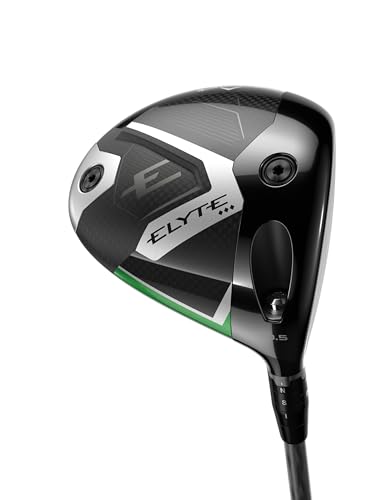
The longest carry in Today’s Golfer’s 2026 low-spin testing at 286.3 yards, on 162.8 mph of ball speed and 1,992 RPM of spin. It also grouped at 12.3 yards left to right, which is the second tightest number in the test and unusual for a head built this way.
That combination is what puts it first. Most low-spin drivers buy their spin reduction with forward weighting that costs stability, and this one gave up less than the field to get there. Callaway builds the Triple Diamond as the smallest and most compact head in the Elyte line, with a shallower face that better players tend to prefer looking down at.
Testers describe it as punishing off-centre strikes more severely than the standard Elyte, which is the expected tradeoff and worth taking seriously. The 12.3 yard figure was produced by good players finding the middle most of the time.
Who should skip it: Anyone swinging under about 100 mph. The compact head and low spin are built for players who already generate speed, and a slower swing will lose carry to this head rather than gain it.
2. TaylorMade Qi35 LS
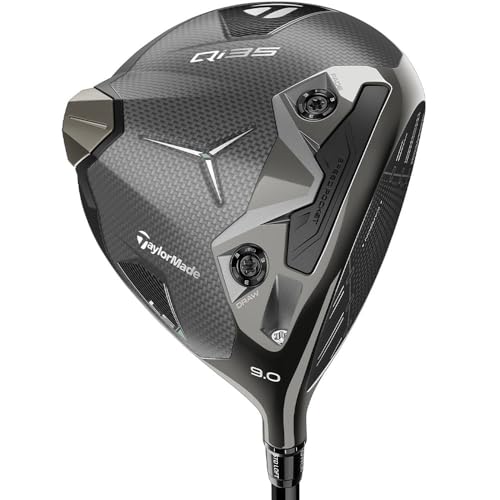
The lowest spin number in the test at 1,730 RPM with the weight set forward, which is a genuinely large gap below the rest of this field. Ball speed measured 162.3 mph and carry came in at 278.4 yards.
Those numbers together make the point about this category better than anything we could write. It spins the least and carries eight yards shorter than the Callaway, because below a certain spin rate the ball stops staying in the air long enough to use the speed. Today’s Golfer’s own note was that the weight-forward setting is too low for many golfers, and the data agrees.
Set the weight back and it becomes a more sensible club with a higher spin number. The adjustability is real and this is one of the few heads where moving the weight changes the category the driver belongs to.
Who should skip it: Most golfers, in the forward setting. Unless a launch monitor has told you that you are spinning above 3,000 RPM with a driver, the lowest-spin head in a low-spin category is solving a problem you do not have.
3. Titleist GT3
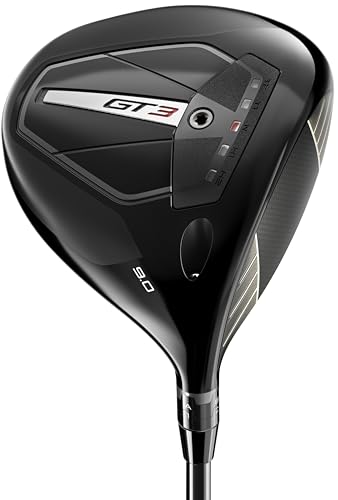
283.3 yards of carry on 162.4 mph and 2,004 RPM, which is the second longest carry here and close behind the Callaway on every figure that matters. The GT3 is the adjustable-weight, lower-spin sibling to the GT2, with a movable track that shifts the centre of gravity toward heel or toe.
Titleist’s reputation in this category is earned on consistency rather than peak numbers, and the spin figure lands almost exactly in the range most fitters aim for rather than chasing the lowest possible number.
The dispersion is the problem. It spread 20.1 yards left to right, the second widest in the test, and that is a lot of scatter to accept for three yards of carry over the Cobra.
Who should skip it: Golfers whose driving accuracy is already marginal. Twenty yards of spread on a good player’s swing becomes considerably more on an inconsistent one, and the carry advantage does not survive a ball in the trees.
4. Ping G440 LST
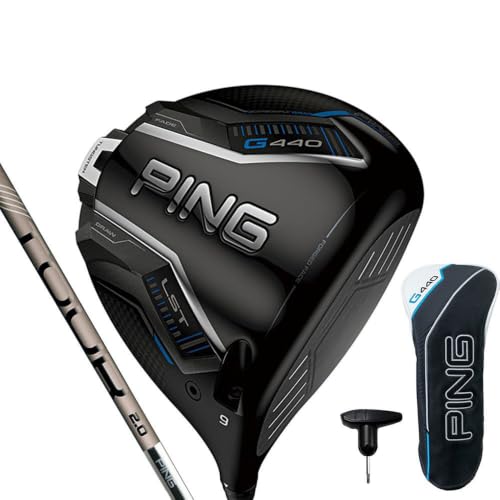
The LST is the low-spin head in Ping’s G440 line, and it reaches lower spin than the Max by moving weight forward while keeping Ping’s usual deep, high-MOI footprint. Independent reporting placed it fifth fastest in ball speed and carry across the 2026 driver field.
Ping’s approach to this category is more conservative than Callaway’s or TaylorMade’s, which means less spin reduction and less forgiveness lost. If you want a low-spin head and you do not want to give up much stability, this is the one built on that premise.
We could not find a published dispersion figure for the LST in the 2026 low-spin comparisons, so it sits below the drivers that have measured numbers. Ping’s line generally tests well on that metric, but we are not going to assume it here.
Who should skip it: Golfers chasing the outright lowest spin number. The LST reduces spin less than the Qi35 LS or the Triple Diamond by design, and if your fitting says you need a large reduction, this is the wrong tool.
5. Cobra Darkspeed LS
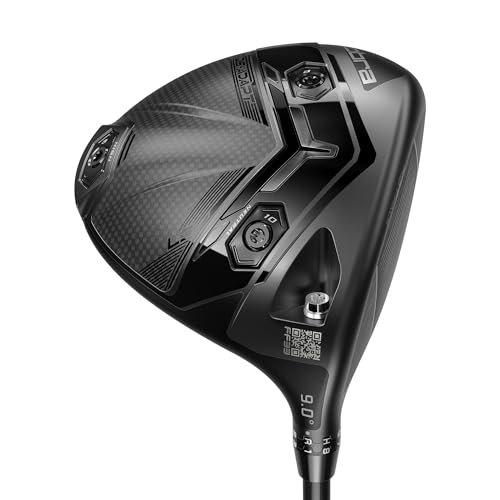
280.3 yards of carry on 161.5 mph and 2,051 RPM of spin, which puts it within six yards of the longest head here for meaningfully less money. Cobra prices below the other major brands and the performance gap is smaller than the price gap.
The head takes two movable weights, front and back, and unlike some adjustable systems the positions produce genuinely different fade and draw biases rather than cosmetic changes. For a faster swinger fighting a one-way miss, that is useful.
The dispersion is the worst in the test at 23.6 yards in the weight-forward setting. That is nearly twice the Callaway’s spread, and it is the honest cost of this driver’s price and spin numbers.
Who should skip it: Anyone who cannot afford to lose fairways. This is the widest-grouping head in a category that already gives up accuracy, and the six yards of carry it concedes to the Callaway will not show up on your card the way a lost ball does.
6. Mizuno JPX One
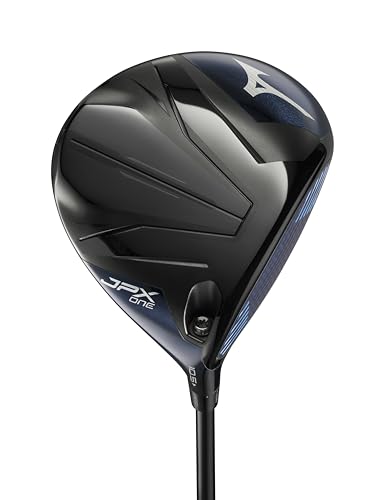
The tightest grouping in the low-spin test at 13.5 yards, on 161.7 mph of ball speed and 278.5 yards of carry. If the Callaway is the distance pick, this is the control pick, and the eight yards of carry separating them is the price of that.
Mizuno is better known for irons and the driver line gets correspondingly less attention, which tends to mean it sits on shelves and gets discounted. The build quality and the sound at impact are both better than the market share suggests.
Testers noted the launch angles came in below optimal for maximising distance, which is the reason the carry number trails despite competitive ball speed. That is a loft and shaft fitting problem rather than a design flaw, but it means buying this off the rack is more likely to disappoint than the others here.
Who should skip it: Golfers buying without a fitting. The under-launch issue testers found is fixable with loft and shaft, and unaddressed it costs you the carry that justifies the purchase.
7. Srixon ZXi LS
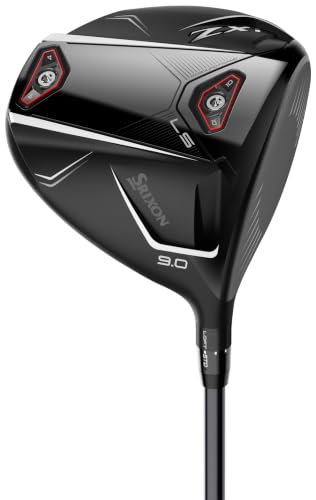
Srixon’s low-spin head is the cheapest current-generation option in this group by a clear margin, and the one most likely to be discounted further. The ZXi LS uses a forward weight port and a compact head shape, following the same design logic as everything else here.
What Srixon does distinctively is feel and sound, which matters more in a driver than people admit. A head that sounds thin makes a good drive feel bad, and Srixon tunes theirs low and solid.
There is no published independent dispersion or carry data for this head in the 2026 low-spin comparisons we could find, and we are not going to infer numbers from the brand’s other clubs. That evidence gap is why it ranks last, not a measured weakness.
Who should skip it: Anyone who wants to check the claims before spending. This head is under-tested relative to the field, so you are buying on spec, feel, and price rather than on data.
Frequently Asked Questions
Will a low-spin driver make me longer?
Only if you are spinning the ball too much to begin with. Low-spin heads remove backspin, and backspin is what keeps the ball in the air. Below roughly 95 mph of swing speed you generally need that spin to carry the ball at all, and taking it away shortens your drives rather than lengthening them.
What spin rate should I be looking for?
Somewhere between 2,200 and 2,700 RPM suits most golfers at typical amateur swing speeds. Faster swingers can optimise lower, toward 2,000, because they generate enough ball speed and launch to keep the ball airborne without it. A launch monitor session tells you your number in about ten minutes.
Do low-spin drivers hurt accuracy?
Usually, yes. The weight placement that reduces spin sits forward in the head, and forward weight reduces resistance to twisting on off-centre strikes. In 2026 testing the low-spin models spread between 12.3 and 23.6 yards left to right, against 8.7 yards for the most forgiving conventional head.
Is the stock shaft good enough in a low-spin driver?
Less often than in a standard head. Low-spin drivers are bought by faster swingers, and stock shaft offerings in this category skew toward lighter, softer profiles than that player needs. If you are spending this much on a head, the shaft is where the remaining gains are.
The Bottom Line
The Callaway Elyte Triple Diamond is the pick if you have the speed to use it, because it produced the longest carry in testing without the dispersion penalty the rest of this category pays. The Mizuno JPX One is the better buy if you want most of the distance and the tightest grouping in the group.
The limitation is the whole premise. These drivers were tested at ball speeds above 160 mph, which is faster than the large majority of golfers swing, and the spin reduction that helps at that speed costs carry below it. Get a launch monitor number before buying anything on this page. If your spin is already under 2,700, our main driver roundup is the more useful list.
Cover image artificially generated for illustrative purposes.