
Best Blade Putters in 2026
Some links on this page are affiliate links. As an Amazon Associate, GolfThis earns from qualifying purchases at no extra cost to you.
Does the putter face rotate through your stroke, and by how much? That question decides which putter fits you, and most golfers buy without answering it.
On most strokes the face does rotate, and you want a putter whose weight distribution encourages that rotation rather than fighting it. That is what a blade with toe hang is. If your stroke is genuinely straight back and through, a blade is the wrong shape and a face-balanced mallet will putt better for you regardless of what looks good behind the ball.
So this list is organised around toe hang and stroke match, and we note where a putter’s balance is unusual for its shape. We also publish the measured scores from Today’s Golfer’s 2026 blade test, which ran 29 models through PuttView at short, mid and long range. Those numbers are the closest thing to objective evidence this category has.
How we picked: We don’t claim to have rolled every putter here. These picks come from manufacturer specs, Today’s Golfer’s 2026 blade putter testing and its published scores, MyGolfSpy’s blade putter data, and aggregated feedback from retailer reviews and fitting writeups. Where a figure is a tested number rather than a manufacturer claim, we say so.
This is part of our 2026 series, alongside Best Putters in 2026 and Best Golf Wedges in 2026. Jump to the comparison table if you just want the picks.
Looking for the blades that defined this category? Our original blade putter reviews cover earlier models, many of which putt exactly as well as the current ones.
Best Blade Putters in 2026 Comparison Table
| Putter | Best For | Face | Test Score | Price |
|---|---|---|---|---|
| Ping PLD Anser | Moderate arc strokes | Milled steel | 76.0% | $$$ |
| Mizuno M.Craft OMOI | Feedback | Milled steel | 68.0% | $$ |
| Bettinardi BB1 | Feel | Milled steel | 68.6% | $$$ |
| Ping Scottsdale Anser 2D | Long putts, value | Milled steel | 67.1% | $$ |
| Wilson Staff Model BL22 | Traditionalists | Milled steel | 68.3% | $$ |
| Odyssey Ai-ONE | Consistent speed | Insert | Not published | $$ |
| Cleveland HB Soft 2 | Tight budgets | Soft milled | Not published | $ |
1. Ping PLD Anser
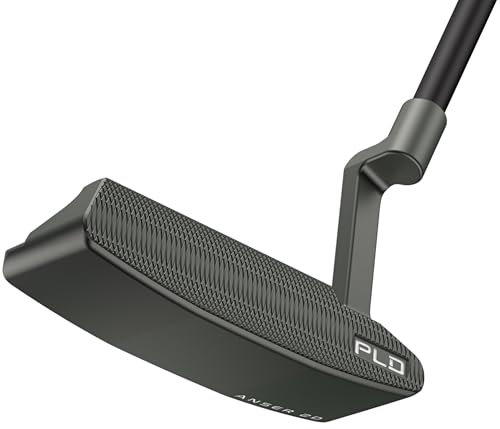
Top of Today’s Golfer’s 2026 blade test at 76.0%, which was four points clear of second place across 29 putters. The Anser head shape has been in production since 1966 and has been copied more than any other design in golf, and the PLD version is Ping building it properly: fully milled from 303 stainless rather than cast.
The plumber’s neck hosel gives moderate toe hang, which is the match for a slight-to-moderate arc stroke. That covers most golfers, and it is the reason this shape became the default in the first place rather than the result of anything clever.
It is the most expensive putter on this list and the performance margin over the $259 Scottsdale below is nine percentage points of test score. Whether that is worth roughly $190 is a judgement about milling and finish, not about holing putts.
Who should skip it: Straight-back-straight-through putters. Moderate toe hang works against a stroke with no arc, and Ping’s own face-balanced models suit that motion better for less money.
2. Mizuno M.Craft OMOI
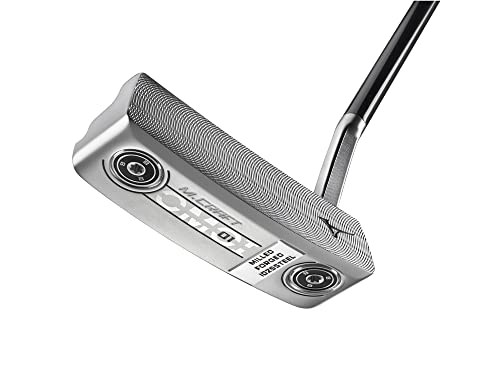
Today’s Golfer gave the OMOI the best feedback rating among wide-body blades at 68.0%, and feedback is the honest reason to buy this putter. Mizuno mills these from a single billet of 1025 carbon steel with no insert, so a strike off the toe tells you immediately that it was off the toe.
The OMOI is the heavier of Mizuno’s M.Craft blades, which suits slower greens and golfers who tend to leave putts short. Extra head weight makes the stroke easier to keep moving through the ball rather than decelerating into it.
Reviewers of the wider Mizuno blade range consistently note severe toe hang on some models, which is a strong match for a pronounced arc and a poor one for anything straighter. Check the balance before buying.
Who should skip it: Golfers who dislike sharp feedback on mishits. A milled carbon steel face with no insert is unforgiving in the information it gives you, and some players putt worse when they can feel exactly how badly they struck it.
3. Bettinardi BB1
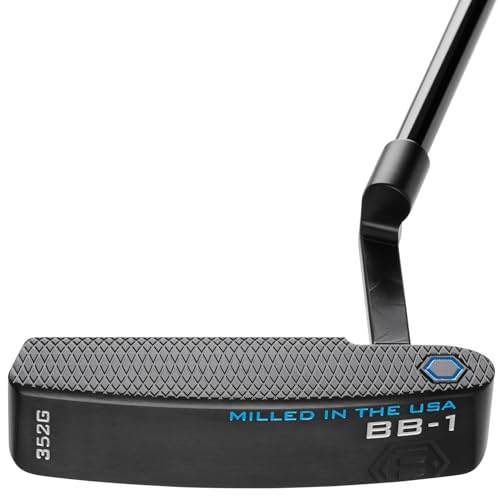
Scored 68.6% in the 2026 test and took the best-looking blade rating from the testers. Bettinardi mills these in Illinois from a single block of carbon steel, and the surface milling pattern on the face is finer than most competitors, which is the source of the soft feel the brand is known for.
The BB1 is the classic Anser-style head in Bettinardi’s line, with a plumber’s neck and moderate toe hang. Functionally it is aimed at the same stroke as the Ping PLD, and the choice between them is feel and finish rather than fit.
Carbon steel rusts. Bettinardi finishes these well, but the face will mark and the putter will not look new for long if you play in wet weather.
Who should skip it: Anyone shopping on measured performance per dollar. This scored eight points below the Ping PLD while costing nearly as much, and its case is craftsmanship and feel rather than test results.
4. Ping Scottsdale Anser 2D
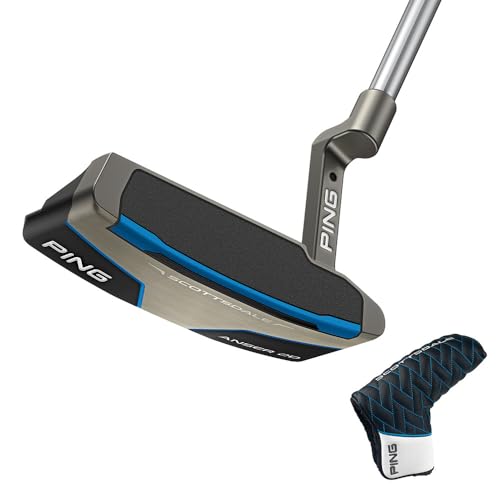
The best blade in the 2026 test for long putts, with a long-range PuttView handicap of -9.3, and the highest-rated blade under $300 at 67.1% overall. Those two facts together make it the value pick on this page.
The 2D is a slightly wider-bodied Anser variant, which moves more weight to the perimeter and raises stability without changing the basic shape or the toe hang. That extra stability is where the long-putt performance comes from: distance control on a 40 footer depends more on how the head resists twisting than on anything about the face.
It is cast rather than fully milled, and the difference in feel against the PLD is noticeable if you putt with both. That is the whole reason for the price gap.
Who should skip it: Golfers who care most about feel at impact. Cast construction feels firmer and less refined than the milled putters above it, and if that matters to you the Scottsdale will not satisfy.
5. Wilson Staff Model BL22
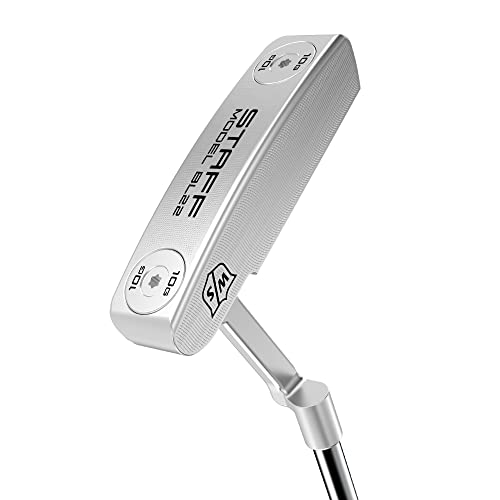
Scored 68.3% in the 2026 test, described by testers as consistent across all three distances rather than strong at any one. That profile is more useful than it sounds, because a putter that is average at every range is easier to trust than one that is excellent at ten feet and poor at forty.
Wilson mills the BL22 from 303 stainless in a compact traditional shape with minimal alignment aid beyond a single sightline. It is deliberately plain, which suits golfers who find modern alignment systems distracting.
The flip side is that if you struggle to aim a putter, this gives you almost no help doing it. Wilson has made a design choice here and it does not suit everyone.
Who should skip it: Golfers with an aim problem. A single sightline on a plain head is the least alignment assistance available, and if you consistently start putts off line, the Odyssey below is built to address exactly that.
6. Odyssey Ai-ONE
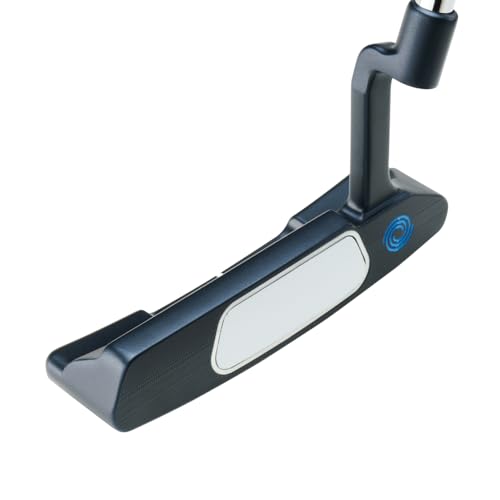
Odyssey’s insert is the reason to look at this one. The Ai-ONE face is an aluminium insert with a variable-thickness pattern behind it, designed so that strikes away from centre lose less ball speed than they otherwise would. The practical effect is on distance control rather than direction: a putt struck off the toe finishes closer to the right pace.
That is a real and under-appreciated problem. Most three-putts are caused by speed, not line, and a mishit blade putt typically comes up short rather than going offline.
The insert feels notably softer and quieter than the milled putters on this list, and it gives less feedback about where you struck it. Whether that is a feature or a fault depends on the golfer.
Who should skip it: Golfers who want to feel their misses. The insert damps exactly the feedback that milled faces provide, and if you use that information to self-correct, this putter removes it.
7. Cleveland HB Soft 2
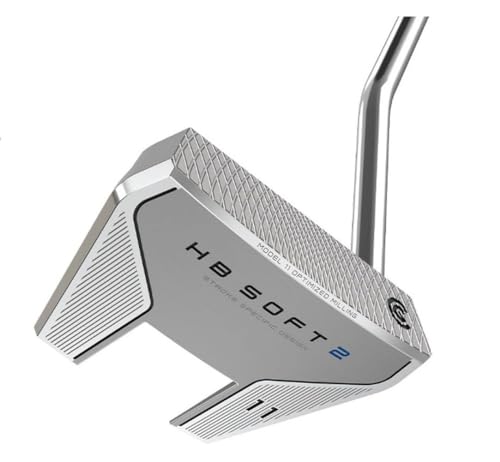
The budget entry, at roughly a third of what the Ping PLD costs. Cleveland mills a diamond pattern into the face to soften feel at impact, which is a cheaper way to get a similar result to an insert without the manufacturing cost.
The Model 11 is a single-bend blade, and the single bend shaft makes it closer to face-balanced than the plumber’s neck putters above. That matters for fit: this is the pick on this list for a stroke with very little arc, and it is not interchangeable with the Ping or Bettinardi on that basis.
It does not feel like a $450 putter and Cleveland does not pretend otherwise. The finish is plainer and the head is cast.
Who should skip it: Golfers with a pronounced arc stroke. The near face-balanced weighting fights face rotation, and if your stroke rotates noticeably you will fight this putter every time.
Frequently Asked Questions
How do I know if I need a blade or a mallet?
It comes down to your stroke shape. If the putter head travels on a noticeable arc, opening going back and closing through, a blade with toe hang matches that motion. If your stroke is closer to straight back and straight through, a face-balanced mallet fits better. Have someone film your stroke from behind; the arc is obvious on video and almost impossible to feel.
What is toe hang and why does it matter?
Balance the putter shaft on your finger and see where the toe points. If it drops toward the ground, the putter has toe hang, which means the face rotates more naturally through the stroke. A face-balanced putter keeps the face pointing at the sky and resists that rotation. Matching the putter to how much your face already rotates is the single most useful fitting decision in putting.
Does an insert face putt better than milled steel?
Neither is better, they feel different. Inserts are softer at impact and quieter, which some golfers find helps on fast greens where a firm strike runs away. Milled steel gives sharper feedback so you can feel where on the face you struck it. The choice is about what information you want back from the ball.
Is an expensive putter actually better?
Not measurably in performance. In 2026 testing the highest-scoring blade cost $449 while a $299 model finished third and a $259 model finished tenth, all within nine percentage points. What money buys is milling quality, finish, and feel. Those are real, but they are not the same thing as holing more putts.
The Bottom Line
The Ping PLD Anser topped the 2026 testing and it is the putter we would point most golfers with an arcing stroke toward, if the budget is there. The Ping Scottsdale Anser 2D does most of the same job for well under half the price and was the best blade in that test on long putts, which is where three-putts come from.
The honest limitation across the whole category: the gap between the best and worst putters in a 29-model test was smaller than the gap between a good and bad week on the greens for any individual golfer. Fit the toe hang to your stroke, then buy whichever one you like looking at. Our full putter roundup covers mallets if the stroke test points you that way.
Cover image artificially generated for illustrative purposes.