
Best Game Improvement Drivers in 2026
Some links on this page are affiliate links. As an Amazon Associate, GolfThis earns from qualifying purchases at no extra cost to you.
Your good drives are fine. It is the other ten you are trying to fix.
That is the honest position most golfers are in when they start shopping for a driver, and it is not the position the marketing addresses. Driver advertising sells peak distance, measured off the middle of the face by someone who finds the middle most of the time. If your strike pattern is spread across the face, peak distance is close to irrelevant to your scorecard. What matters is the floor, not the ceiling.
Game improvement drivers are built for the floor. A high moment of inertia means the head resists twisting when you miss, so a heel strike leaves at a smaller angle and holds more of its speed. Slope of loss, not maximum gain. The trade is real: these heads are larger, harder to shape on purpose, and a few of them look like shovels behind the ball.
We weighted forgiveness first, then stock shaft quality, then price against what you actually get. We also checked whether a model has a genuine draw-biased sibling, because plenty of golfers shopping for forgiveness are really shopping for a fix to a slice, and those are different clubs.
How we picked: We don’t claim to have hit every club here. These picks come from manufacturer specs, independent testing data, and aggregated feedback from golfers playing them. Where we’ve had a club in hand, we say so.
This is part of our 2026 series, alongside Best Golf Drivers in 2026 and Best Drivers for Seniors in 2026. Jump to the comparison table if you just want the picks.
See also: Best Driver for Left-Handed Players in 2026, Best Drivers for Mid-Handicappers in 2026, and Best Drivers for Distance in 2026.
Looking for the all-time picks? Our original game improvement driver list covers models that held up for years.
Game Improvement Drivers in 2026 Comparison Table
| Driver | Best For | Lofts | Draw Model | Price |
|---|---|---|---|---|
| Callaway Elyte Max Fast | Moderate swing speeds | 9°, 10.5°, 12° | Yes | $$ |
| TaylorMade Qi4D Max | All-round forgiveness | 9°, 10.5°, 12° | Yes | $$$$ |
| Ping G440 Max | Consistency over speed | 9°, 10.5°, 12° | Yes (SFT) | $$$ |
| Cobra Darkspeed Adapt MAX-K | Stability without forced draw | 9°, 10.5°, 12° | No | $$ |
| Wilson DYNAPWR Max+ | Maximum MOI on a budget | 9°, 10.5°, 13° | No | $$$ |
| Cleveland Launcher XL 2 | Value and light weight | 9°, 10.5°, 12° | Yes | $$ |
| Titleist GT2 | Forgiveness in a tour shape | 8°, 9°, 10°, 11° | No | $$$$ |
| Tour Edge Hot Launch Max | Slower speeds, tight budget | 10.5°, 12° | Yes | $$ |
1. Callaway Elyte Max Fast
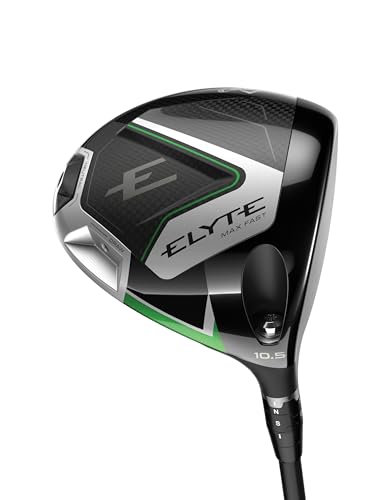
The Max Fast is the lightest build in Callaway’s forgiving line, and the weight is the point. A 40-gram shaft and a lighter head let a moderate swing move the club faster without swinging harder, which is where most of the distance gap comes from for golfers under about 90 mph.
Callaway’s AI-mapped face varies thickness across the hitting area rather than using a single uniform plate, and the company’s stated aim is holding ball speed wider of centre. Golf Monthly reports the AI face retaining about 93 percent of ball speed on mishits against roughly 85 percent for a standard driver, a manufacturer-derived figure but a large enough gap to be worth knowing.
The caveat is that light builds can feel vague. If you have a quick transition you may lose track of where the head is, and the lighter shaft will not hold up to an aggressive move.
Who should skip it: Anyone over about 100 mph. The light build costs you control at speed, and you want the standard Elyte or the Triple Diamond instead.
2. TaylorMade Qi4D Max
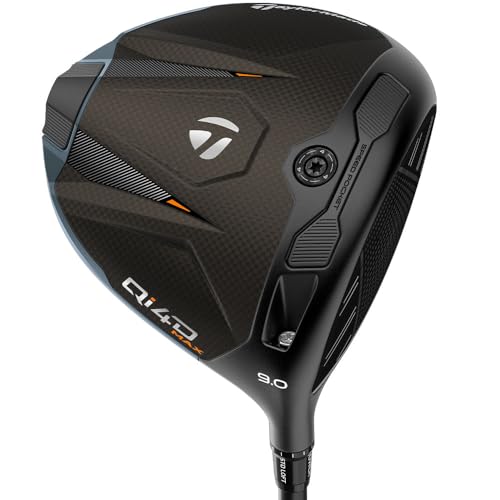
The Max is the forgiving member of the Qi4D family, and reviewers testing the three heads side by side reported the same pattern: slightly behind the standard and LS models on raw speed, ahead of both on stability. That is the trade this whole category is built on, and TaylorMade made it deliberately.
It also carries the most adjustability TaylorMade has built into a driver, with a 12-position loft sleeve and movable mass in the sole. If you are between settings or your swing is still moving around, that range has real value.
Two honest problems. It is the most expensive driver on this list by a wide margin, and the forgiveness gain over a head costing half as much is not proportional to the price gap. The adjustability is also wasted if you set it once and never touch it, which is what most golfers do.
Who should skip it: Anyone who will never adjust it. You are paying for a feature you won’t use, and the Cobra or Cleveland gets you most of the forgiveness for less than half the money.
3. Ping G440 Max
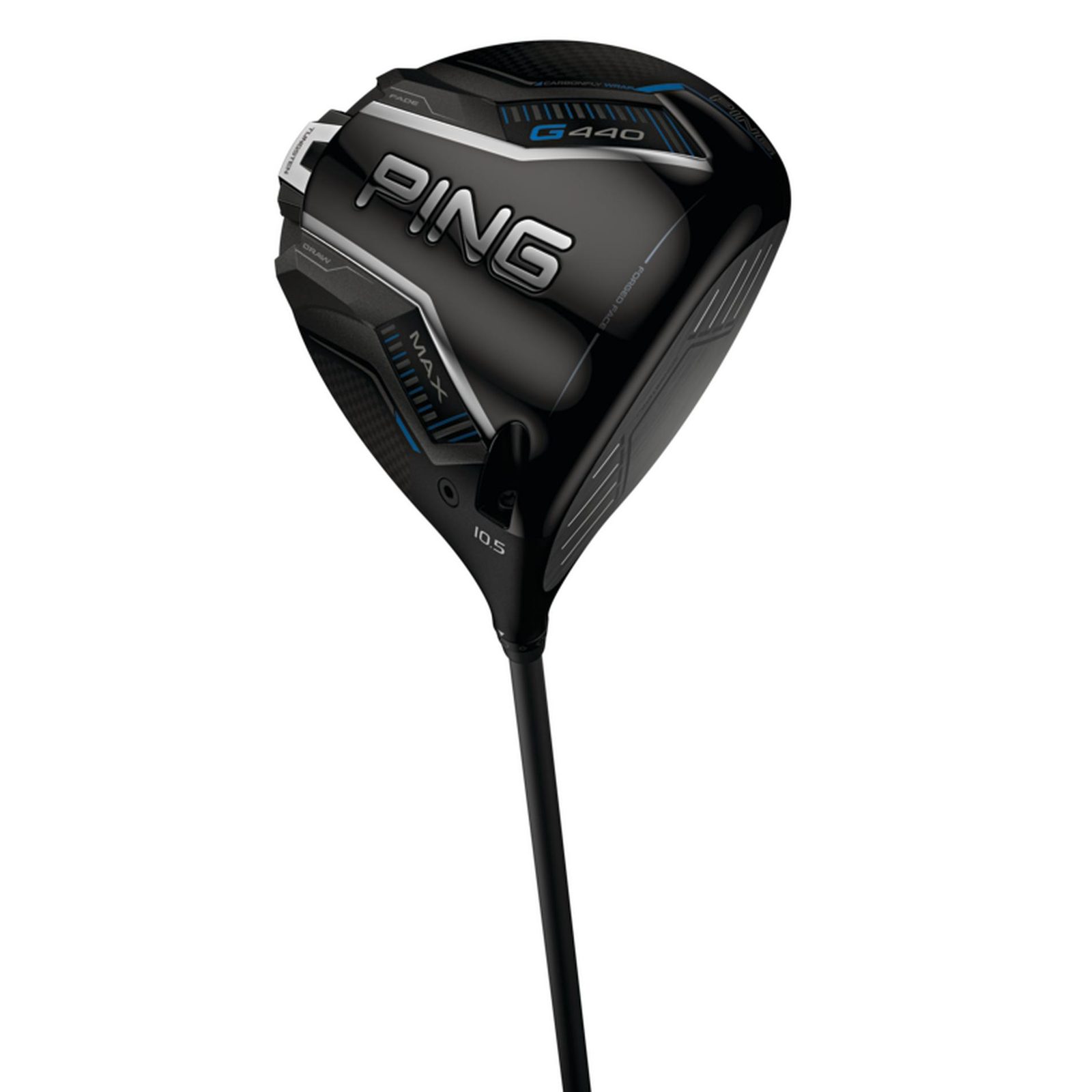
Ping has built the same club well for a long time, and the G440 Max is the current version of it. The reputation is consistency rather than peak speed, and that is the right reputation for this category. The head is aerodynamic enough to help clubhead speed without asking you to swing harder for it.
What separates Ping here is the fitting infrastructure. The stock shaft list is genuinely deep, and Ping’s fitting carts are in more pro shops than any other brand’s, so the odds of finding the right build in your hand before you buy are better than with most of this list.
The problem is buying one online. Ping’s distribution is tightly controlled and the listings that surface on Amazon are mostly grey-market resellers at inflated prices, several with misspelled titles. We could not verify a legitimate Amazon listing for this club, so there is no button here.
Who should skip it: Golfers who want to buy today without leaving the house. Get fitted at a shop for this one or pick something else on the list.
4. Cobra Darkspeed Adapt MAX-K
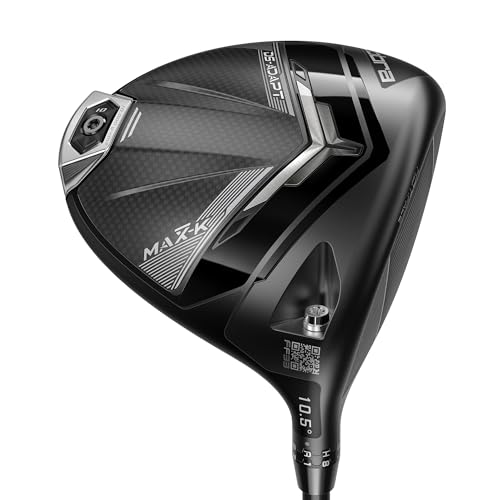
The MAX-K chases the MOI limit without forcing a ball flight on you, which makes it the pick for golfers whose miss goes both ways. A lot of forgiving drivers are quietly draw-biased, and if your bad shot is a hook that help becomes a problem. This one stays neutral.
Cobra’s Adapt hosel changes loft and lie together rather than as separate settings, which produces fewer nonsensical combinations than systems that let you stack adjustments independently.
Two things to know. Cobra’s finishes attract scuffs faster than the competition, cosmetic but noticeable within a season. And at full MOI the head is large enough at address that players used to a compact shape may not settle behind it.
Who should skip it: Slicers. The neutral setup that makes this club good for two-way misses means it does nothing to close the face, and you want a draw-biased head instead.
5. Wilson DYNAPWR Max+
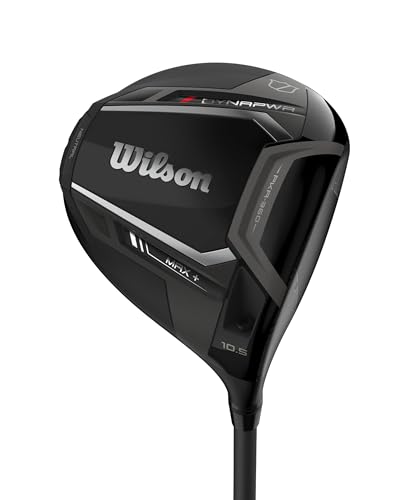
Wilson’s engineering story here is specific enough to check: five grams pulled out of the redesigned face and moved into a 26-gram rear weight, raising MOI without making the club heavier overall. That is the hard part of maximum forgiveness. Most 10K claims arrive attached to a head that feels like a brick.
It lands at a price the other maximum-MOI drivers do not touch, and Wilson has quietly been making good equipment for golfers who are not shopping on brand name.
The honest limitation is resale and fitting support. Wilson moves fewer units, so there are fewer fitting carts, fewer aftermarket shaft options in stock, and you will get less back when you sell it.
Who should skip it: Anyone who shapes shots on purpose. Maximum MOI resists the twisting you are deliberately trying to create, so a fade you asked for comes out straighter than you wanted.
6. Cleveland Launcher XL 2
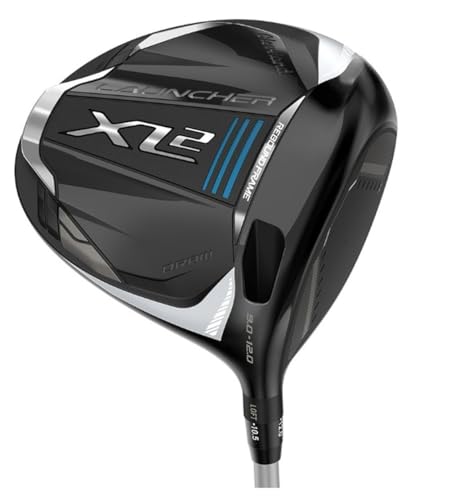
The Launcher XL 2 has been the quiet value pick in this category for two seasons. It is a large, light, high-launching head aimed at golfers who need help getting the ball up, and it usually sells for well under the premium models.
It comes in a standard and a draw setup at the same price, which is more useful than it sounds. Most brands charge the same for both but stock only the standard version at retail, so the draw head is a special order. Cleveland’s draw version is widely available.
The face feels noticeably duller than the premium heads at impact. That is a preference rather than a performance issue, but if feedback matters to you, hit one first.
Who should skip it: Faster swingers who already launch it high. The extra launch turns into ballooning and you lose roll.
7. Titleist GT2
The GT2 is the forgiving driver for golfers who cannot stand how forgiving drivers look. Titleist keeps the footprint closer to a traditional shape while pushing the MOI up, and for a certain player the confidence of a clean shape behind the ball is worth a measurable amount of forgiveness.
Titleist’s stock shaft options are unusually strong, and the brand’s fitting network is second only to Ping’s.
It is expensive, and Titleist’s positioning means the price rarely moves much. You are also giving up some absolute forgiveness to the shovels higher on this list, which is the deal you are knowingly making.
Who should skip it: High handicappers who do not care what the club looks like at address. You are paying a premium for a shape, and the MAX-K or the Wilson gives you more help for less.
8. Tour Edge Hot Launch Max
Tour Edge builds for slower swing speeds without charging a premium for it, and the Hot Launch line has been doing that consistently. The Max is the forgiving head in the 2026 range, offered in higher lofts than most of this list, including a 12 degree that a lot of brands treat as an afterthought.
Shafts are the reason to look here. Tour Edge stocks genuine senior and lightweight options as standard rather than as a special order, so a slower swinger gets a sensible build off the rack.
The brand carries less resale value than anything else here, and the finish quality is a step behind the major manufacturers. It is a club to buy and keep, not to trade up from.
Who should skip it: Anyone above about 95 mph. The whole design brief is helping slower swings launch the ball, and at speed it spins too much.
The Bottom Line
For most golfers reading this, the Cleveland Launcher XL 2 is the sensible buy. It delivers the large majority of the forgiveness on this list at roughly half the price of the premium heads, and the draw version is easy to find if your miss goes right. If money is genuinely not the constraint, the Qi4D Max is the more complete club and the adjustability earns its keep over a few seasons.
The limitation worth naming is that none of these fix a swing. A forgiving head shortens your bad shots rather than straightening them, and if your miss is a slice you want a draw-biased head or a lesson before you want more MOI. Our guide to fixing a slice is the cheaper place to start.
Cover image artificially generated for illustrative purposes.