
Best Pitching Wedges in 2026
Some links on this page are affiliate links. As an Amazon Associate, GolfThis earns from qualifying purchases at no extra cost to you.
Your 9-iron goes 135 and your sand wedge goes 85, and there is a stretch in between where you are guessing. That gap is the reason to think about your pitching wedge, and it is almost always a gapping problem rather than a quality problem.
Iron manufacturers created it by strengthening lofts for years to post better distance numbers, so the pitching wedge that used to be 48 degrees is now commonly 42 to 44 in a game-improvement set. Your sand wedge did not move, because 56 degrees is still 56 degrees. The result is a 12-degree hole at the bottom of the bag, which is about 30 yards of distance with no club to cover it, and it sits exactly in the scoring range.
So this list is about two different buyers. If you play a strong-lofted set, the right move is usually to gap around your existing pitching wedge rather than replace it, and the clubs below matter as the 50 or 52 degree that fills the hole. If you want a specialty pitching wedge in its own right, for more spin and a better sole than a cast iron head provides, these are the heads worth looking at. We weighted turf interaction, spin on partial shots, and the range of lofts and grinds each model offers, because a wedge you cannot gap correctly is not useful however well it performs.
How we picked: We have not hit every wedge on this list ourselves. These picks come from MyGolfSpy’s 2026 Most Wanted wedge testing, published reviews at Golf Monthly and Golf Digest, manufacturer loft, bounce and grind specs, and aggregated feedback from fitters and golfers playing them. Where we have had a club in hand, we say so.
Wedges are sold by loft, bounce and hand, and the retail listings below open on whichever configuration the seller has stocked. Check that you are ordering the loft you want before you buy, because the listing default is rarely the one that fits your gapping.
This is part of our 2026 series, alongside Best Golf Wedges in 2026 and Best Sand Wedges in 2026. Jump to the comparison table if you just want the shortlist.
Looking for the all-time picks? Our original best pitching wedge review covers an earlier generation of models, most of which are no longer sold new.
Best Pitching Wedges in 2026 Comparison Table
| Wedge | Best For | Loft Range | Why It Made The List | Price |
|---|---|---|---|---|
| Titleist Vokey SM11 | Gapping precision | 46° to 62° | Widest grind selection | $$$$ |
| Cleveland CBX4 ZipCore | Cavity-back iron sets | 46° to 60° | V-sole in 44° to 52° | $$ |
| Cleveland RTZ | Spin on a budget | 46° to 60° | ZipCore iQ, per-loft hosel | $$$ |
| Callaway Opus SP | Penetrating flight | 46° to 60° | Lowest launch here | $$$$ |
| PING s159 | Fitting options | 46° to 62° | Six grinds available | $$$ |
| Mizuno Pro T-3 | Feel off the face | 46° to 60° | Grain flow forged | $$$ |
| TaylorMade Milled Grind | Consistent sole shaping | 46° to 60° | CNC milled sole | $$$ |
| Titleist Vokey SM10 | Value on last generation | 46° to 62° | Same platform, lower price | $$$ |
1. Titleist Vokey SM11
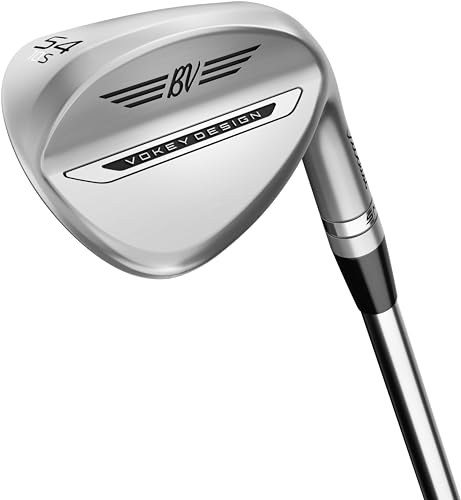
The SM11 is a refinement of the SM10 rather than a redesign, which is the correct way to treat a wedge line that was already the benchmark. For a pitching wedge specifically, the reason it leads is the loft and grind matrix: Vokey covers 46 through 62 degrees with multiple grinds at most lofts, so you can build a set that actually gaps rather than accepting whatever three lofts a manufacturer decided to sell.
Vokey’s centre of gravity placement changes by loft, with a higher CG in the gap and pitching lofts for flight control and a lower one in the lob wedge. That is the design detail that matters on a 46 or 50 degree wedge, where you want a controlled, repeatable flight rather than maximum height. Reviewers consistently describe the spin as aggressive but predictable on the second bounce.
It is the most expensive option here, and the grind selection that makes it good is genuinely confusing without a fitting. Buying the wrong grind off a website is a real risk with this model.
Who should skip it: Golfers who want to buy a wedge without a fitting conversation. The SM11’s advantage is choice, and choice you do not use is just a higher price.
2. Cleveland CBX4 ZipCore
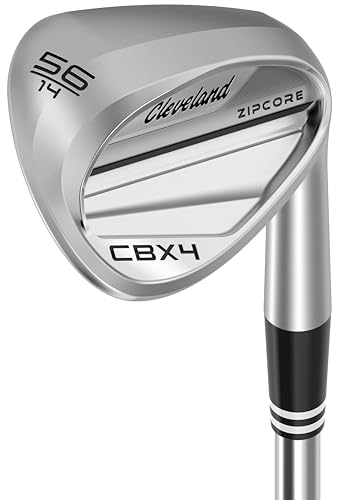
The CBX line exists for the golfer this article is mostly about: someone playing a cavity-back or hollow-body iron set who wants a wedge that matches it. The head is a cavity back rather than a blade, so it is more forgiving on a thin or toe strike than any of the tour heads on this list.
The detail that earns it second place is the V-shaped sole in the 44 to 52 degree lofts, which covers exactly the pitching and gap wedge range. That sole is shaped to glide rather than dig on a full, square-faced swing, which is what a pitching wedge is actually used for. ZipCore moves weight out of the hosel and puts it low and toward the toe, where golfers in this bracket actually strike the ball.
It is the least workable head here. Opening the face for a delicate shot does not do what it does on a Vokey, and better players tend to find the cavity back look bulky behind the ball.
Who should skip it: Low handicappers who open the face regularly. The CBX is built to be forgiving on standard shots, not versatile on creative ones.
3. Cleveland RTZ
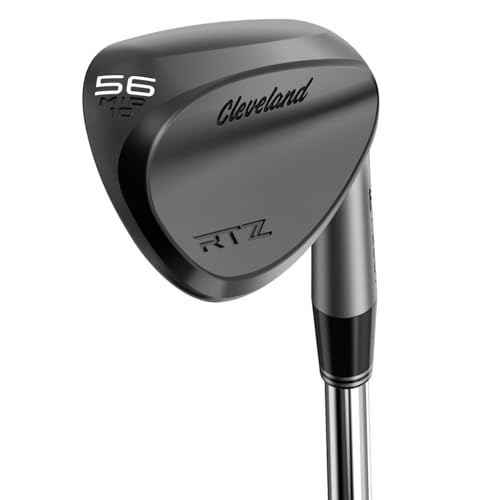
The RTZ is Cleveland’s tour line and the successor to the RTX series, and it is one of the cleanest looking wedges available at this price. ZipCore has been upgraded to ZipCore iQ, which means the lightweight hosel is now tailored to each individual loft and grind combination rather than shared across the range.
That per-loft approach matters more in the pitching and gap lofts than anywhere else, because a 46 degree wedge and a 60 degree wedge want their weight in different places and older wedge lines largely ignored that. Cleveland has built its reputation on spin, and the UltiZip groove design is the part of the club most reviewers single out.
The compact head that better players like is the same head that offers less help on a mis-hit, and it sits below the Vokey and Opus on grind choice.
Who should skip it: High handicappers who would be better served by the CBX sitting one entry above it in the same brand’s range.
4. Callaway Opus SP
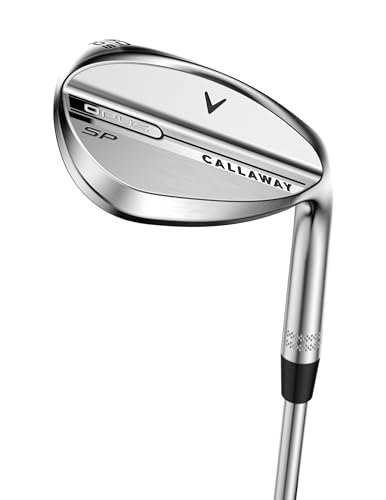
The Opus SP is the flight-control option on this list. Its three-piece construction with tungsten weighting and a spin pocket produces the lowest launch and the most penetrating ball flight of the wedges compared here, which is a specific and useful property in a pitching wedge.
That matters because a pitching wedge is a full-swing club more often than any other wedge in the bag. A flight that bores through wind and lands with predictable spin is worth more from 120 yards than maximum height is, and the higher-launching wedges on this list are optimised for the opposite job.
It is priced with the Vokey, and the low-launch character that suits a full pitching wedge shot makes it harder to hit the high, soft shot around the green that other wedges give you more easily.
Who should skip it: Golfers who need height around the greens, or anyone playing soft, receptive courses where a penetrating flight is not an advantage.
5. PING s159
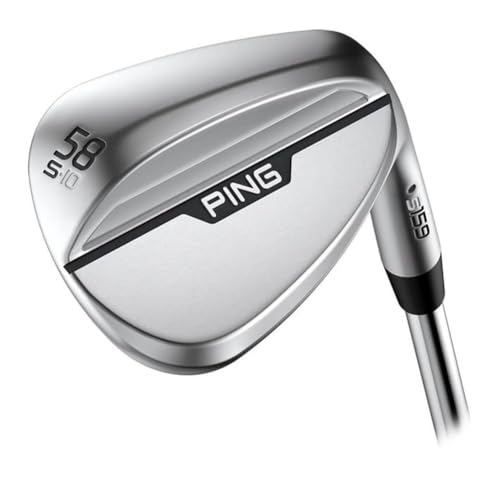
PING’s s159 offers six grinds across its loft range, which puts it alongside Vokey as the line to look at if you want the sole matched to your turf and your attack angle rather than taking a standard option. PING’s fitting system is the most methodical in golf, and for wedges specifically that is a real advantage rather than a marketing point.
For a pitching wedge, PING’s approach of building each loft with its own weighting suits the club’s job. The lofts in this part of the bag get hit full, and full shots reward consistency of flight over spin at any cost.
PING’s wedge line has less tour visibility than Vokey or Cleveland, and the finishes on offer are more conservative than most competitors. Neither affects performance, but both affect whether people buy them.
Who should skip it: Golfers who want to buy off the rack quickly. Like the Vokey, this is a line whose value comes out in a fitting.
6. Mizuno Pro T-3
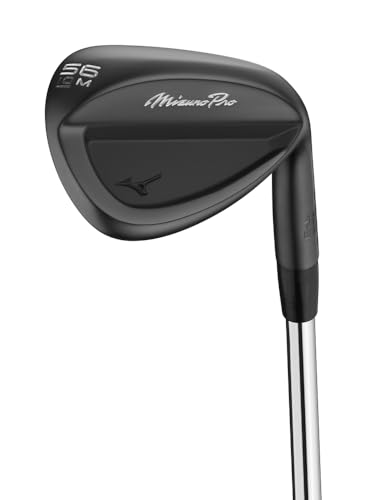
Mizuno’s grain flow forging process has a long reputation for feel, and the Pro T series is where that shows up in the wedge range. For a golfer who plays Mizuno irons, matching the wedges to the set is a straightforward reason to buy these, and the feedback through the hands on a slightly thin strike is genuinely more informative than a cast head gives.
Feel is the least measurable property on this list and the easiest to overclaim. The T-3 does not outperform the Vokey or the RTZ on spin data, and it is chosen for how it feels and looks behind the ball. Those are legitimate reasons to pick a scoring club you will hit 40 times a round.
Grind and loft options are narrower than Vokey’s or PING’s, and forged heads wear faster than cast ones if you practise heavily off mats.
Who should skip it: High handicappers, and anyone who practises mainly on mats. A softer forged head is not where that golfer’s money does the most.
7. TaylorMade Milled Grind
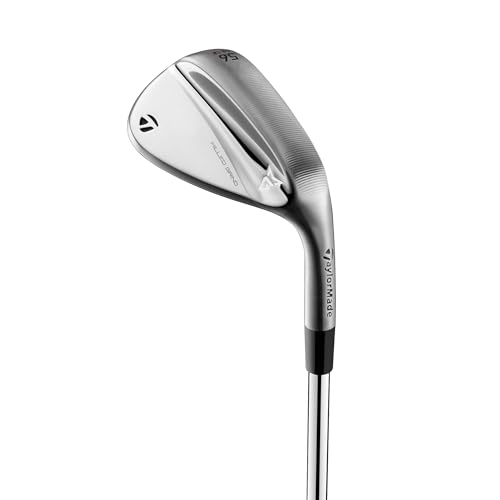
The premise of the Milled Grind line is manufacturing consistency: the sole is CNC milled rather than hand-ground, so the wedge you buy matches its specification more closely than a hand-finished sole does. On a pitching wedge that is worth something specific, because sole shape determines how the club enters turf on the full shots this club mostly hits.
TaylorMade’s wedges are widely available and frequently discounted, which makes this one of the easier picks here to buy without a fitting appointment. The spin numbers are competitive rather than category-leading.
The trade against a Vokey is character. A milled sole is consistent by design, and hand-ground soles exist because some golfers want a specific feel that a standard grind does not provide.
Who should skip it: Better players who already know which hand-ground sole shape they want. Consistency to spec is only an advantage if the spec suits you.
8. Titleist Vokey SM10
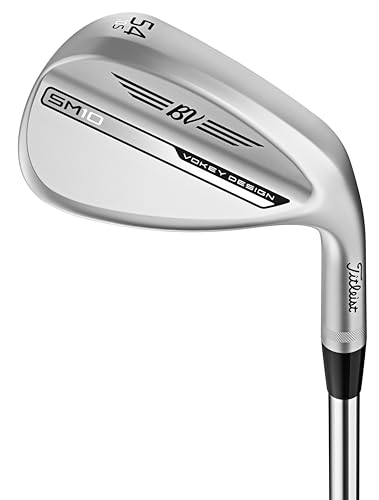
The SM10 is the previous generation of the wedge at the top of this list, and since the SM11 was a refinement rather than a redesign, the gap between them is small. The progressive centre of gravity system, the grind matrix and the groove design are all substantially the same club.
For a golfer building a three or four wedge setup, this is where the money goes furthest. Gapping correctly matters more than model year, and buying three SM10s to cover 50, 54 and 58 degrees is a better outcome than buying one SM11 and leaving a gap somewhere in the bag.
Availability is the catch. Stock of specific loft and grind combinations thins out as a model is superseded, and the combination you want may simply not be there in the hand you need.
Who should skip it: Golfers who need a specific grind that is out of stock, and anyone buying a single wedge where the price difference to the current model is small.
Frequently Asked Questions
What loft is a pitching wedge in 2026?
It depends entirely on whether it came with your irons. Traditional pitching wedges are 46 to 48 degrees, while modern game-improvement iron sets have strengthened the pitching wedge to 42 to 44 degrees to advertise more distance. Specialty wedges sold separately run in 2-degree increments from about 46 up to 62 degrees regardless of brand, which is why they are easier to gap correctly.
Do I need a separate pitching wedge if my iron set came with one?
Usually not, and that is the honest answer. The set pitching wedge is built to match your irons in length, weight and loft progression, and replacing it can break that progression. The case for a specialty pitching wedge is specific: you want more spin and a better sole on partial shots than a game-improvement iron head gives you, and you are willing to re-gap the rest of your wedges around it.
How much loft gap should I have between wedges?
Four to six degrees, which produces roughly 10 to 15 yard gaps for most golfers. If your pitching wedge is 44 degrees and your sand wedge is 56, that is a 12-degree hole and a 30-yard distance gap with no club to cover it. Fixing that gap is usually worth more strokes than upgrading any single wedge on this list.
Does bounce matter on a pitching wedge?
Less than on a sand wedge, but it still matters. A pitching wedge is mostly played off the turf on full and three-quarter shots, so a mid bounce around 8 to 12 degrees with a versatile sole suits most golfers and most conditions. Very low bounce is for firm turf and shallow swings, and it will dig on soft ground.
The Bottom Line
Before buying any of these, go and find out what loft your current pitching wedge is. If it is 43 degrees and your next wedge is a 56, the club you need is a 50, and which brand you buy it from matters far less than owning it at all. That single purchase closes a 30-yard hole in the middle of your scoring range.
If you are replacing a pitching wedge on merit, the Vokey SM11 is the most complete option and the CBX4 ZipCore is the one most mid and high handicappers will actually score better with. The limitation on all of this: wedge fitting depends on your turf, your attack angle and how you deliver the club, and none of that is visible from a list. Get the loft gaps right first, then worry about which head.
Cover image artificially generated for illustrative purposes.