
Best Golf Wedges in 2026
Some links on this page are affiliate links. As an Amazon Associate, GolfThis earns from qualifying purchases at no extra cost to you.
Most wedge shopping starts and ends with loft. That’s the wrong place to start. Two wedges at the same 56 degrees can behave completely differently around the green depending on bounce, sole grind, and how aggressively the grooves bite the ball, and that’s before you get to how each one performs once the face picks up moisture or the grooves start to wear.
We weighted spin performance under both dry and wet conditions, turf interaction across sole grinds, and where each wedge sits on the forgiveness-to-workability spectrum, since that’s the real tradeoff most golfers are making without realizing it.
How we picked: We don’t claim to have hit every wedge here. These picks come from manufacturer specs, MyGolfSpy and Today’s Golfer’s 2026 spin and turf-interaction testing, and aggregated feedback from retailer reviews and fitting-shop writeups. Where a figure is a tested number rather than a manufacturer claim, we say so.
This is part of our 2026 series, alongside Best Golf Drivers in 2026 and Best Putters in 2026. Jump to the comparison table if you just want the picks.
Looking for the wedges that defined the category for a decade? Our original best wedges list covers the Cleveland 588 and the earlier Vokey SM6, both still findable used and both still good.
Best Golf Wedges in 2026 Comparison Table
| Wedge | Best For | Loft Options | Feel | Price |
|---|---|---|---|---|
| Titleist Vokey SM10 | Low handicaps, tour-level spin | 46°–62° | Forged softness | $$$ |
| Cleveland RTX 6 ZipCore | Wet-weather spin | 46°–64° | Cast, firmer | $$$ |
| Cleveland CBX ZipCore | Mid-to-high handicaps | 46°–58° | Cast, forgiving | $$ |
| Ping Glide 4.0 | All-around forgiveness | 46°–62° | Cast, mid-firm | $$$ |
| Mizuno Pro T-1 | Feel and consistency | 46°–60° | Forged, soft | $$$ |
| Cobra King | Maximum spin | 46°–60° | Cast, firm | $$$ |
| TaylorMade Milled Grind | Partial shots, greenside touch | 46°–60° | Forged, soft | $$$ |
| Tour Edge Hot Launch Super Spin | Beginners, tight budgets | 48°–60° | Cast, forgiving | $ |
1. Titleist Vokey SM10
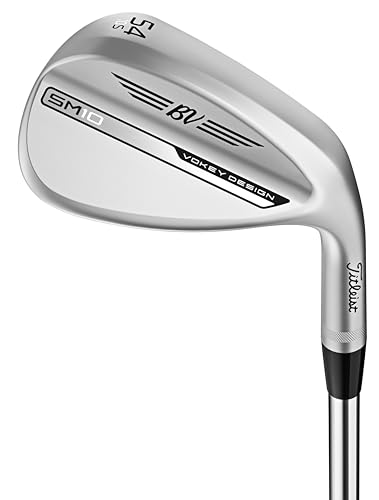
The SM10 is the most-played wedge on tour, and it earned that spot with a refined groove process where each groove is cut individually based on loft and finish, plus micro-texture between the grooves that keeps gripping the ball on partial shots. Players moving up from an SM7, SM8, or SM9 tend to notice the jump immediately on shots from 40 to 80 yards, which is the scoring zone this wedge is built around.
The tradeoff is that it’s built for players who already control spin and trajectory well. It’s not a forgiving wedge, and a mishit off the toe or heel costs you more here than on a game-improvement design.
Who should skip it: High handicappers still working on strike consistency. The workability that makes this the tour standard is wasted, and sometimes punishing, on an inconsistent contact point.
2. Cleveland RTX 6 ZipCore
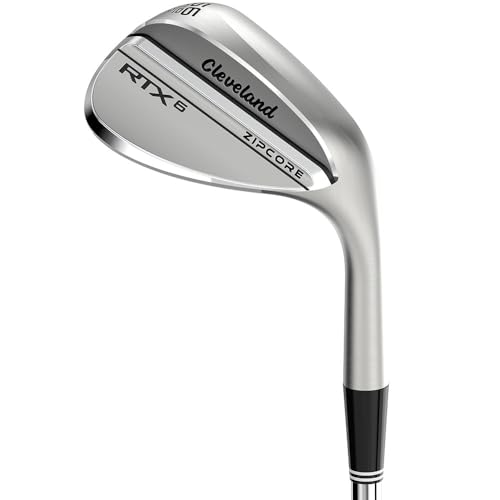
Cleveland built the RTX 6 around wet-condition performance specifically, which matters more than most golfers think until they’re playing morning dew or an afternoon after rain. The ZipCore lightweight core sits behind the face to keep spin high even as grooves start picking up moisture and grass.
In head-to-head testing it trails the Vokey SM10 slightly on rating for tour-level versatility, but for golfers who play in wetter climates or tee off early, the moisture performance can matter more than outright spin ceiling.
Who should skip it: Golfers in consistently dry conditions who’ll never see the wet-weather advantage this wedge is built for.
3. Cleveland CBX ZipCore
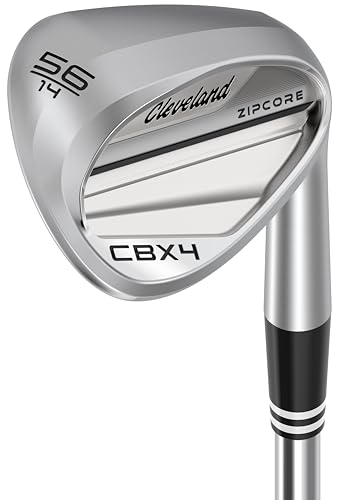
The CBX takes the same ZipCore core technology and puts it in a cavity-back, game-improvement shape with V-, C-, and S-shaped sole grinds that widen to prevent chunking. It’s built to be forgiving first, which is the opposite design goal from the RTX line above.
For a mid-to-high handicapper who’s more likely to catch a shot heavy than to need extra spin on a flop shot, this trades some of that top-end spin for a sole that saves more mishits.
Who should skip it: Better players who shape wedge shots intentionally. The wider sole and cavity-back design that make this forgiving also limit how much you can manipulate face angle and trajectory.
4. Ping Glide 4.0
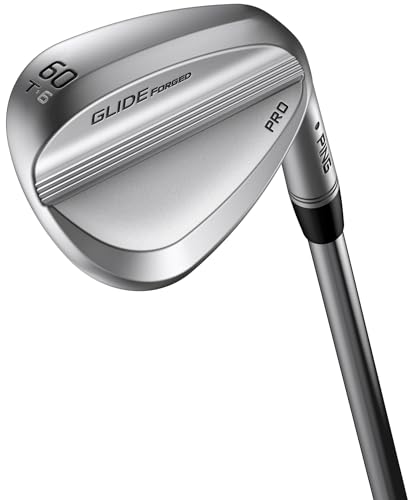
Ping’s Glide line is built around multiple sole grinds matched to different turf conditions and swing types, with the SS grind offering the widest sole and the most forgiveness across a range of lies. It holds spin in wet conditions notably well through its groove and face texture design, which puts it in a similar conversation to the Cleveland RTX 6 on that specific strength.
It’s a genuinely versatile option for a broad range of handicaps, without leaning as hard toward either pure forgiveness or pure workability as the Cleveland pair above.
Who should skip it: Golfers who already know they want either maximum forgiveness or maximum spin. The Glide 4.0’s strength is being the sensible middle option, which means it won’t out-forgive the CBX or out-spin the RTX 6 at either extreme.
5. Mizuno Pro T-1
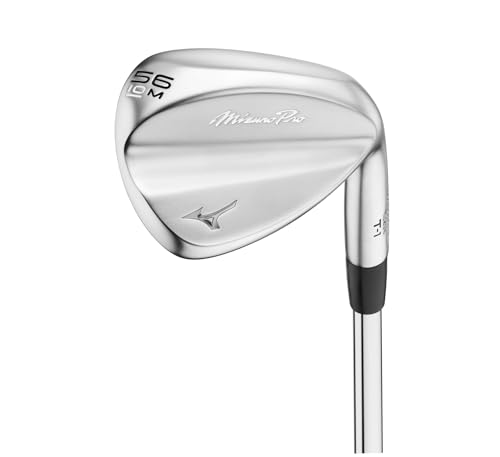
Mizuno’s T-series has built a reputation on feel, and the Pro T-1 is described by testers as the most complete wedge in 2026 testing, balancing accuracy, consistency, and spin rather than maximizing any single number. The forged construction gives a softer feel at impact than the cast options on this list.
It rewards a repeatable strike more than it forgives an inconsistent one, which is the usual tradeoff with a forged, tour-oriented wedge.
Who should skip it: Golfers who prioritize forgiveness on mishits over feel. A cast, wider-sole design like the CBX ZipCore will save more strokes for that player.
6. Cobra King
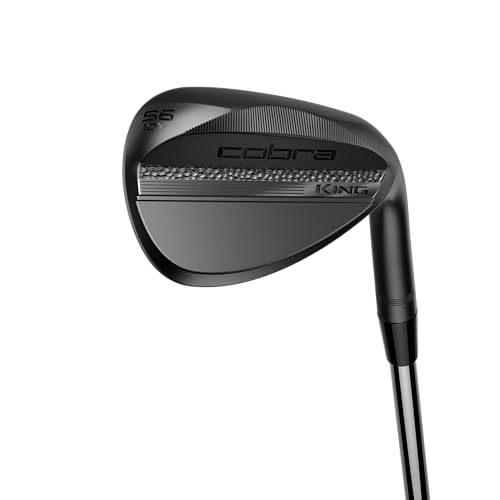
The King posted the highest full-swing spin numbers in 2026 testing among wedges compared, averaging over 700 RPM ahead of its nearest rival, thanks to a CNC-milled groove process and a face texture aimed specifically at wet-condition grip. That’s a genuinely large gap in a category where most wedges cluster closely on spin.
The firmer cast feel is the honest tradeoff for that spin number, and it won’t suit a player who wants a softer, more forged sensation at impact.
Who should skip it: Golfers for whom feel at impact matters more than outright spin numbers. The King is a data-driven pick, not a feel-first one.
7. TaylorMade Milled Grind
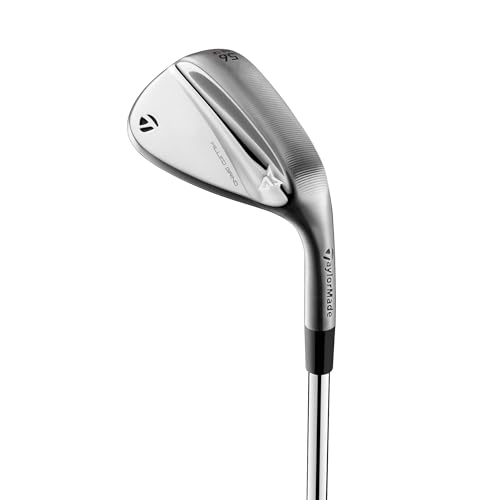
TaylorMade’s latest Milled Grind wedge is fully forged with saw-milled grooves that have steeper walls and sharper edges, built specifically to grab the ball on partial shots rather than full swings. That’s a deliberate, narrower focus than most wedges on this list, which chase full-swing spin numbers as much as greenside touch.
The soft forged feel pairs with that partial-shot focus for a wedge built around the scoring zone from 30 to 70 yards rather than distance control on full shots.
Who should skip it: Golfers whose short game misses are mostly full wedge shots rather than partial ones. The Milled Grind’s specific strength doesn’t show up as clearly there.
8. Tour Edge Hot Launch Super Spin
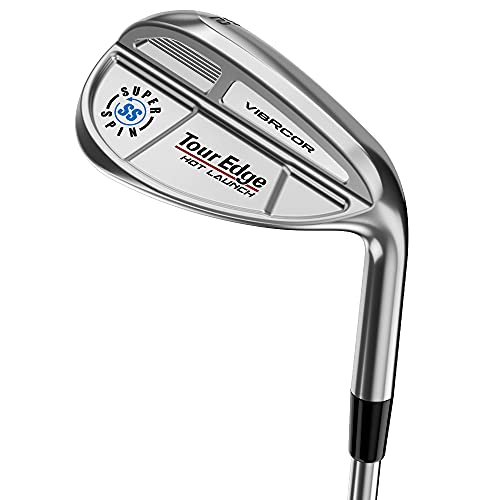
The one clearly budget-priced entry here, with a beveled leading edge and cambered sole built to prevent digging, plus a wide, forgiving sole that helps get the ball airborne for a slower or steeper swing. It won’t match the spin ceiling or the wet-weather performance of the wedges above it, and the feel is noticeably firmer.
For a beginner still building a short game, or anyone unwilling to spend $150-plus on a single wedge, it does the fundamental job of getting the ball up and stopping reasonably well.
Who should skip it: Anyone shopping by lowest handicap and shot-shaping needs. This is a forgiveness-and-price pick, not a performance-ceiling one.
Frequently Asked Questions
Do I need a different wedge for every loft in my bag?
Most golfers carry three: a pitching wedge gap (46-50 degrees), a sand wedge (54-56), and a lob wedge (58-60). They don't have to match brands, and mixing a forgiving gap wedge with a spinnier sand wedge is common. What matters more than brand-matching is bounce fitting to your typical turf and swing type.
What's the actual difference between a forged and cast wedge?
Forging shapes the head from a single billet of soft carbon steel, which most players describe as a softer feel at impact. Casting pours molten metal into a mold, which is cheaper and allows more complex internal weighting for forgiveness. Neither makes the ball spin more on its own — grooves and face texture do that.
How much bounce should a beginner use?
Higher bounce, generally 10 to 14 degrees, forgives a steep or digging swing by keeping the leading edge from catching the turf first. Better players with a shallower, sweeping strike can use less. If you're chunking chips regularly, bounce is worth checking before you blame technique.
The Bottom Line
If you’re a low-single-digit handicap chasing tour-level spin and touch, the Vokey SM10 remains the standard for a reason. Most golfers will get more out of their short game from the Cleveland CBX ZipCore or Ping Glide 4.0, which forgive the mishits that actually cost strokes. The honest limitation across this whole category: no wedge fixes a strike that’s inconsistent in location on the face, and no amount of groove technology replaces a proper bounce fitting for your typical turf. See our full set vs. individual clubs breakdown if you’re building out a bag from scratch, or our dedicated Best Gap Wedges in 2026 roundup if the 46-50 degree gap in your bag is the one you’re trying to fill.
Cover image artificially generated for illustrative purposes.