
Best Sand Wedges in 2026
Some links on this page are affiliate links. As an Amazon Associate, GolfThis earns from qualifying purchases at no extra cost to you.
You are in a greenside bunker with the lip above your knees, and the last two times you were here you either left it in the sand or sent it over the green. Neither of those is a technique problem you can fix while standing in the bunker, but one of them may be an equipment problem you can fix before you get there.
The specification that decides it is bounce, and most golfers buying a sand wedge never look at it. Bounce is the angle between the leading edge and the lowest point of the sole, and it controls whether the club digs into the surface or slides across it. Get it right and the sand wedge does the work itself. Get it wrong and a good swing produces a bad result, which is the frustrating part.
For bunkers specifically, 54 to 56 degrees with mid to high bounce, around 10 to 14 degrees, is the setup that suits most golfers and most sand. So we ranked these on sole grind options and turf interaction rather than on spin numbers, because spin is what sells wedges and bounce is what gets you out of the bunker.
How we picked: We have not hit every wedge on this list ourselves. These picks come from MyGolfSpy’s 2026 Most Wanted wedge testing, published reviews at Golf Monthly and Golf Digest, manufacturer loft, bounce and grind specifications, and aggregated feedback from fitters and golfers playing them. Where we have had a club in hand, we say so.
Wedges are sold by loft, bounce and hand, and the retail listings below open on whichever configuration the seller has stocked. Check the bounce as well as the loft before ordering, because bounce is the specification this article says matters most and it is the one buyers skip.
This is part of our 2026 series, alongside Best Golf Wedges in 2026 and Best Pitching Wedges in 2026. Jump to the comparison table if you just want the shortlist.
Looking for the all-time picks? Our original best sand wedge review covers an earlier generation of models, most of which are no longer sold new.
Best Sand Wedges in 2026 Comparison Table
| Wedge | Best For | Typical SW Loft | Bounce Approach | Price |
|---|---|---|---|---|
| Titleist Vokey SM11 | Matching sand conditions | 54°, 56° | Six grinds, low to high | $$$$ |
| Cleveland CBX4 ZipCore | Mid to high handicaps | 54°, 56° | Wide, forgiving sole | $$ |
| PING s159 | Methodical fitting | 54°, 56° | Six grinds incl. wide | $$$ |
| Cleveland RTZ | Spin from sand | 54°, 56° | Per-loft hosel weighting | $$$ |
| Callaway Opus SP | Firm sand and tight lies | 54°, 56° | Lower launch, spin pocket | $$$$ |
| TaylorMade Milled Grind | Sole consistency | 54°, 56° | CNC milled to spec | $$$ |
| Cleveland RTX 6 ZipCore | Value tour head | 54°, 56° | Mid and full grinds | $$ |
| Titleist Vokey SM10 | Value grind choice | 54°, 56° | Same grind matrix as SM11 | $$$ |
1. Titleist Vokey SM11
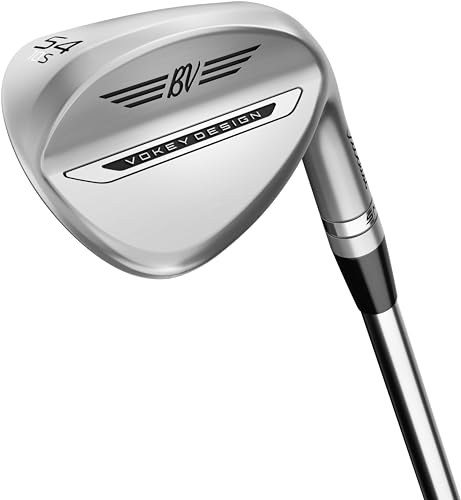
Vokey wedges are the most played sand wedge on the PGA Tour, and for once the tour usage figure points at something that matters to an amateur: the grind matrix. Vokey offers multiple sole grinds at the standard sand wedge lofts, which means you can match bounce to the sand you actually play rather than buying whatever the shop stocked.
That is the whole argument for this club at the top of the list. Soft, fluffy bunker sand wants high bounce and a wide sole. Firm, compacted sand, the kind that has not been raked since last Tuesday, wants less. One club cannot be both, and Vokey is the line that lets you choose. Reviewers describe the spin as aggressive but predictable, and the feel off the face as the standard other wedges are measured against.
It is the most expensive wedge here, and the grind options are genuinely confusing without help. Buying the wrong one is worse than buying a simpler wedge correctly.
Who should skip it: Golfers buying online without a fitting. The SM11’s advantage is matched bounce, and an unmatched SM11 is an expensive average wedge.
2. Cleveland CBX4 ZipCore
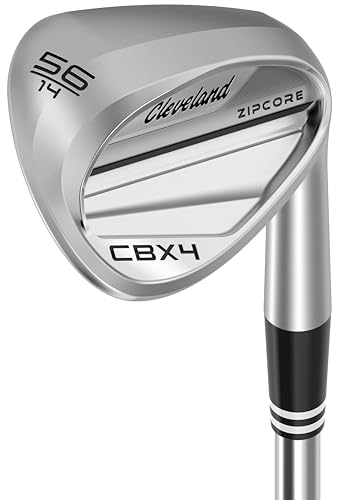
Most bunker advice assumes a golfer who makes solid contact, and the CBX is built for the one who does not. It is a cavity-back wedge with a wide, forgiving sole, and for a mid to high handicapper it will produce more successful bunker shots than any tour head on this list.
The reason is straightforward. A wide sole with generous bounce is hard to dig into the sand, and digging is the error that leaves the ball in the bunker. ZipCore repositions weight low and toward the toe where this golfer actually strikes the ball, so a slightly thin or toe-side strike loses less than it would on a blade. It is also less than half the price of the Vokey.
The cost is versatility. Opening the face to hit a high, soft shot does not work as well as it does on a tour grind, and better players find the head bulky behind the ball.
Who should skip it: Low handicappers who open the face and manipulate the sole. This wedge is built to do one thing reliably rather than several things on demand.
3. PING s159
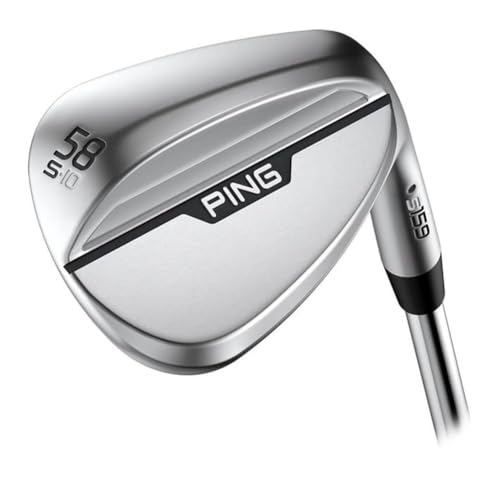
PING’s s159 line offers six grinds, and PING’s fitting process is the most systematic in the business. For a sand wedge that combination is worth more than it is anywhere else in the bag, because bounce fitting depends on measurable things: how steep your attack angle is, and how firm your home course plays.
The wide-sole options in the range are aimed squarely at golfers who play soft sand or take a deep divot, and they do the job without the cavity-back look that puts some players off the CBX. PING builds each loft with its own weighting rather than scaling one head up and down.
Tour visibility is lower than Vokey’s and Cleveland’s, and PING’s finishes are plainer than most. Neither affects how the club performs in sand.
Who should skip it: Golfers who want to buy quickly off a shelf. Like the Vokey, this line earns its money through fitting.
4. Cleveland RTZ
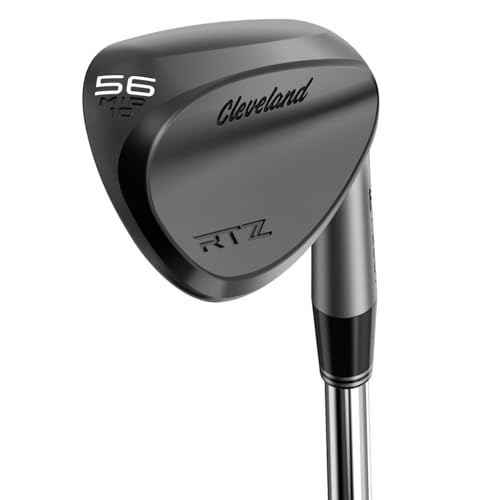
Cleveland has built its wedge reputation on spin, and the RTZ is the current tour line carrying that. ZipCore iQ tailors the lightweight hosel to each individual loft and grind rather than using one hosel across the range, and UltiZip grooves are the feature most reviewers point to when the ball checks on its second bounce.
For sand play specifically, spin matters less than bounce, but it matters a great deal on the shot immediately after: the short pitch from a tight lie beside the bunker you just escaped. The RTZ is a better all-round short game club than its bunker performance alone suggests, and it undercuts the Vokey on price.
The compact tour head offers less forgiveness than the CBX from the same brand, and the grind selection, while good, is narrower than Vokey’s or PING’s.
Who should skip it: Golfers whose bunker problem is contact rather than spin. The CBX one entry above solves that better.
5. Callaway Opus SP
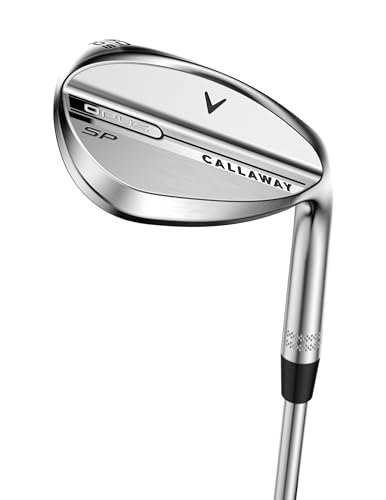
The Opus SP produces the lowest launch and most penetrating flight of the wedges compared here, using three-piece construction with tungsten weighting and a spin pocket. That makes it the specialist option for firm conditions and tight lies rather than the general bunker recommendation.
If your course has hard-packed bunkers with a thin layer of sand, which is common on older municipal courses and in dry climates, a high-bounce wedge is the wrong tool. The sole bounces off the compacted base and the leading edge catches the ball thin. The Opus SP in a lower-bounce grind is built for exactly that situation.
It is priced with the Vokey, and it is the wrong choice for soft, deep sand, where the low launch and reduced bounce work against you.
Who should skip it: Anyone playing soft, fluffy bunkers, and high handicappers generally. This is a specialist tool for firm conditions.
6. TaylorMade Milled Grind
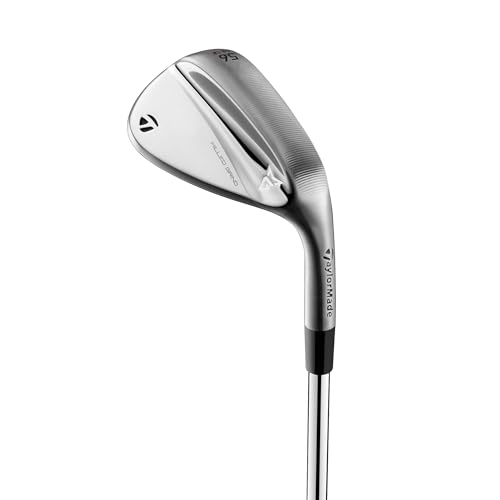
The Milled Grind line exists because hand-ground soles vary from club to club, and TaylorMade mills them by CNC instead. For a sand wedge that is a real benefit: the sole is the part of the club doing the work in a bunker, and getting the exact bounce you were fitted for rather than something close to it is the difference the process is designed to deliver.
These are widely stocked and frequently discounted, making this the easiest club here to buy correctly without a fitting appointment. The spin performance is competitive rather than leading.
A milled sole is consistent, not characterful. Golfers who have played a specific hand-ground Vokey sole for years often find the milled equivalent slightly clinical, which is a preference rather than a performance claim.
Who should skip it: Players who already know the hand-ground sole they want. Precision to spec only helps when the spec is right for you.
7. Cleveland RTX 6 ZipCore
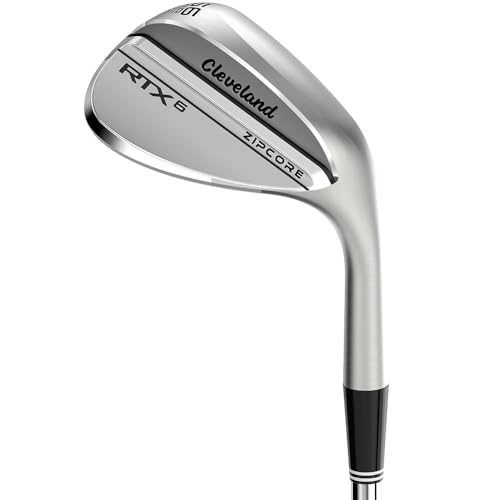
The RTX 6 is the generation before Cleveland’s current tour wedge, and it has settled into a price that makes it one of the best value purchases in the short game. ZipCore, UltiZip grooves and the mid and full sole grinds that suit bunker play are all present.
For a golfer replacing a worn sand wedge, this is the pragmatic pick. Wedge grooves wear out with use, and a fresh RTX 6 will spin more than a three-year-old flagship that has hit a thousand bunker shots. Buying the older model more often is usually better than buying the newest model rarely.
Stock of particular loft, bounce and hand combinations is thinning as it is superseded, so the specification you want may not be available.
Who should skip it: Golfers who need a specific bounce that is out of stock. A wedge in the wrong bounce is a downgrade regardless of price.
8. Titleist Vokey SM10
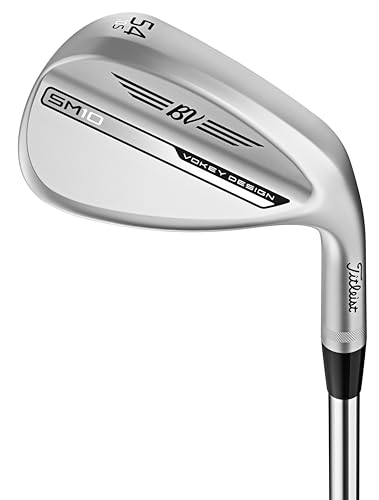
The SM11 refined the SM10 rather than replacing its architecture, so the grind matrix, progressive centre of gravity and groove design carry over substantially unchanged. For a sand wedge, where the grind choice is the entire point of buying a Vokey, that means the older model delivers most of what the newer one does.
The practical argument is the same one that applies to the RTX 6. If the money saved means you get properly fitted for bounce, or buy a second wedge to close a gap, the older generation is the better purchase. Grind matching beats model year in this category more clearly than in any other.
Availability is the limitation, particularly for less common bounce options and for left-handed golfers, who are always served last when a model is superseded.
Who should skip it: Left-handed golfers and anyone needing an unusual grind, where stock is thin. Also anyone finding the SM11 at a similar price.
Frequently Asked Questions
What loft and bounce should a sand wedge have?
For most golfers, 54 to 56 degrees with mid to high bounce of roughly 10 to 14 degrees is the safest all-round bunker setup. That combination has enough loft to clear a lip and enough bounce for the sole to slide through sand rather than dig into it. Go higher on bounce for soft sand and steep swings, lower for firm sand and shallow swings.
What does bounce actually do?
Bounce is the angle between the leading edge and the lowest point of the sole, and it determines whether the club digs or skids. High bounce makes the sole glide, which helps in soft sand and fluffy lies. Low bounce lets the leading edge get under the ball on firm turf, but it digs on soft ground. Bounce matters more than any other specification on a sand wedge.
Can I use a sand wedge from the fairway?
Yes, and most golfers do. A 54 or 56 degree wedge is a normal full-swing club from roughly 80 to 100 yards depending on your speed. The thing to watch is bounce: a high-bounce sand wedge chosen for soft bunkers can skid off firm fairway turf and catch the ball thin, which is why golfers on firm courses often prefer a mid-bounce sole.
Do I need a sand wedge and a lob wedge?
Not necessarily. If you carry a 56 degree sand wedge, adding a 60 gives you a higher, softer option around the green, but it also creates another gap to manage and a club many golfers strike poorly. Adding a lob wedge is worth it if you regularly face short-sided shots over bunkers. If your misses are long, the yardage gaps lower in the bag matter more.
The Bottom Line
Most golfers should buy a 56 degree wedge with around 12 degrees of bounce and stop thinking about it. If you play soft sand or take a deep divot, go higher. If your bunkers are hard-packed and your divots are shallow, go lower. That decision matters more than which of these eight names is stamped on the back.
For a mid or high handicapper, the Cleveland CBX4 ZipCore will save more shots than the tour heads above it, and it costs less than half as much. For everyone else, the Vokey SM11 in the right grind is the most complete sand wedge available. The honest limitation is that bounce fitting depends on your turf and your attack angle, and no article can measure either from here. If you have never been fitted for a wedge, that appointment is worth more than the upgrade.
Cover image artificially generated for illustrative purposes.